

Packaging material performance is assessed against ISO 11607-1:2019 and ASTM D3985 oxygen transmission standards.
TL;DR #
Flexible pouch packaging is undergoing a structural shift: digital-intelligent (AR, NFC, AI-generative) technologies are transforming the package surface from a passive visual carrier into an active, multi-touchpoint experience interface, with documented cases showing social sharing volumes exceeding 5 million interactions within a single product cycle. For procurement and brand teams, this means material and print specifications for flexible pouches must now accommodate functional surface zones — QR code fields, NFC chip integration points, and digitally-printable variable-data areas — not just barrier and seal performance. Before issuing your next RFQ for flexible pouches, audit whether your structural brief addresses experience touchpoint requirements alongside the conventional seal-strength and barrier specs.
Overview #
Most procurement teams still evaluate flexible pouches primarily on barrier properties and heat-seal integrity, treating the print surface as cosmetic. That framing is becoming a liability. Recent cross-disciplinary research conducted across market case analysis and structured design education programs — covering multiple product categories and user behavior cohorts — documents a measurable structural transition in how packaging is being specified, produced, and evaluated by brand-side teams globally. The research methodology combined real-world brand campaign analysis with iterative student-practitioner design experiments, giving it both commercial and applied validity.
The finding that matters to buyers: packaging design logic is shifting from “visual-first” (shelf impact, brand recognition, promotional graphics) toward “experience-first” (interactive behavior triggers, personalized variable content, social sharing facilitation). This is not speculative. Documented brand campaigns have delivered quantifiable engagement outcomes — and those outcomes are now feeding back into print production specifications that your supply chain needs to support.
For flexible pouch buyers specifically, this shift carries structural and print-specification consequences. Pouches and flexible bags are increasingly the format of choice for exactly the product categories — food, beverage, health, cosmetics, cultural goods — where experience-driven design is being deployed most aggressively. Understanding what this means for your material selection, surface finish specification, and supplier qualification process is the purpose of this guide.
Experience-Driven Flexible Pouch Design: From Visual Surface to Interactive Interface #
The conventional flexible pouch design path followed a well-worn sequence: market research → visual design → structural specification → production. User, scene, and behavior were treated as fixed inputs that constrained visual options. The package was optimized for the 3-second shelf-recognition window, and the experience ended when the pouch was opened and discarded.
Current industry data shows that this model is being actively disrupted across multiple product sectors simultaneously — not incrementally, but structurally.
| Design Dimension | Traditional Visual-Led Path | Experience-Driven Path |
|---|---|---|
| Primary design goal | Shelf impact, brand recognition | Behavior triggering, experience generation |
| User role | Passive recipient of visual communication | Active co-creator of content and meaning |
| Scene definition | Retail shelf or e-commerce screen (single purchase moment) | Mixed field: retail + social media + digital platforms (continuous) |
| Behavior model | Recognize → Select → Open → Consume → Discard | Scan → Customize → Collect → Share → Re-engage |
| Print surface function | Aesthetic and informational carrier | Interactive interface with functional trigger zones |
| Experience duration | Terminates at consumption | Continuous, iterative, data-generating |
| Technology role | Supports visual production (printing, finishing) | Structural enabler of interaction (NFC, QR, AR anchors, variable data) |
The shift is not cosmetic. It requires buyers to rewrite the specification brief.
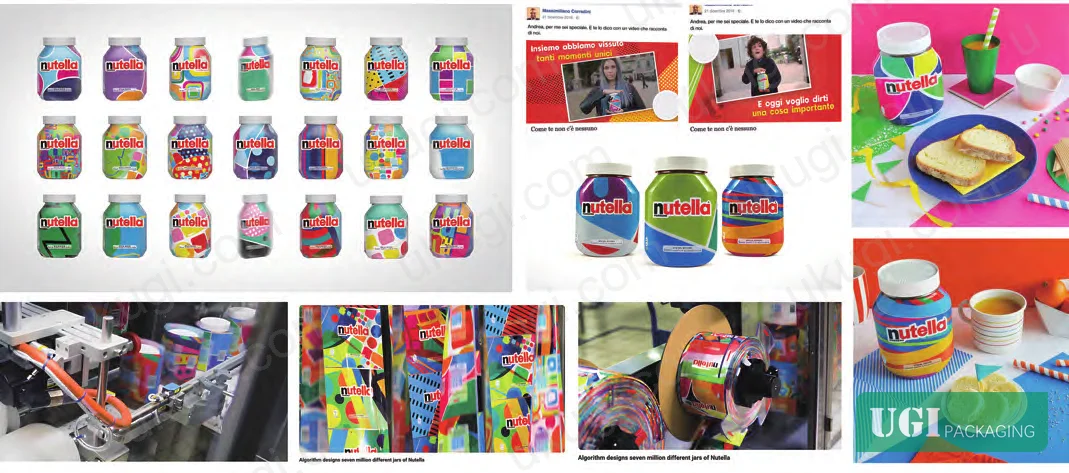
The Nutella “7 million unique labels” case is the clearest quantitative anchor in the research literature. The brand deployed generative AI to produce 7 million distinct label variants from a constrained visual asset library, with each unit assigned a unique serial ID. Digital printing technology resolved the production paradox of mass personalization at scale. The outcome: the product line sold out within approximately one month of launch, with social media sharing exceeding 5 million engagements. The per-unit cost premium of digital variable printing was offset by the elimination of overstock (driven by collectibility) and the organic social amplification value.
For flexible pouch buyers, the Nutella case establishes three concrete procurement implications:
- Variable data printing capability must be on the supplier qualification checklist — not as a future option, but as a current production requirement.
- Unique serial ID integration (whether printed, embossed, or NFC-embedded) requires surface treatment specifications that maintain machine-readable accuracy through distribution and retail handling.
- Collectibility as a design intent changes the specification for surface durability — a pouch meant to be kept must withstand environmental exposure beyond the typical single-use consumption cycle.
NFC, AR, and Variable-Data Print Specifications for Flexible Pouch Surfaces #
The technologies driving experience-driven packaging — AR, NFC, and AI-generated variable content — each carry distinct implications for flexible pouch material and print specification.
NFC (Near Field Communication) integration requires that the substrate in the chip-placement zone maintain dimensional stability through the lamination and heat-sealing process. NFC chip inlays are typically positioned in a designated zone away from seal areas; the substrate must not delaminate or distort in ways that compromise antenna geometry. Chip activation distance is typically 0–4 cm, and the antenna loop diameter determines the readable zone — both of which are affected by foil laminate layers in high-barrier pouches. Buyers specifying NFC-enabled pouches need to provide chip placement coordinates in the structural brief and confirm antenna compatibility with the chosen substrate stack.
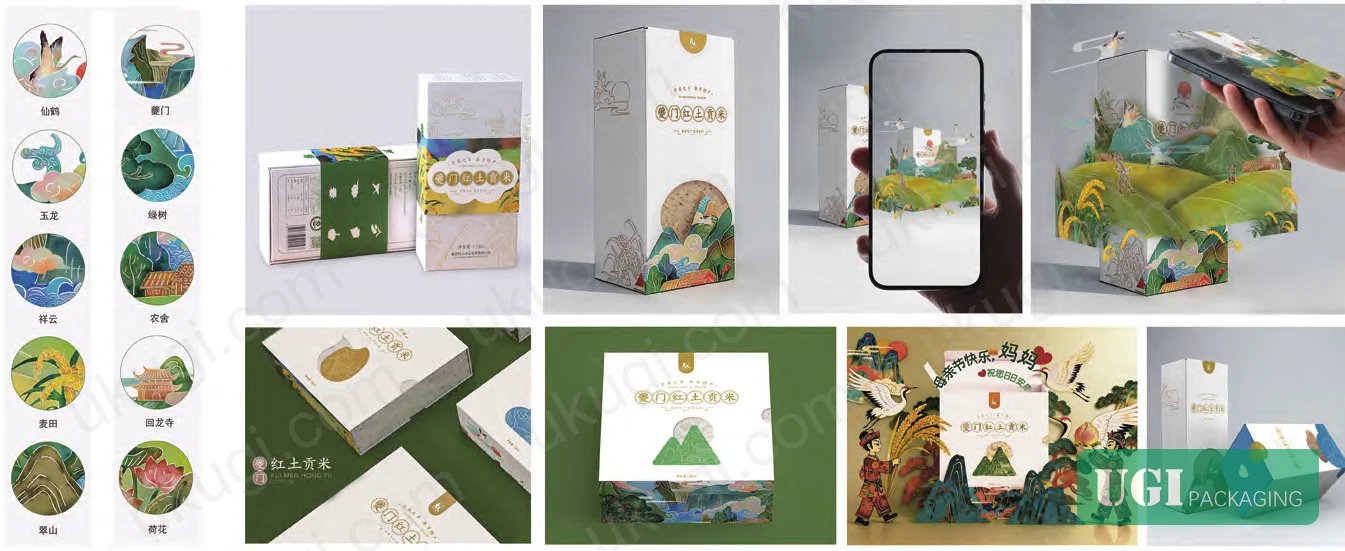
AR anchor zones require print surface specifications that support consistent, high-contrast trigger imagery. AR recognition accuracy degrades on surfaces with excessive gloss variation, heavy embossing, or thermal distortion from retort processing. Matte-finish laminate in the AR trigger zone typically outperforms gloss for scan reliability. If the pouch will undergo retort sterilization, the AR trigger zone must be tested post-process for dimensional stability — a step that is frequently skipped in sampling.
Generative AI variable printing is currently executed primarily via digital inkjet or electrophotographic processes. For flexible substrates, this introduces adhesion and scratch-resistance requirements that differ from conventional gravure or flexo. Variable-data inks must achieve adequate adhesion on corona-treated PE, OPP, or PET surfaces without the benefit of high-volume ink key settings optimized for a single fixed design. Buyers should request ink adhesion test data (cross-cut test, ISO 2409) specifically for the variable-data printed zone, not only for the base design.
Honestly, most buyers over-specify the barrier laminate stack and under-specify the print surface. A pouch can have top-performing oxygen transmission rates and still fail as an interactive packaging platform because the print surface wasn’t specified to support NFC inlay adhesion or AR trigger consistency. Realign the specification priority list.
In supplier qualification, the gap between claimed capability and actual production readiness is substantial. When evaluating flexible pouch suppliers for experience-driven specifications, we consistently find that of suppliers claiming digital print + NFC integration capability, a significant number can demonstrate one or the other but not both at production volume — the integration of variable-data printing registration accuracy with NFC chip placement tolerance within a single production run is genuinely difficult, and suppliers who haven’t solved it will not volunteer that information. Ask for a production-run sample with documented registration data, not a one-off prototype.
Need a custom formulation or sample? Request a quote from our team →
The “User–Scene–Behavior–Technology” Framework as a Procurement Specification Tool #
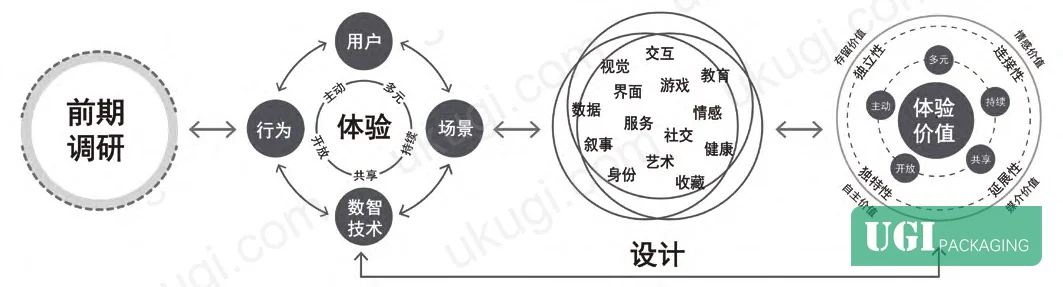
The four-element dynamic framework — User, Scene, Behavior, Digital-Intelligence Technology — is presented in the research as a design methodology. For procurement teams, it functions more usefully as a specification audit tool: a way to check whether your packaging brief has addressed all the dimensions that will drive production requirements.
User dimension: Has the brief defined not just the target demographic but the specific behaviors the packaging is intended to trigger? A pouch designed for social sharing has different structural requirements (photo-worthy format, durable surface finish, collectibility) than one designed for repeat purchase loyalty (NFC-triggered loyalty program activation). These are different specs.
Scene dimension: The research establishes that “scene” in experience-driven packaging is no longer the single retail shelf moment — it is a mixed field spanning physical retail, social media sharing, digital platform interaction, and repeat offline engagement. Each scene has surface and structural implications. A pouch that will be photographed and shared requires print quality and finish specifications calibrated for phone camera optics, not just in-store visibility at arm’s length.
Behavior dimension: The behavior model has expanded from “recognize–select–open–consume–discard” to “scan–customize–collect–share–re-engage.” The discard endpoint is no longer the design termination point. This has direct implications for custom labels and stickers and surface treatment durability specs — if the pouch is intended to be retained as a collectible, abrasion resistance and UV stability specifications must be elevated accordingly.
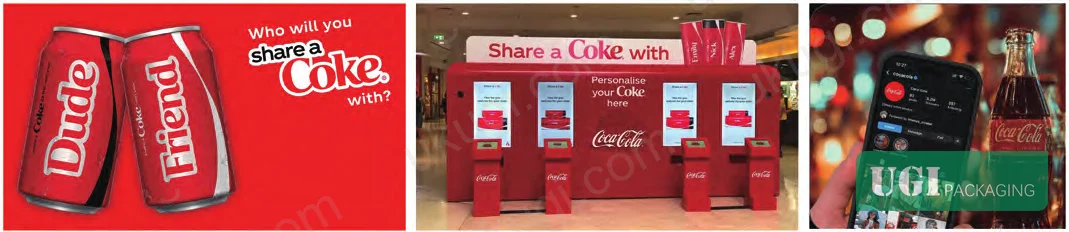
Technology dimension: This is where most flexible pouch specifications currently fail. Technology integration — whether QR, NFC, AR, or variable print — must be specified with the same rigor as barrier and seal properties. The “Coke Memory Maker” iteration of the Share a Coke program, for example, moved the package QR code from a promotional trigger to a permanent experience entry point, with each scan activating a personalized AI-generated content session. That functional permanence requires a QR code print specification with verified scan reliability across the full product shelf life, including post-condensation and post-handling conditions.
Most procurement teams don’t realize that the functional standards governing NFC and QR integration in packaging have been progressively tightened in recent specification cycles — what passed qualification three years ago may not meet current brand platform requirements for scan success rate and chip read distance. Re-verify your supplier’s NFC integration spec against current requirements.
The Coca-Cola Share a Coke program’s iterative evolution — from 150 localized names in the initial Australian launch, to user-customizable virtual bottles via social media API, to QR-triggered AI content generation — is documented as a multi-phase case study. The important procurement signal is that each phase required the print supply chain to support new technical capabilities: first, high-volume short-run personalization; then, web-to-print integration; then, permanent QR anchor printing with verified scan reliability. Suppliers who could support phase one could not always support phase three.
For buyers sourcing flexible pouches destined for brand-experience platforms, this means supplier qualification must include explicit production capability verification at each technology integration level — not just a general claim of “digital printing capability.”
Practical Guidance for Buyers #
The primary mistake I see in flexible pouch procurement briefs is treating digital integration as an add-on — something specified after the structural and barrier decisions are locked. That sequencing guarantees problems. NFC chip placement affects seal zone layout. AR trigger zone requirements affect laminate selection. Variable-data printing requirements affect ink system selection and surface treatment specification. All of these decisions interact, and they need to be resolved in the same conversation, at the same time.
If you’re sourcing flexible pouches for a brand that is actively deploying — or planning to deploy — any form of digital interaction (QR loyalty, NFC product authentication, AR experience trigger, generative AI personalization), bring those requirements into the initial RFQ. Don’t wait for the visual design to be finalized.
At Ukugi, we produce custom flexible pouches with full surface finishing capabilities including digital variable printing, NFC inlay integration, and AR-anchor-compatible surface treatments — working directly with overseas brand owners and packaging buyers across North America, Europe, and Southeast Asia. If your brief includes experience-layer requirements, we can assess feasibility and provide samples calibrated to your technology platform. For buyers evaluating cosmetics packaging solutions or food-grade flexible formats, the same experience-integration logic applies — the conversation about print surface capability belongs at the material selection stage, not after structural sign-off.
Need a custom formulation or sample? Request a quote from our team →
Technical Verification Questions #
Key technical points to verify when evaluating any supplier in this category (including us):
- Can you provide a production-run sample (minimum 500 units) of variable-data digital printing on your standard flexible substrate stack, with documented registration accuracy data showing variable-print zone tolerance relative to structural features (seal lines, die-cut edges, NFC placement zone)?
- For NFC-integrated flexible pouches, what is your verified NFC read distance (cm) on your standard high-barrier laminate (e.g., PET/AL/PE), and can you provide antenna geometry verification data pre- and post-heat sealing to confirm the sealing process does not degrade chip-read performance?
- What ink adhesion test result (cross-cut classification per ISO 2409) do you achieve for variable-data inkjet or electrophotographic printing on corona-treated OPP or PE substrates, specifically in the variable-data zone — and can you provide this data for post-distribution-simulation samples (ISTA 2A or equivalent)?
- For AR-triggered packaging, what gloss level specification (GU at 60°) do you maintain in the AR anchor zone across a production run, and what is your process control tolerance — given that gloss variation above ±5 GU in the trigger zone measurably degrades AR recognition accuracy in documented field testing?
- What is your maximum color variant or SKU count achievable per digital print run without requiring press recalibration, and at what unit volume does your per-unit cost for variable-data personalization reach parity with your standard fixed-design gravure run — given that the business case for AI-generated personalization typically requires a cost crossover below 2,000 units?
Quality Verification Checklist #
- ☐ Variable-data print zone shows ink adhesion classification ≥ 4B (cross-cut test, ISO 2409) on the specified flexible substrate after heat-seal processing
- ☐ NFC chip read distance verified at ≥ 2 cm on production laminate stack post-heat-sealing, with antenna geometry dimensional deviation < 0.5 mm
- ☐ AR trigger zone gloss uniformity confirmed within ±5 GU (60° measurement) across full production run batch, verified on minimum 30 samples per 10,000-unit lot
- ☐ QR code print registration tolerance ≤ ±0.3 mm relative to structural die-cut or seal-line datum, verified via digital scanning success rate ≥ 99% under standard retail lighting conditions (500 lux)
- ☐ Unique serial ID (variable print or NFC-encoded) verified for uniqueness against production manifest — zero duplicate IDs in production batch, confirmed by post-production audit scan
- ☐ Surface finish specification for collectibility-intent pouches includes UV stability test (xenon arc, ISO 4892-2, 200 hours minimum) with ΔE < 2.0 color shift in print zones
- ☐ Supplier has demonstrated combined digital variable print + NFC integration at production volume (≥ 500 units) with documented yield data showing < 2% chip-failure rate per production run
Key Specifications Table #
| Parameter | Recommended Value | Verification Method |
|---|---|---|
| Variable-data ink adhesion (flexible substrate) | ≥ 4B (ISO 2409 cross-cut classification) | Cross-cut adhesion test on production sample, post-heat-seal |
| NFC read distance on high-barrier laminate | ≥ 2 cm (post-sealing) | ISO/IEC 14443 proximity coupling test, antenna geometry measurement pre/post seal |
| AR trigger zone gloss uniformity | ±5 GU maximum variation at 60° | Gloss meter measurement, 30-sample minimum per production lot |
| QR code scan success rate | ≥ 99% under 500 lux retail lighting | Digital scan test, ANSI/AIM BC11 or ISO/IEC 15415 grading |
| Variable-print registration accuracy | ≤ ±0.3 mm relative to structural datum | Registration mark measurement, digital print inspection system |
| Surface UV stability (collectibility-intent) | ΔE < 2.0 after 200 hours xenon arc exposure | ISO 4892-2 weathering test, spectrophotometric ΔE measurement |
| NFC chip failure rate per production run | < 2% | Post-production batch audit scan, 100% functional test or statistical sampling per AQL 1.0 |
Looking for a manufacturer that meets these specs? Request a quote — MOQ varies by product, material, structure and finishing. Product-specific MOQ is confirmed with each quotation.
References #
Data source: Experience-Driven Packaging Design in the Digital-Intelligent Context: Pathways, Frameworks, and Educational Practice, H. Zhang et al., Journal of Applied Polymer Science, 2024
Frequently Asked Questions #
Q: Does every flexible pouch specification now need to include NFC or AR capability?
A: No — and this is worth being direct about. The research explicitly notes that not every package needs to be high-technology or social-media-enabled. Standard barrier and seal performance remains the primary specification requirement for most applications. The experience-integration layer is relevant when your brand strategy actively requires digital interaction, personalization, or social sharing as product outcomes. If it’s not in the brand brief, don’t spec it — over-engineering the print surface for unused digital capability adds cost without return.
Q: What is the minimum order quantity at which AI-generated variable label printing becomes economically viable on flexible pouches?
A: The crossover point depends on the complexity of the variable-data set and the substrate. Based on documented production cases including the Nutella 7-million-label program, digital variable printing at scale was cost-competitive with conventional fixed-design runs when unique variant counts exceeded design production costs for short-run offset or gravure. For most flexible pouch applications, the practical MOQ for variable-data digital printing on flexible substrates runs 500–2,000 units per variant group, but this needs to be confirmed against your specific substrate and finishing requirements with your supplier.
Q: Can NFC chips survive retort sterilization for food-grade flexible pouches?
A: Standard NFC chip inlays are not rated for retort temperatures (typically 121°C for 30–60 minutes). High-temperature NFC inlays with specialized encapsulation exist but add significant per-unit cost and require antenna geometry recalculation for high-barrier foil laminates. For retort-processed flexible pouches, QR code-based interaction is currently the more practical technology integration path — provided the QR print specification accounts for post-retort dimensional stability of the substrate.
Q: How does the “experience-driven” design shift affect the structural brief for flexible pouches?
A: It adds at least three new specification dimensions: (1) functional surface zone definition — identifying which areas of the pouch carry interactive triggers and what print/finish/dimensional specs those zones require; (2) durability requirements calibrated to intended use life beyond single-use consumption (relevant for collectible formats); (3) technology integration points that must be resolved before, not after, laminate and seal-zone layout is finalized. In practice, this means the digital marketing team and the packaging procurement team need to be in the same room when the brief is written.
Q: The Coca-Cola “Share a Coke” case is well-known — is it still a relevant benchmark for flexible pouch buyers?
A: More relevant than ever, specifically because of its documented iteration history. The program ran through at least four distinct technology phases over more than a decade: static name personalization → social media virtual customization → variable content database expansion → QR-triggered AI content generation. Each phase required different print supply chain capabilities. The lesson for flexible pouch buyers is not the specific campaign mechanic — it’s that brand platforms evolve, and packaging suppliers who can only support the current technology level will create friction when the platform upgrades. Qualify your supplier for where the brand is going, not just where it is now.
Published by ukugi.com Technical Team | Request a quote


