

Chocolate Drawer Boxes: Sleeve, Tray, Inserts and Quality Control
A chocolate drawer box combines an outer sleeve with a sliding tray and an insert or food-contact pack. Reliable performance depends on sleeve clearance, tray squareness, pull feature, cavity design, product contact, grease and odor conditions, loaded weight and the final distribution pack.
UGI Packaging manufactures drawer-style custom paper gift boxes in our factory through printing, board cutting, wrapping, forming, ribbon or tab assembly, custom insert production and QC.
Set sleeve clearance from the finished materials
The drawer should move smoothly without falling out or binding after wrap, lamination and finish are applied. Clearance must account for board thickness, wrap buildup, humidity exposure, tray squareness and loaded weight. A paper white sample may not predict a heavily wrapped production box unless the material stack is represented.

Pull ribbons, tabs and finger notches have different assembly and durability requirements. A decorative ribbon should not be treated as a carrying handle unless designed and tested for the loaded box.
- Finished internal and external dimensions
- Sleeve and tray board construction
- Drawer travel and stop condition
- Ribbon, tab or finger-notch access
- Chocolate count and loaded weight
- Insert material and cavity geometry
- Contact layer and grease conditions
- Orientation, interleaving and outer carton
Develop the insert and dieline together
Cavity spacing, edge clearance and finger access must fit both the chocolates and the tray. The insert must not bow the drawer or interfere with the sleeve. Our factory cuts, forms, molds, wraps and assembles paper, foam, plastic and other approved insert routes using our own equipment.
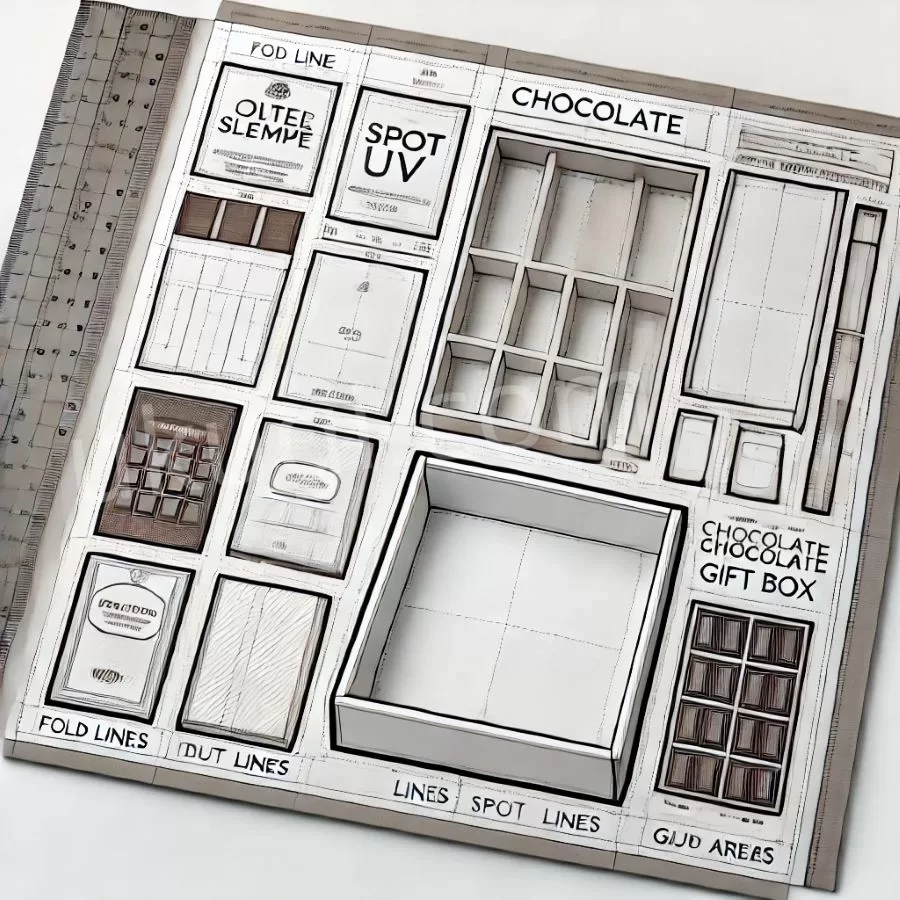
A controlled dieline should identify sleeve seam, tray walls, ribbon slots, insert position and artwork safe areas. Artwork near sleeve edges must allow for wrapping and alignment tolerances.
Control direct food contact and odor
Identify every cup, film, tray, coating, ink or adhesive that may contact unwrapped chocolate. The FDA food-contact substances page is a U.S. primary reference, but project evidence must match the exact material and intended use.
The rigid sleeve and tray are often secondary packaging. Even then, odor, grease migration and storage conditions should be checked with the finished product system.
Sample, production and QC
Approve loaded drawer movement, stop behavior, ribbon or tab strength, cavity fit, removal, odor, grease effects, print rub and surface scuffing. Production starts after the dieline, material stack, contact boundary, artwork, sample and packing are approved.
Our QC team checks sleeve and tray dimensions, squareness, sliding force, pull attachment, insert position, cavity count, printing, finish, cleanliness and packing.
Frequently asked questions
Why can a drawer bind after printing?
Wrap, lamination, finish buildup, humidity, tray squareness and loaded weight can reduce the approved clearance.
Can the pull ribbon carry the box?
Only when it is designed, reinforced and tested for that function; otherwise it is a drawer-opening feature.
What materials may directly contact chocolate?
Only project-approved components supported for the exact intended use and destination market.
What should a drawer-box sample confirm?
Confirm sliding force, stop behavior, insert fit, product removal, odor, grease effects, printing and packing.