

Custom Gift Box Inserts: Materials, Fit and Manufacturing
UGI Packaging manufactures custom inserts for foldable and rigid gift boxes using paperboard, EVA and other foams, molded plastic, fabric- or leather-wrapped structures and molded pulp. The insert must be engineered around the actual product, not selected only by appearance: weight, fragility, surface sensitivity, accessory count, removal force and shipping conditions determine the right material and cavity design.
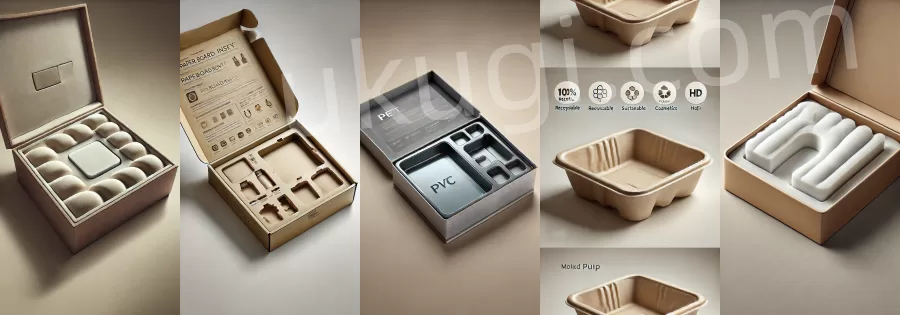
Compare insert materials by function
- Paperboard: efficient for folded platforms, partitions and lightweight products.
- EVA or other foam: suitable for precise cavities and cushioning when density and thickness are specified.
- Molded plastic: useful for repeatable formed cavities, visibility and clean product presentation.
- Wrapped inserts: combine a structural core with fabric, paper or leather-effect surfaces.
- Molded pulp: suitable where its texture, dimensional tolerance and project-specific performance are acceptable.
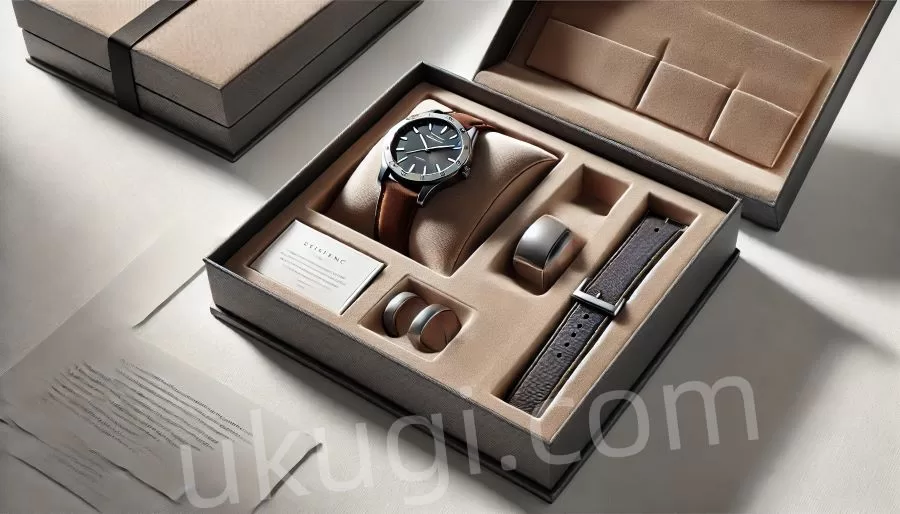
A fitted insert is part of the box structure
The insert must support the product without distorting the box, rubbing decorated surfaces or making removal difficult. For watches, jewelry, cosmetics and gift sets, we define separate cavities, finger notches, pull ribbons, accessory channels and lid clearance. This is especially important in a foldable gift box, where the collapsed structure, assembled wall and insert must work together.
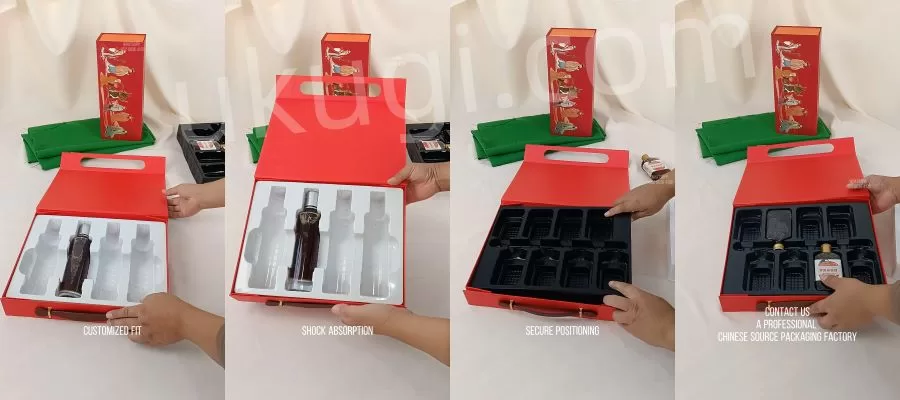
How our factory develops the insert
- Measure the product, accessories and required presentation orientation.
- Select the material, density, thickness and surface treatment.
- Create the cavity, support and finger-access geometry.
- Produce a prototype using die cutting, CNC cutting, molding, thermoforming, wrapping or assembly as required.
- Test fit, removal, movement, abrasion and interaction with the box.
- Release the approved construction to production and QC.
Our own cutting, forming, thermoforming, injection molding, leather processing, wrapping and assembly equipment lets us manufacture the relevant insert route in-house. The choice between a die-cut and molded insert depends on geometry, material, tooling and order requirements rather than a generic minimum quantity.
Quotation inputs and fixed costs
Send product samples or controlled drawings, weight, surface sensitivity, box structure, insert material preference, cavity count, branding, quantity and packing method. Fixed costs may include CAD development, cutting dies, CNC programming, forming or injection molds, wrapping tools and product fixtures. If the insert is part of a new custom paper gift box, quote both together so tolerances are assigned to one approved assembly.
Sampling and validation
A visual sample is not enough. We check product retention, finger access, insertion force, removal force, lid clearance, accessory separation, surface contact and movement after representative handling. Transit validation must use the finished product, box, insert and shipper; ISTA test procedures provide recognized options for defining packaged-product tests.
Production and QC
Production starts after the material, structure, approved sample, product orientation, artwork, quantity and packing method are released. Our QC checks material identity, thickness or density, cavity dimensions, cutting or forming accuracy, wrapped edges, adhesive marks, product fit, removal access and assembly inside the box.
Frequently asked questions
Which insert material is best for a gift box?
The best material depends on product weight, fragility, surface sensitivity, cavity geometry, presentation, quantity and required validation. Approve the exact material and fitted sample.
Does UGI Packaging manufacture inserts in-house?
Yes. Our factory uses paper converting, cutting, CNC, forming, thermoforming, injection molding, leather processing, wrapping, assembly and QC equipment for relevant insert structures.
Do you need the actual product to make an insert?
A controlled drawing may start development, but the actual product is strongly preferred for final fit, removal, abrasion and movement checks.
Can the insert be developed separately from the box?
It can, but developing both together reduces tolerance conflicts and lets the box depth, lid clearance and insert support be approved as one assembly.