
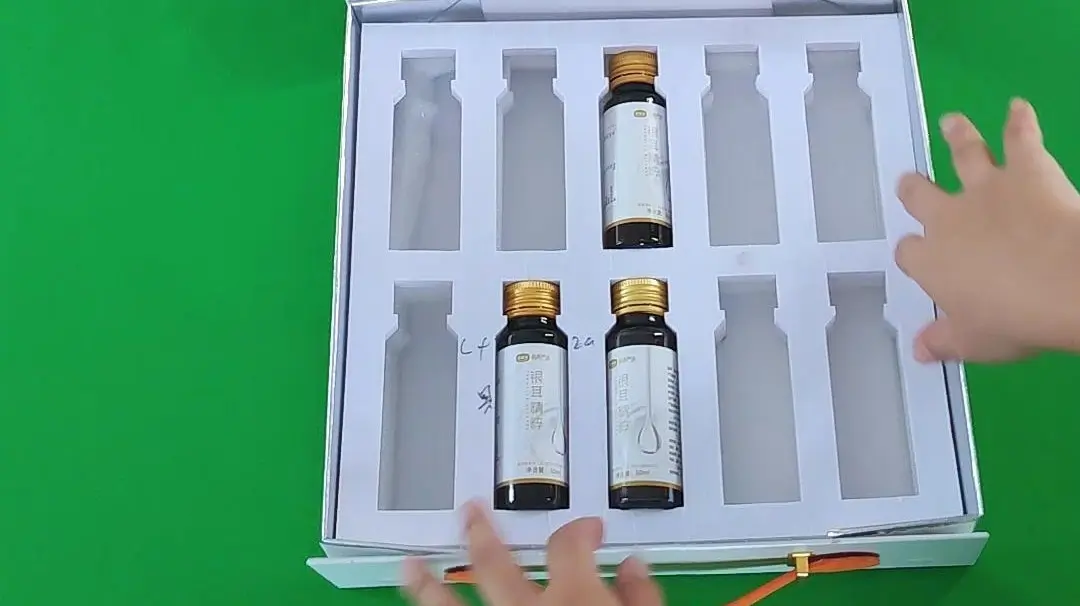

A folding gift box with an EVA insert can organize glass vials, but protection depends on the vial, closure, cavity, foam, box and shipping pack as one system. Buyers must define vial dimensions, filled weight, fragility, orientation, spacing, removal access, box assembly and distribution route.
UGI Packaging manufactures foldable boxes and custom gift-box inserts in our factory. We print, cut and wrap board, cut or machine foam, form or mold relevant components, assemble samples and complete QC. Our foldable gift-box design process defines the surrounding structure.
Start with the vial and failure modes
Provide body diameter, height, shoulder and closure dimensions, filled mass, glass type where relevant, label sensitivity and the weakest expected orientation. State whether the vial is sealed, whether leakage containment is required and how many vials share the box.
Fragility cannot be reduced to one universal foam density or cavity clearance. The insert must limit movement without applying damaging pressure to the glass, closure or label.
- Vial and closure dimensions
- Filled weight and quantity
- Orientation and spacing
- Fragility and label-sensitive areas
- EVA grade, thickness and cavity route
- Finger access and removal force
- Foldable-box assembly and closure
- Outer shipper and distribution route
Engineer the EVA cavity and box together
Cavity diameter, depth, edge distance and foam thickness affect retention and compression. A cut cavity differs from a molded or layered insert. Approve the exact material, color, odor, surface and processing route.
The insert must not push the foldable panels out of square or prevent the lid from closing. Our factory trials the loaded insert inside the assembled box before artwork and production release.
Validate the complete shipment
A presentation sample can confirm appearance and fit but cannot guarantee transport protection. Test the actual filled or representative vials, insert, foldable box, seals and outer carton for the intended route. ISTA test procedures offer packaged-product test options; the buyer must select the procedure and acceptance criteria.
Record breakage, leakage, label damage, cavity movement, box deformation and closure condition after testing. Any change to vial, foam, box or shipper requires change control.
Production and QC
Production starts after vial inputs, drawings, foam, box materials, artwork, loaded sample, test plan and packing are approved. Our QC team checks dimensions, cavity geometry, foam surface, vial fit, foldable-box assembly, closure, printing, cleanliness and packing.
Frequently asked questions
What EVA density is best for glass vials?
There is no universal value. Select and test the exact foam grade, thickness and cavity against the vial and distribution route.
Should the cavity grip the vial tightly?
It should control movement without damaging the glass, closure or label and must still allow safe removal.
Is the folding gift box itself a shipping carton?
Not automatically. The complete shipment may require an outer carton and additional protection.
What changes require retesting?
Changes to vial, fill weight, closure, foam, cavity, box, seals, shipper or route should trigger change review.