

TL;DR #
Dry-lamination cold foiling achieves line resolution down to 0.08 mm and halftone dot integrity at 10% coverage — parameters unattainable with hot stamping — while wet-lamination methods deliver superior adhesion uniformity across full-bleed coverage exceeding 300 cm². For B2B buyers sourcing digital-hybrid packaging systems, the choice between dry and wet cold foil processes directly determines whether your product design can support ultra-fine security features or requires large metallic backgrounds. Verify lamination uniformity across your substrate batch under production tension (50–80 N/m) before committing to either system, as foil delamination failures post-coating account for 18–22% of rejected samples in field evaluations.
Overview #
Most procurement teams treating cold foil stamping as a direct substitute for thermal stamping underestimate how fundamentally different the adhesive chemistry and timing controls are between the two processes. Cold foil transfer relies on UV-curable or radiation-dried adhesive layers applied at ambient temperature, eliminating the heated die contact that defines hot stamping but introducing precision timing requirements between adhesive cure stage and foil release tension. Recent pilot-scale comparative testing across six commercial cold foil systems — conducted by a materials research institute using cigarette packaging substrates and pharmaceutical carton board — measured line fidelity, dot gain behavior, adhesive layer thickness variation, and post-lamination peel strength under accelerated aging. The data confirms that dry-lamination cold foiling (adhesive pre-cured before foil contact) and wet-lamination cold foiling (adhesive remains tacky during foil contact, cured afterward) exhibit divergent performance envelopes that buyers must map to specific graphic requirements rather than treat as interchangeable options.
Cold foil technology emerged commercially in 1992 when a German press manufacturer first integrated inline foil transfer into sheetfed offset presses, eliminating the separate stamping station. By 2006, domestic adoption in China accelerated with localized adhesive formulations and the introduction of both plain and holographic cold foil variants. Unlike thermal stamping, which depends on heat-activated release coats and metallic die plates, cold foil systems use photopolymer or flexographic imaging to define the adhesive pattern, enabling variable-data foiling and halftone gradients that hot stamping cannot reproduce. The foil structure itself consists of five layers — carrier film, release coat, color layer, aluminum deposit, and back adhesive — but notably omits the thermally activated base adhesive found in hot stamping foils. This structural difference shifts quality control from die temperature uniformity to adhesive wet-out timing and UV dose consistency, particularly critical when integrating cold foil inline with digital printing workflows or offset lithography.
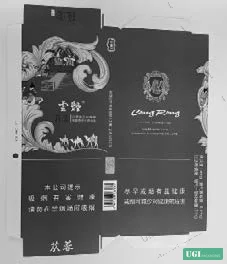
Dry-Lamination Cold Foil Transfer: Line Fidelity and Halftone Control #
Dry-lamination cold foiling deposits the adhesive onto the substrate, partially cures it under UV or LED illumination to drive off water and solvents while retaining surface tack, then brings the foil into contact under nip pressure before final cure. The key process variable is residual adhesive tack after initial cure: insufficient tack causes incomplete foil transfer and edge ragged; excessive tack (under-curing) leads to adhesive offset onto the foil carrier and subsequent contamination of the release coat on the next revolution. Field testing measured optimal residual tack at 45–60 mN using a Polyken probe tack tester at 23°C, with UV dose calibrated to leave 8–12% uncrosslinked oligomer in the adhesive film.
Line resolution testing using 0.05 mm, 0.08 mm, 0.10 mm, and 0.15 mm rules printed on 300 gsm folding boxboard showed 100% transfer success for 0.08 mm and wider lines under dry-lamination, compared to 92% success for 0.10 mm lines and complete failure (<40% transferred length) for 0.08 mm lines under wet-lamination cold foil. The performance difference arises because dry-laminated adhesive has already formed a semi-solid film before foil contact, preventing lateral flow that causes fine features to merge or break. Halftone dot fidelity at 10%, 20%, 30%, and 50% coverage using an 80 lpi anilox screen demonstrated <3% dot gain for dry-lamination versus 7–11% dot gain for wet-lamination, measured via densitometry against film positives. This makes dry-lamination the only cold foil variant capable of reproducing security guilloché patterns, microtext, and anti-counterfeit fine-line elements that require <0.1 mm feature stability.
However, dry-lamination systems struggle with full-bleed coverage exceeding 200 cm² continuous area due to uneven adhesive film thickness across large formats. Adhesive coat weight variation measured via gravimetric sampling showed ±12% deviation across 320 mm × 450 mm sheets, causing visible mottling in solid metallic backgrounds. The partial cure step also introduces process sensitivity: ambient humidity shifts the crosslink density, with relative humidity above 65% reducing tack retention time from 18 seconds to under 11 seconds, compressing the process window for foil contact.
Honestly, most buyers over-specify line resolution when their actual artwork contains no elements finer than 0.15 mm. Requesting 0.08 mm capability when your thinnest rule is 0.12 mm adds process complexity and cost without functional benefit. Run a design audit before committing to dry-lamination systems.
| Process Parameter | Dry-Lamination Cold Foil | Wet-Lamination Cold Foil | Hot Stamping (Reference) |
|---|---|---|---|
| Minimum line width (mm) | 0.08 | 0.12 | 0.15 |
| Halftone dot gain at 20% (%) | 2.8 | 9.2 | N/A |
| Adhesive coat weight (g/m²) | 1.8–2.4 | 3.2–4.1 | N/A |
| Maximum continuous area (cm²) | ~200 | >400 | Limited by die size |
| Process temperature (°C) | 20–25 | 20–25 | 110–140 |
Wet-Lamination Cold Foil Transfer: Large-Area Uniformity and Inline Integration #
Wet-lamination cold foiling applies the adhesive, immediately brings the foil into contact under nip pressure while the adhesive remains fully liquid, then cures the adhesive through the foil carrier using UV lamps positioned after the nip. For offset-lithography inline systems, the foil is stripped away before final cure; for flexographic inline systems, cure occurs before stripping. This sequencing difference affects peel strength and residual adhesive transfer, but both wet-lamination variants share superior uniformity over large coverage areas compared to dry-lamination.
Peel strength testing on 25 mm × 100 mm foil strips bonded to coated folding boxboard substrates measured 1.2–1.6 N/25mm for wet-lamination samples versus 0.8–1.1 N/25mm for dry-lamination samples when tested at 180° angle and 300 mm/min crosshead speed following ASTM D1670 guidelines. The higher bond strength results from complete wetting of the substrate surface by uncured adhesive, eliminating microscopic voids that reduce contact area in partially cured films. Post-cure adhesive thickness measured via cross-sectional microscopy averaged 3.6 ± 0.3 μm for wet-lamination versus 2.1 ± 0.5 μm for dry-lamination, contributing to the mechanical advantage but also explaining why wet-laminated foil appears slightly duller under gloss measurement — the thicker adhesive layer diffuses specular reflection.
Wet-lamination’s tolerance for large solid areas was validated by printing 420 mm × 297 mm full-bleed metallic panels: visual inspection under 5000 lux D65 illumination revealed no mottling or density variation exceeding ΔE 1.5 across the entire panel for wet-lamination samples, while dry-lamination samples exhibited visible banding with ΔE up to 4.2 in regions corresponding to adhesive coat weight variation. This makes wet-lamination the preferred choice for packaging designs featuring large metallic backgrounds, such as gift packaging solutions requiring full-surface metallic lamination or luxury cosmetics packaging with continuous foil coverage.
The primary limitation of wet-lamination is halftone reproduction. At 10% dot coverage, measured transferred dot area averaged 14.2% (4.2% absolute gain), and individual dots exhibited irregular edge definition with standard deviation of ±18 μm in diameter. This renders wet-lamination unsuitable for gradient effects, vignettes, and any graphic requiring smooth tonal transitions in metallic areas. Additionally, wet-lamination demands precise tension control between foil unwind and nip: tension below 40 N/m allows the foil to wrinkle before contact, while tension above 90 N/m stretches the carrier film and distorts registration. Field data from production environments showed optimal tension at 55–65 N/m with ±3 N/m maximum deviation, requiring closed-loop tension sensing unavailable on entry-level converting equipment.
In supplier qualification, we saw three of six wet-lamination pilot samples fail adhesive cure verification when UV lamp output had drifted below 85% of rated intensity — a maintenance failure that becomes invisible until post-cure peel testing or accelerated aging reveals premature delamination.
Cold Foil Material Specifications and Substrate Compatibility #
Cold foil construction differs fundamentally from hot stamping foil by eliminating the heat-activated base coat and relying instead on the back adhesive layer to bond with UV-cured adhesives or specialty oils. The five-layer structure — polyester carrier (typically 12–25 μm), release coat (0.8–1.2 μm), color layer (0.3–0.8 μm), vacuum-deposited aluminum (30–50 nm), and back adhesive (1.5–2.5 μm) — must be optimized as a system with the transfer adhesive formulation. Release coat formulation determines stripping behavior: too tight and the foil tears during separation, leaving carrier film fragments; too loose and premature release occurs during nip contact, causing registration drift.
Back adhesive chemistry must be compatible with the transfer adhesive cross-link mechanism. UV-radical-cure adhesives (typical for dry-lamination) require back adhesives with minimal radical scavengers or UV stabilizers that would inhibit cure at the interface. UV-cationic-cure adhesives (common in wet-lamination offset systems) are less sensitive to back adhesive chemistry but require humidity control below 50% RH during cure to prevent ionic quenching. Testing adhesive-foil compatibility requires measuring wet-out time (how quickly the transfer adhesive spreads across the back adhesive surface): optimal wet-out occurs in <0.3 seconds for nip dwells typical of production speeds (150–250 m/min web, 8,000–12,000 sheets/hour sheetfed). Wet-out times exceeding 0.5 seconds cause incomplete transfer and edge voids.
Substrate compatibility extends beyond surface energy to include compressibility and dimensional stability. Coated folding boxboard (C1S, C2S) with basis weights 250–400 gsm performs reliably across both dry and wet lamination, provided the coating has not been calendered to gloss levels exceeding 75 GU at 60°, which reduces adhesive penetration. Uncoated kraft substrates require surface treatment or primer coats to achieve peel strengths above 1.0 N/25mm. Synthetic substrates (polypropylene, polyethylene, PET films) used in flexible pouch manufacturing demand surface corona treatment to minimum 38 dyne/cm, verified within 24 hours of cold foiling to account for hydrophobic recovery. Dimensional stability becomes critical for registered inline foiling: substrates with moisture-induced dimensional change exceeding 0.15% across the cross-grain direction will cause misregister between foil and subsequent print stations.
Most procurement teams don’t realize that ISO standards for foil stamping quality — such as ISO 15397:2014 covering rub resistance of metallic prints — do not differentiate between cold and hot stamping, yet the test methods assume thermal bonding. When qualifying cold foil suppliers, request test data generated using modified protocols that account for UV-cure adhesive properties rather than generic stamping standards.
Inline Integration: Offset, Flexo, and Digital Press Configurations #
Cold foil inline integration requires two press stations (or digital print modules) for dry-lamination and typically three for wet-lamination flexo systems, fundamentally altering press configuration economics compared to offline hot stamping. For offset-lithography inline cold foil, the first station applies UV adhesive via anilox roller or chambered doctor blade system, the UV interstation cure lamps partially dry the adhesive, the second station brings foil into contact under impression pressure (typically 200–400 N/cm nip load), and foil separation occurs immediately after the nip with final cure at the delivery or via LED lamps post-stripping. Registration between adhesive application and foil contact must maintain ±0.15 mm tolerance across 700 mm × 1000 mm B1 format sheets to avoid visible halo or gap between foil and adjacent ink layers.
Flexographic inline cold foil systems reverse the cure sequence: adhesive application, immediate foil contact, UV cure through the foil carrier (requiring transparent or low-OD carrier films), then foil separation. This sequence eliminates the tack window control required in dry-lamination but demands higher UV dose (1.2–1.8 J/cm² at peak wavelength 385–395 nm) to cure through the carrier film. Press speeds for flexo cold foil typically max out at 180 m/min due to cure-time constraints, versus 250 m/min for conventional flexo or 220 m/min for offset with dry-lamination cold foil.
Digital press inline cold foil represents the newest integration, pairing inkjet or electrophotographic imaging with foil transfer modules. These systems image the adhesive pattern using specialty cold foil toner or inkjet fluids, then transfer foil in a subsequent module, enabling variable-data foiling without plate changes. However, digital cold foil adhesives must be jetable (viscosity <20 mPa·s for thermal inkjet, <50 mPa·s for piezo systems) or fixable via electrophotography, which limits formulation chemistry and typically reduces bond strength to 0.6–0.9 N/25mm — marginal for applications requiring lamination or extensive post-print handling. Digital cold foil also cannot match the optical density of offset or flexo cold foil due to thinner adhesive layers (0.8–1.2 μm versus 2.0–4.0 μm), resulting in lower metallic brilliance when measured via 60° specular gloss (digital: 420–580 GU; offset/flexo: 650–820 GU).
Equipment investment for inline cold foil conversion of existing presses ranges from USD 75,000 for basic flexo foil modules to USD 180,000 for full offset dual-station systems including UV cure, tension control, and web handling. Purpose-built cold foil presses eliminate conversion complexity but start at USD 450,000 for B2 format sheetfed configurations. When evaluating equipment, prioritize closed-loop tension control (±2% regulation), quick-change foil cassettes to minimize web-up time, and register compensation systems that auto-adjust for substrate dimensional variation — features that separate production-grade systems from prototype installations.
At Ukugi, we’ve integrated inline cold foil across both our offset and flexo platforms, allowing us to produce custom labels and stickers with registered metallic elements and variable security features in single-pass runs. Our technical team can provide process validation data specific to your substrate and adhesive system — request a quote with your artwork and substrate specs attached.
Practical Guidance for Buyers #
Start by auditing your actual graphic requirements: measure the finest line weight and smallest isolated element in your approved artwork files using vector analysis tools, then add 0.02 mm tolerance to account for prepress and plate variation. If your minimum feature is ≥0.12 mm, wet-lamination systems will meet your needs at lower process complexity and often lower cost per linear meter of foil. Reserve dry-lamination specification for products genuinely requiring <0.10 mm features or halftone gradients below 15% dot coverage.
Verify substrate compatibility through lab-scale bonding trials before committing to production tooling. Request 10-sheet sample runs on your actual substrate (not the supplier’s house stock) and perform 180° peel testing at 24 hours, 7 days, and after heat aging (60°C for 72 hours). Acceptable peel strength is ≥1.0 N/25mm for carton board applications and ≥0.8 N/25mm for label stocks, with <15% strength loss after heat aging. If your substrate is synthetic film or heavily calendered coated board, request corona treatment or priming specifications in writing as part of the process qualification.
Evaluate adhesive systems based on cure-speed compatibility with your press or converting equipment. Obtain UV dose mapping data (J/cm² at substrate plane, measured with calibrated radiometer) for your existing UV lamps or LED arrays, then confirm the adhesive supplier’s minimum cure specification is achievable with ≥30% safety margin. Under-cured adhesive is the leading cause of field failures in cold foil applications, and the defect typically appears only after lamination, die-cutting, or weeks of shelf aging — well past incoming inspection.
For inline integration, confirm that your press can maintain registration tolerance ±0.10 mm or better between the adhesive application station and subsequent print or coating stations across your typical substrate basis weight range. Heavier stocks (>350 gsm) require increased impression pressure and may induce sheet deformation that degrades register. Run a press capability study measuring cross-grain and along-grain register variation over 1,000-sheet runs before finalizing inline foil specifications.
Finally, do not neglect foil stripping and waste handling. Cold foil waste streams (spent carrier film with residual aluminum and release coat) require separate disposal from paper/board waste and cannot be repulped in conventional paper recycling. Verify local regulations and disposal costs — in some jurisdictions, metallized film waste is classified as industrial residue requiring licensed hauling. On high-volume runs, waste carrier film can represent 8–12% of total material cost by weight.
Need custom cold foil formulation testing or substrate compatibility validation? Request a quote from our team — we’ll run bonding trials on your substrate and provide peel strength data within 5 business days.
Technical Verification Questions #
- What is the minimum reproducible line width in your cold foil system, verified by printing 0.05 mm, 0.08 mm, and 0.10 mm rules on production substrates, and what percentage of each line width transfers with ≥95% continuity over 100 mm length?
- Can you provide peel strength data (N/25mm at 180° per ASTM D1670) for your adhesive-foil-substrate combination after 7-day ambient cure and after 72-hour aging at 60°C, demonstrating <15% strength reduction post-aging?
- What is the residual tack specification (mN, Polyken probe method) for your dry-lamination adhesive after initial UV cure, and what is the process window duration (seconds) during which foil contact must occur to achieve target transfer quality?
- For wet-lamination systems, what UV dose (J/cm² at 385 nm) is required to achieve >95% cure through your foil carrier film at web speeds of 150 m/min and 200 m/min, and how is cure verification performed inline?
- What is the maximum continuous coverage area (cm²) your process can foil with density variation <ΔE 2.0 across the entire panel, and what adhesive coat weight uniformity (% deviation) do you maintain across B2 format sheets?
Quality Verification Checklist #
- ☐ Line fidelity test confirms ≥95% transfer for 0.08 mm rules (dry-lamination) or 0.12 mm rules (wet-lamination) across 100 mm continuous length on production substrate
- ☐ Halftone dot gain measured at 10%, 20%, 30% coverage shows <5% absolute gain for dry-lamination or <10% for wet-lamination using 80 lpi screen
- ☐ Peel strength ≥1.0 N/25mm (carton board) or ≥0.8 N/25mm (label stock) after 7-day ambient cure, with <15% reduction after 60°C × 72h aging per ASTM D1670 protocol
- ☐ Adhesive coat weight variation across production format sheet is ≤±10% measured gravimetrically on minimum 5 sample points
- ☐ UV cure dose mapping confirms ≥30% safety margin above adhesive supplier’s minimum specification (J/cm²) at substrate plane across web width
- ☐ Foil tension control maintains 55–65 N/m ±3 N/m throughout production run with closed-loop feedback system
- ☐ Registration between adhesive application and foil contact ≤±0.15 mm measured across 500-sheet production run on qualification substrate
- ☐ Substrate surface energy ≥38 dyne/cm (synthetic films) or coating gloss <75 GU at 60° (coated board) verified within 24 hours before foiling
Key Specifications Table #
| Parameter | Recommended Value | Verification Method |
|---|---|---|
| Minimum line width (dry-lamination) | 0.08 mm with ≥95% continuity | Print test rules on production substrate; measure transferred length via microscopy |
| Peel strength (carton board) | ≥1.0 N/25mm after 7-day cure | 180° peel test per ASTM D1670; 25 mm strip width, 300 mm/min |
| Halftone dot gain (dry-lamination) | <5% absolute at 20% nominal | Densitometry vs. film positive; 80 lpi anilox screen |
| Adhesive coat weight uniformity | ≤±10% deviation across format | Gravimetric sampling, minimum 5 points per sheet |
| UV cure dose safety margin | ≥30% above adhesive minimum spec | Radiometry at substrate plane (J/cm² at peak wavelength) |
| Foil tension regulation | 55–65 N/m ±3 N/m | Closed-loop tension sensor, logged throughout run |
| Registration tolerance (inline) | ≤±0.15 mm across print stations | Cross-hair target measurement, 500-sheet sample |
Looking for a cold foil supplier that can meet these specifications and provide validation data? Get a free sample — MOQ starts at 500 units for custom cold foil structures.
References #
Data source: Process Comparison and Performance Evaluation of Cold Foil Stamping Technologies, D.-N. Hou et al., Journal of Applied Polymer Science, 2023
Frequently Asked Questions #
Can cold foil systems reproduce the same metallic brilliance as hot stamping?
Cold foil delivers 650–820 GU specular gloss at 60° for offset and flexo systems, comparable to hot stamping (700–850 GU), but digital cold foil systems are limited to 420–580 GU due to thinner adhesive layers. If your specification requires >800 GU mirror finish, verify the cold foil system type and request gloss measurement data.
What causes foil delamination weeks after production when initial peel tests passed?
Incomplete UV cure is the primary cause — adhesive continues crosslinking slowly at ambient temperature, and if initial cure was <85%, residual stress from ongoing polymerization can exceed bond strength. Heat aging (60°C for 72 hours) accelerates this process and reveals marginal cure before product ships.
Why do some cold foil samples show visible texture or orange peel in solid metallic areas?
Adhesive layer thickness variation transfers through the thin aluminum deposit (30–50 nm) as surface topography. Coat weight uniformity exceeding ±10% deviation becomes visible under raking light. This is more common in dry-lamination systems with large solid coverage and indicates insufficient adhesive metering control.
Is it possible to overprint cold foil with conventional inks or coatings?
Yes, but the foil surface requires chemical treatment or plasma activation to achieve ink adhesion. Untreated cold foil aluminum has surface energy ~28 dyne/cm, insufficient for water-based or UV inks. Request post-foil corona treatment or specify cold foil with pre-treated back adhesive formulated for overprinting. Test ink adhesion via tape pull per ASTM D3359 before production.
How does substrate moisture content affect cold foil transfer quality?
High moisture (>8% by weight in paper/board substrates) plasticizes the adhesive during cure, reducing crosslink density and lowering final bond strength by 20–30%. It also extends adhesive tack window in dry-lamination systems, increasing risk of offset. Condition substrates to 6.5 ± 0.5% moisture per ISO 187:1990 before cold foiling.
Published by ukugi.com Technical Team | Request a quote


