

TL;DR #
Citric acid-crosslinked regenerated cellulose film (CA15%-RC) stored peeled bananas for 23 days at room temperature without visible mold, outperforming commercial PVC wrap under identical conditions. For buyers sourcing sustainable food packaging, this means functional performance is now achievable in bio-based cellulose formats — but regulatory compliance differs significantly across the EU, US, South Korea, Japan, and China, and that gap will cost you if you spec the material without auditing jurisdiction-specific approval status. Qualify your target market’s regulatory requirements before committing to any regenerated cellulose substrate, and request migration test data alongside performance specs.
Overview #
The shift away from petroleum-based packaging films is no longer just a sustainability narrative — it’s being driven by procurement mandates and import regulations in the EU, North America, and Southeast Asia. Buyers who treat regenerated cellulose as a simple drop-in replacement for PP or PET are making an expensive assumption. The material class has genuine functional capabilities, but it also carries real performance trade-offs and a regulatory landscape that remains inconsistent across borders.
The technical findings consolidated here draw from laboratory evaluations conducted at a Beijing-based national product quality supervision and testing institution, in collaboration with a university chemistry faculty. The work examined multiple formulations — antibacterial, UV-blocking, oxygen-barrier, and moisture-barrier variants — using standardized film preparation and characterization methods across more than a dozen experimental configurations.
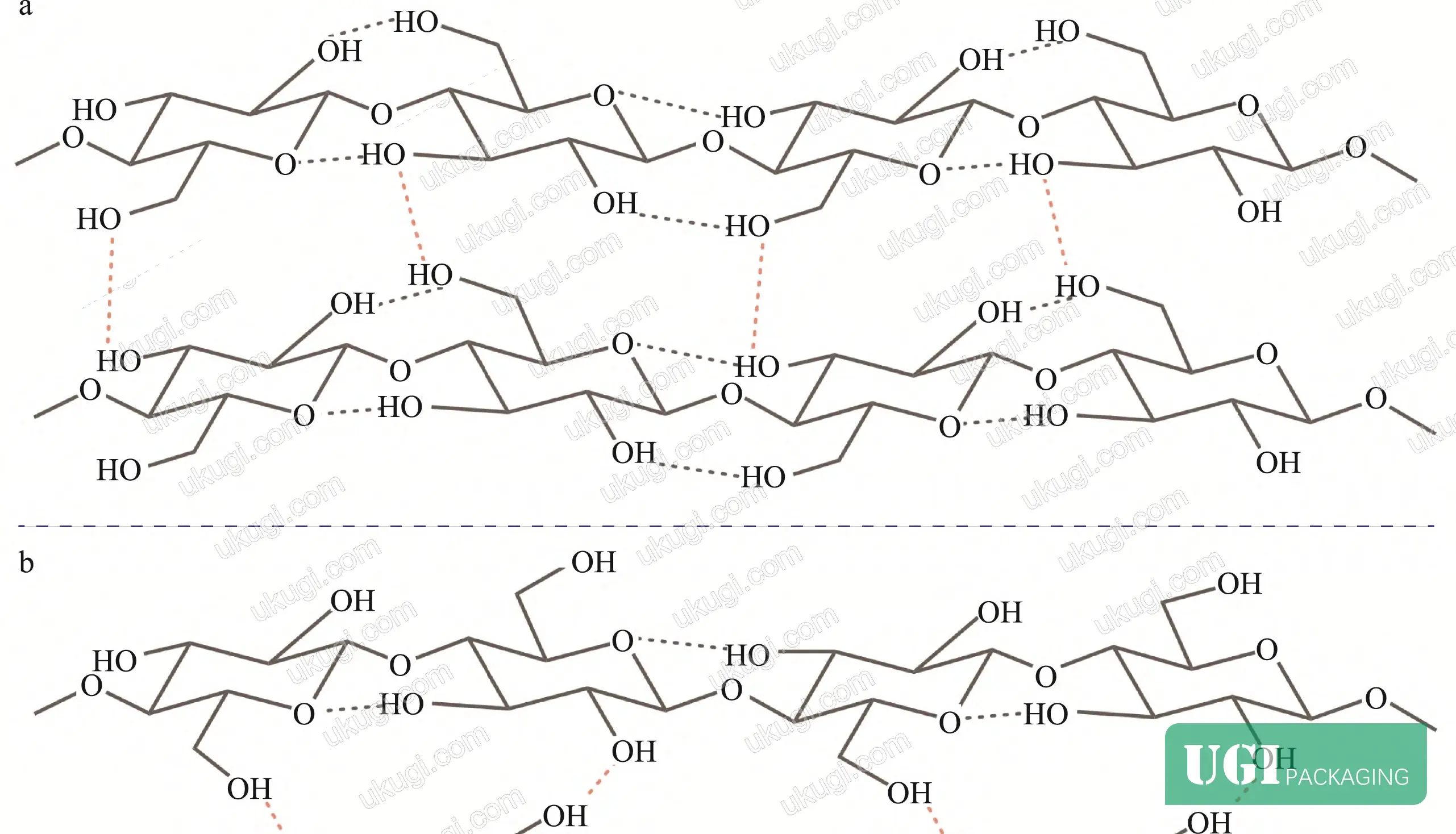
Regenerated cellulose is produced by dissolving natural cellulose (degree of polymerization ranging from 100 to 20,000 depending on source) and reprecipitating it using non-solvent reagents. The dissolution-regeneration process converts the crystal structure from Cellulose I (parallel chain) to Cellulose II (antiparallel chain), lowering crystallinity and introducing functional design flexibility that native cellulose cannot offer. Commercial forms include cellophane (viscose process), cuprammonium rayon, acetate cellulose, and mercerized cotton — with cellophane being the most directly applicable to food packaging due to its transparency, tensile strength, and flexibility.

Regenerated Cellulose Performance in Food Packaging Applications #
This is where the data gets interesting — and where generic supplier claims about “bio-based barrier films” start to fall apart.
Freshness and shelf-life extension
Comparative testing across four packaging substrates — PLA, regenerated cellulose, PET, and PP — at 4 °C cold-storage conditions showed that both biodegradable formats (PLA and regenerated cellulose) better preserved total solids, soluble solids, sugar content, and titratable acidity in fresh-cut tomatoes over extended storage periods. The regenerated cellulose performed comparably to PLA on nutritional retention, both outperforming the petroleum-based controls. In a separate experiment, citric-acid crosslinked regenerated cellulose film designated CA15%-RC maintained peeled banana condition for 23 days at room temperature and 4 °C, with some surface browning but no visible mold — whereas commercial PVC wrap showed clear mold growth under the same conditions.
Antibacterial functionality
Four aminosilane-modified regenerated cellulose films were evaluated: RC-12%APS, RC-12%APTES, RC-12%APDMS, and RC-12%TMSPED. The modification mechanism involves the formation of polycationic groups on the film surface, which disrupt bacterial cytoplasmic membrane interaction. Unmodified regenerated cellulose has no meaningful antibacterial activity; the silane coupling treatment is what delivers the functionality. A separate approach using tea polyphenols (TPs) incorporated into a transparent regenerated cellulose/TPs biocomposite film showed bactericidal action through phenolic hydroxyl group diffusion, creating a low-pH microenvironment that causes cell lysis. Both routes work; they serve different formulation strategies.
UV blocking
Tannin-cellulose films (TCFs) were evaluated across UVA, UVB, and UVC ranges. At a tannin mass fraction of 19.4%, the TCF film demonstrated high absorption across the full UV spectrum including UVA, UVB, and UVC — all three bands. Separately, graphene oxide (GO) incorporated at 2% loading into regenerated cellulose film achieved UVA blocking of 66.7% and UVB blocking of 54.2% under standardized measurement conditions. Regenerated cellulose-glycerol-PVA films (with glycerol as plasticizer) showed high absorbance across the 190–400 nm UV range, with absorbance decreasing as cellulose content increased.
Oxygen barrier
When organic montmorillonite (OMMT) was used as filler in a LiCl/DMAc solvent system, the oxygen permeability coefficient reached a minimum at 4% OMMT content: 1.391 × 10⁻¹⁷ cm³·cm/(cm²·s·Pa). This layered silicate morphology blocks gas ingress from multiple directions and adsorbs gas molecules — a physical rather than chemical mechanism. In a different formulation, zein (corn protein) at 20% mass fraction in NaOH/urea-derived regenerated cellulose film produced an oxygen transmission rate of (1.55 ± 0.01) cm³·µm/(m²·d·kPa) — the best result in that test series.
Water vapor barrier
Ten film variants were produced from three hardwood and two softwood pulps using two fabrication methods: dry process and hot-press. The hot-press method reduced apparent porosity, directly improving water vapor barrier performance. Pine-derived film performed best in the series, demonstrating effective prevention of cherry tomato weight loss and quality degradation over 16 days — performance described as comparable to commercial wraps. Lignin-cellulose composite films using hydrophobic lignin and ε-polylysine (ε-PL) showed further reduction in water vapor transmission rate due to strong intermolecular interactions between hydrophobic lignin and cellulose chains.
| Film Type | Key Functional Parameter | Performance Value |
|---|---|---|
| CA15%-RC (citric acid crosslinked) | Mold resistance at room temp | No visible mold at 23 days vs. PVC failure |
| RC + 4% OMMT (LiCl/DMAc system) | Oxygen permeability coefficient | 1.391 × 10⁻¹⁷ cm³·cm/(cm²·s·Pa) |
| Zein-RC (20% zein, NaOH/urea) | Oxygen transmission rate | (1.55 ± 0.01) cm³·µm/(m²·d·kPa) |
| TCF (19.4% tannin loading) | UV blocking | Full UVA/UVB/UVC absorption |
| GO-RC (2% graphene oxide) | UVA / UVB blocking rate | 66.7% / 54.2% |
| Pine-derived hot-press RC film | Moisture barrier duration | Effective over 16-day storage test |
| Regenerated cellulose vs. PLA/PET/PP | Cold-storage nutritional retention | Outperformed PET and PP at 4 °C |
Dissolution Systems and Manufacturing Trade-offs for Regenerated Cellulose Film #
Honestly, most buyers over-specify performance without asking the single most important question: how was this film dissolved, and what residual risk does that process carry for your food contact application?
The manufacturing route defines both the material’s properties and its regulatory compliance pathway. The viscose process (NaOH/CS₂) remains dominant globally, with China accounting for approximately 70% of world viscose fiber production — but it generates SO₂, H₂S, and other toxic by-products. It works at scale. It is cost-competitive. And it is increasingly scrutinized under environmental compliance requirements in the EU market.
| Dissolution System | Solvent Example | Key Advantage | Key Limitation |
|---|---|---|---|
| Alkali/urea system | NaOH/urea, LiOH/urea | Low cost, eco-friendly, high production efficiency | Low solubility and solution stability, weak dissolution capacity |
| NMMO system | N-Methylmorpholine-N-oxide | Simple process, low energy, low pollution | NMMO synthesis is demanding, easily oxidized, high production cost |
| Ionic liquid system | [Amim]Cl, [Bmim]Cl | High dissolving capacity, high efficiency | Solvent requires synthesis, poor recovery stability |
| Viscose (NaOH/CS₂) | NaOH/CS₂ | Mature process, low cost | Uses toxic CS₂, generates hazardous gases, long process chain |
| Cuprammonium chelate | Cu(OH)₂/NH₃ solution | Mature process, low cost | Oxygen-sensitive, difficult copper removal, weak dissolving power |
| LiCl/DMAc | LiCl/N,N-dimethylacetamide | High solubility and stability | High cost, requires activation, toxic and corrosive |
| Deep eutectic solvent | Choline chloride/urea | Eco-friendly, high stability, low cost | High viscosity, difficult transfer operations, limited toxicological data |
The NMMO (Lyocell) route is the current best practice for producing food-contact-grade regenerated cellulose with minimal chemical residue risk. Ionic liquid systems show promising performance but lack sufficient toxicological data for regulatory clearance in most jurisdictions.
For buyers evaluating film suppliers: ask specifically which dissolution system was used and whether the final film has been tested for residual solvent content under the target market’s food contact material (FCM) regulations.
Global Regulatory Landscape for Regenerated Cellulose Food Contact Materials #
Most procurement teams don’t realize that there is no harmonized international standard for regenerated cellulose as a food contact material — each major market operates its own framework, and the gaps between them are not trivial. Sourcing the same film for simultaneous distribution in the EU, US, and South Korea requires compliance verification against three separate regulatory instruments.
European Union
Regenerated cellulose film must comply with Directive 2007/42/EC (specific to regenerated cellulose film), plus general FCM regulations (EC) 1935/2004 and (EC) 2023/2006. The directive covers uncoated, cellulose-coated, and plastic-coated regenerated cellulose films. Key requirements: authorized substance lists, defined use conditions by film type, and a prohibition on printing on the side that contacts food (Article 5). A declaration of compliance and labeling are mandatory (Article 6). Germany has issued separate recommendations for artificial sausage casings (Recommendation XLIV), and Italy’s Decreto Ministeriale 21 marzo 1973 specifies colorants, printing, additives, and adhesives for cellulose film.
United States
Under 21 CFR, regenerated cellulose packaging is classified as an indirect food additive. The specific regulation is 21 CFR 177.1200 (Cellophane), which governs permissible raw materials, allowed additives, and their quantities. Substances must fall into one of four categories: GRAS, previously approved for cellophane use (with conditions), cleared under FFDCA Section 409, or listed in the 177.1200 positive list (subject to residue and addition limits).
South Korea
The Ministry of Food and Drug Safety (MFDS) “Standards and Specifications for Food Utensils, Containers and Packaging” governs FCMs. For regenerated cellulose: overall migration limit (OML) is 30 mg/kg; specific migration limit (SML) for arsenic (As) is 0.1 mg/kg; SML for lead (Pb) is 1 mg/kg. These are hard limits, not guideline values.
Japan
The Ministry of Health, Labour and Welfare (MHLW) amended the “Standards and Specifications for Food, Food Additives, etc.” to address PVC/PVDC-coated regenerated cellulose film used for moisture resistance. Requirements include maximum cadmium and lead content in plastic coatings, evaporation residue and KMnO₄ consumption in migration testing across different food simulants, and maximum content limits for specific plastic components.
China
China has no dedicated mandatory standard for regenerated cellulose. Compliance is assessed against the general FCM framework: GB 4806.1—2016 (General Safety Standard for Food Contact Materials and Articles), GB 31603—2015 (Good Manufacturing Practice for Food Contact Materials), and the GB 31604 test method series. The recommended standard GB/T 24695—2009 (Cellophane for Food Packaging) applies to transparent cellophane for food and pharmaceutical use, but it has been in effect for over 14 years without revision — a significant gap relative to current material capabilities and market demands.
In supplier qualification, we have seen non-compliance emerge at the documentation stage: three of six sample submissions from Asian film manufacturers evaluated against 2007/42/EC requirements lacked valid declarations of compliance, and two could not provide extraction test data for their coating additives. The EU declaration-of-compliance requirement is not optional and cannot be substituted with a general food safety certificate.
Practical Guidance for Buyers #
If you are specifying regenerated cellulose for food-adjacent packaging — inner wraps, flexible pouches, freshness films, or laminate substrates — you need to hold a harder line on two issues that most RFQ processes treat as afterthoughts.
First, functionality claims need quantified backing. “Antibacterial” and “UV-blocking” are not specifications. Ask for the specific additive system (aminosilane type, tannin loading %, graphene oxide %, OMMT content %), the test conditions, and the measured result. A film with 2% GO loading blocking 66.7% of UVA is a spec. “UV-resistant packaging” is marketing.
Second, the regulatory gap is real and costly. China’s GB/T 24695—2009 is outdated relative to current film technologies, while EU Directive 2007/42/EC requires explicit authorized substance compliance and a declaration of conformity. If your product ships into both markets, you need to confirm compliance against each framework separately — there is no mutual recognition for this material category.
For structural packaging applications that combine cellulose films with printing or surface finishing, barrier performance will interact with your ink and coating systems in ways that require separate validation. Our team at ukugi.com has worked through these qualification steps across multiple cellulose-based flexible packaging projects, from custom label substrates to specialty pouches with UV and oxygen barrier requirements. Need a custom formulation or sample? Request a quote from our team →
Technical Verification Questions #
- What dissolution system was used to produce your regenerated cellulose film (viscose/NaOH-CS₂, NMMO, ionic liquid, or alkali-urea), and can you provide residual solvent test data for each system — specifically confirming compliance with the target market’s FCM regulations?
- For films claiming oxygen barrier performance: what is the measured oxygen permeability coefficient or oxygen transmission rate, under what test conditions (temperature, RH, film thickness), and does your specification control OMMT filler content at the 4% loading level where minimum permeability was demonstrated (1.391 × 10⁻¹⁷ cm³·cm/(cm²·s·Pa))?
- For antibacterial films: which modification system is used — aminosilane coupling (APS, APTES, APDMS, or TMSPED at 12% loading), tea polyphenol incorporation, or other — and what is the documented antibacterial mechanism and test result against target organisms?
- For EU-market shipments: can you provide a Declaration of Compliance aligned with Directive 2007/42/EC, confirming that the printing side of the film does not contact food (Article 5) and that all coating additives appear on the authorized substance list?
- For South Korea-market shipments: what are your measured values for overall migration limit (OML, must be ≤30 mg/kg), arsenic specific migration limit (must be ≤0.1 mg/kg), and lead specific migration limit (must be ≤1 mg/kg) under MFDS test conditions?
Quality Verification Checklist #
- ☐ Oxygen permeability coefficient confirmed ≤1.391 × 10⁻¹⁷ cm³·cm/(cm²·s·Pa) for oxygen-barrier grade films (OMMT-loaded or zein-composite formulations)
- ☐ Oxygen transmission rate confirmed ≤(1.55 ± 0.01) cm³·µm/(m²·d·kPa) for NaOH/urea-zein composite films at 20% zein loading
- ☐ UV blocking performance documented with specific loadings: tannin 19.4% for full-spectrum UVA/UVB/UVC absorption, or GO at 2% for ≥66.7% UVA and ≥54.2% UVB blocking
- ☐ For EU market: Declaration of Compliance per Directive 2007/42/EC provided, with authorized substance list cross-check and Article 5 print-side restriction confirmed
- ☐ For South Korea market: migration test results on file showing OML ≤30 mg/kg, As SML ≤0.1 mg/kg, Pb SML ≤1 mg/kg per MFDS standards
- ☐ Dissolution system identified and residual solvent data provided; viscose-process films verified for SO₂/H₂S residue compliance
- ☐ Water vapor barrier validated by hot-press fabrication method confirmation and 16-day storage performance data (pine-derived or equivalent)
- ☐ Antibacterial functionality confirmed by named modification system (aminosilane type + % loading, or polyphenol type + %) with documented test conditions and result
Key Specifications Table #
| Parameter | Recommended Value | Verification Method |
|---|---|---|
| Oxygen permeability coefficient (OMMT composite) | ≤1.391 × 10⁻¹⁷ cm³·cm/(cm²·s·Pa) at 4% OMMT | Gas permeability test per GB/T 1038 or ASTM D3985; specify temperature and RH |
| Oxygen transmission rate (zein-RC composite) | ≤(1.55 ± 0.01) cm³·µm/(m²·d·kPa) at 20% zein | OTR measurement under controlled atmosphere; cross-check zein mass fraction |
| UV blocking — UVA/UVB (GO-RC at 2%) | ≥66.7% UVA; ≥54.2% UVB | UV-Vis spectrophotometry at 190–400 nm; confirm GO dispersion uniformity |
| Heavy metal migration — South Korea (Pb) | SML ≤1 mg/kg | Migration testing per MFDS Standards and Specifications; food simulant appropriate to application |
| Heavy metal migration — South Korea (As) | SML ≤0.1 mg/kg | Migration testing per MFDS Standards and Specifications |
| Overall migration limit (OML) — South Korea | ≤30 mg/kg | Total migration test per MFDS; confirm simulant and contact conditions |
| Shelf-life performance (CA15%-RC, room temp) | No visible mold at ≥23 days | Comparative storage test vs. commercial PVC wrap; visual and microbiological assessment |
Looking for a manufacturer that meets these specifications? Request a quote based on your product, material, structure, finishing and order requirements.
References #
Data source: Functional Performance and Regulatory Frameworks for Regenerated Cellulose-Based Food Contact Packaging Materials, N. Tang et al., Food Packaging and Shelf Life, 2024
Frequently Asked Questions #
Is regenerated cellulose actually compostable under standard industrial composting conditions, or does it require specific environments?
Regenerated cellulose is biologically degradable under appropriate microbial conditions and is generally classified as compostable, but the rate and completeness depend on the formulation. Films with inorganic fillers (OMMT, GO) or synthetic polymer additions (PVA, zein coatings) may require certified compostability testing — the base cellulose degrades, but additives may not meet industrial compost certification thresholds. Verify against your target certification standard (e.g., EN 13432 for EU markets) before claiming compostability on product packaging.
What is the most practical dissolution system for buyers who need to confirm food-contact safety of incoming cellulose film?
Ask for the dissolution route in writing. NMMO (Lyocell process) and alkali/urea systems carry lower residual chemical risk than viscose (CS₂-based) or LiCl/DMAc systems. LiCl/DMAc is high-performance but toxic — acceptable for industrial applications, but it needs documented extraction data for food contact use. If the supplier cannot identify the dissolution system, that is itself a qualification failure.
Does EU Directive 2007/42/EC apply to cellulose film that is only used as an outer wrap and never directly contacts food?
The directive applies specifically to food contact — materials intended to come into contact, or that do come into contact, with food. An outer wrap that has no food contact in the finished product may fall outside direct scope, but this needs legal confirmation based on the actual product configuration. Do not assume exemption without documented legal review, especially if the product ships to multiple EU member states that may have implemented additional national requirements.
Can regenerated cellulose film replace PET or PP in high-moisture food packaging without performance compromise?
Not without engineering modifications. Unmodified regenerated cellulose has inferior water vapor barrier performance compared to PP and PET. The hot-press fabrication method, lignin composite additions, and hydrophobic modification routes described in recent evaluations close the gap meaningfully, but the modified films should be tested against your specific packaging conditions — moisture load, storage temperature, and duration — before committing to production.
Which internal packaging formats at ukugi.com are available in bio-based cellulose substrates?
For flexible cellulose-based food packaging formats, our custom labels and stickers and cosmetics packaging solutions both accommodate bio-based substrate options with surface finishing — foil, UV coating, or embossing over cellulose film. For structural packaging in bio-based or compostable materials, the qualification process starts with an RFQ and material specification review. Film substrate selection, barrier coating, and regulatory compliance documentation are handled as part of the sampling process.
Published by ukugi.com Technical Team | Request a quote
Relevant standards referenced in this article:
Note to buyers: The three external regulatory references most directly applicable to cellulose food packaging compliance are: EU Directive 2007/42/EC (consult official EUR-Lex), US 21 CFR 177.1200 (consult FDA.gov), and South Korea MFDS Food Utensils Container and Packaging Standards — all accessible through their respective government regulatory portals.


