

Custom Paper Gift Bags: Materials, Handles, Printing and Production
UGI Packaging manufactures the packaging and printed components covered in this article in our own factory. For custom paper gift bags, we develop the specification and sample, operate the relevant printing, cutting, forming, finishing and assembly equipment, and inspect the approved result before packing. This connects each buyer decision to the way our factory actually produces and controls the job.
A custom paper gift bag is specified as a complete carrying system, not just a printed sheet. The useful starting point is the product size and weight, followed by the bag dimensions, paper, top construction, handle, reinforcement, printing, finish and packing method. UGI Packaging manufactures the bag and controls these variables from a printing and packaging factory perspective, while the final construction and commercial terms remain project-specific.
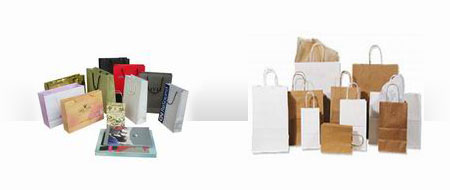
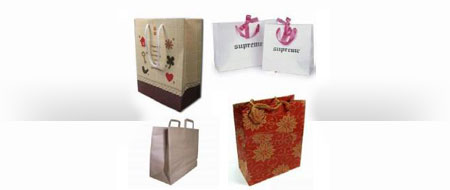
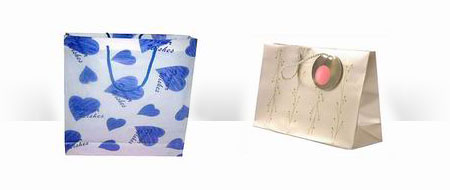
Define the bag around the product
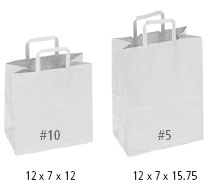
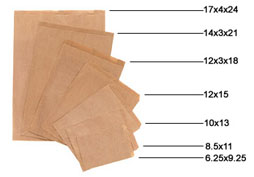
Measure the product or inner retail box and allow practical clearance for loading and removal. State the finished width, gusset and height in one agreed order, because changing the dimension convention can produce a bag with the wrong orientation. The expected carrying weight matters as much as size: it affects paper selection, base construction, handle patching and whether the top should be folded for additional reinforcement.
- Serrated or straight machine-cut top: efficient for many everyday retail applications, subject to the chosen bag-making route.
- Folded top: gives a cleaner edge and creates space for reinforcement or inside-top printing.
- Die-cut handle: integrates the grip into the bag face but requires sufficient top-area strength and comfortable clearance.
- Handle-free merchandise bag: useful for flat or lightweight goods when a separate carrying handle is unnecessary.
Choose paper for appearance, printing and load
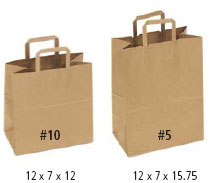
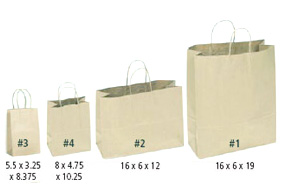
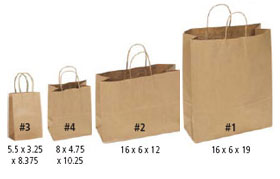
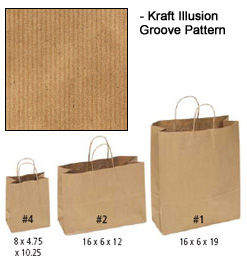
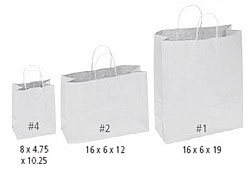
Brown kraft shows a natural fibre colour and absorbs ink differently from a coated white sheet. White kraft gives a cleaner print base while keeping an uncoated character. Coated paper is often selected when the artwork needs finer detail, stronger colour contrast or a laminated surface. A textured or tinted stock can create a distinctive result, but the base colour will influence transparent inks and colour matching. The broader paper bag material and construction guide explains these trade-offs in more detail.
Paper weight should not be chosen from a catalogue number alone. Bag dimensions, gusset depth, product weight, handle attachment and base reinforcement all affect performance. UGI Packaging can review a proposed structure, but load suitability should be confirmed through a representative sample and an agreed test method rather than a universal weight claim.
Match handles and reinforcement to use
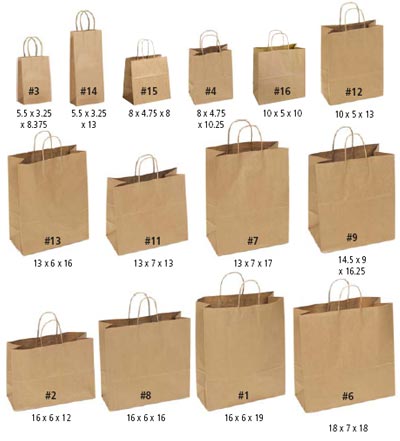
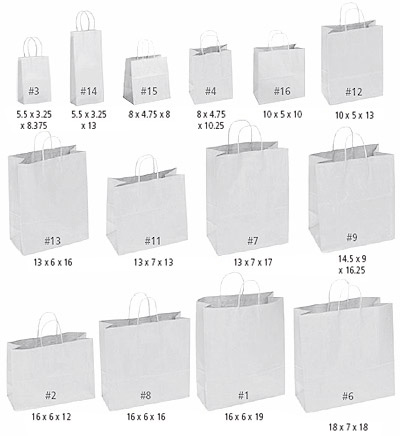
Twisted-paper and flat-paper handles keep the bag primarily paper based and work well for many retail uses. Rope, ribbon or textile handles can create a softer grip and a more presentation-led appearance, but they introduce separate colour, length, hole-position and knot or patch decisions. Die-cut handles avoid a separate cord, although the cutout concentrates stress in the top panel. In every case, confirm the exposed handle length, colour, attachment method and whether an internal patch or folded top is required.
A common failure is approving the handle visually without testing the loaded bag. Another is placing artwork too close to handle holes, top folds or gusset creases. The dieline should reserve these mechanical areas before the final artwork is released.
Control artwork, colour and surface finish
Artwork should be built on the production dieline with bleed, fold zones, gussets, base panels, handle holes and glue areas clearly marked. Confirm whether the design uses process colour, spot colour, inside printing or large solid areas. The appropriate proof depends on the risk: a PDF proof checks content and placement, a colour reference helps set expectations, and a physical sample can reveal how the design crosses folds and gussets. The packaging printing process guide compares proof and printing decisions.
Gloss or matte lamination can change colour appearance, stiffness and fold behaviour. Varnish may add rub protection or a different sheen, but its result depends on the paper and ink system. Foil or other decorative processes need artwork that respects registration limits and crease locations. Do not approve these finishes from an on-screen image alone when colour or tactile effect is commercially important.
Sampling, production release and quality control
A structural sample is useful for checking size, loading, top construction and handle comfort. A printed sample or production proof may be needed when colour, finish or artwork placement carries greater risk. Different sample routes reproduce different parts of the final process, so the approval record should state what the sample does and does not prove.
The production clock should start from the agreed release milestone: confirmed specifications, final artwork, approved proof or sample where required, order quantity, packing requirements and commercial approval. During production, checks can cover dimensions, paper and print identification, colour reference, handle position, patch adhesion, base bonding, fold quality, surface damage, count and export-carton marking. Acceptance criteria should be agreed before mass production instead of being invented after delivery.
Prepare a complete RFQ
Send UGI Packaging the finished size, product dimensions and weight, paper preference, top style, handle specification, reinforcement, artwork, colours, finishes, quantity, packing method, delivery destination and required approval route. If the bag will directly contact food, identify the exact use and market at the beginning. The U.S. FDA explains that food-contact substances are evaluated for their intended conditions of use; a general statement that a bag is made from paper is therefore not enough to establish suitability for every food-contact project.
How UGI Packaging produces this work
Our factory uses the printing, cutting, forming, finishing and assembly equipment required by the approved design. We develop the process specification and sample first, release the controlled production files, run the operations in the approved sequence, and inspect materials, registration, dimensions, surface condition, assembly and packing against the retained approval sample. Our engineers confirm project-specific materials, tooling and acceptance limits without shifting UGI Packaging’s manufacturing responsibility to an outside factory.
Frequently asked questions
What information is needed to quote custom paper gift bags?
Provide the finished bag size, product weight, paper preference, handle type, print coverage, finishes, order quantity, packing method and delivery destination. Photos or a physical reference can clarify proportions, but production specifications still need written confirmation.
Should I choose kraft paper or coated paper for a gift bag?
Choose kraft when a natural surface and visible paper character suit the brand. Choose coated paper when sharper graphics, brighter colour or lamination is important. The final choice should also account for bag size, carrying load, folds and handle reinforcement.
When does production of a custom paper bag start?
Production should start only after the commercial specification, artwork, colour reference, structural sample or approved proof, quantity and other order terms have been confirmed. A design conversation or quotation alone is not a production release.
Can a paper gift bag be used for food products?
It may be suitable for carrying separately wrapped food, but direct-food-contact use requires project-specific review of the paper, inks, coatings, adhesives and intended conditions. UGI Packaging does not treat a general paper description as a finished-package compliance guarantee.