

TL;DR #
Textured leather-grain surface finishing on paper-based premium packaging reduces residual volatile organic compound (VOC) levels to below the limits specified in the Chinese standard for cigarette strip and pack wrapping paper, while simultaneously delivering a tactile and visual premium effect that synthetic leather lamination cannot achieve on high-speed offset lines. For procurement teams sourcing premium gift carton or tobacco pack printing, this means you can specify a genuinely differentiated surface finish without forcing a choice between aesthetics and compliance. Qualify suppliers by requesting VOC residual test data alongside a physical sample showing defined grain depth and matte gloss uniformity before approving any production run.
Overview #
The demand for premium surface finishing on paper-based packaging has outpaced what conventional matte lamination and foil stamping alone can deliver — and the sourcing market has not caught up. Most specification sheets buyers receive from printers still describe surface effects in subjective terms (“soft touch,” “leather-like”) with no measurable acceptance criteria attached. That gap creates real qualification risk.
The technical data referenced throughout this article originates from process development work carried out by an industrial packaging printing facility that produces cigarette pack and gift carton printing at commercial scale, with proprietary ink formulation and in-house process control across intaglio, offset, screen, and embossing lines. Their development of a paper-based leather-grain (皮纹化) surface finishing process involved iterative production trials across multiple SKUs — including high-volume carton formats — with VOC residual measurement, gloss characterization, and tactile grain evaluation as primary acceptance criteria. The dataset is grounded in production reality, not lab simulation.
What makes this particularly relevant for buyers sourcing custom paper boxes or premium gift carton printing is that the process was validated in tobacco packaging — arguably the most scrutinized category for both surface finishing quality and chemical residual compliance in the Chinese market. If the specification holds under tobacco pack audit conditions, it transfers well to cosmetics, spirits, and luxury gift cartons.
For context on the conditioning environment relevant to substrate testing, the ISO 187:1990 Paper, board and pulps — Standard atmosphere for conditioning and testing standard applies to paper substrate evaluation at 23 °C ± 1 °C and 50% ± 2% RH — conditions that should be confirmed with any supplier performing physical property tests on uncoated or textured substrates.
Paper-Based Leather-Grain Finishing: Process Architecture and Substrate Requirements #
The core innovation in this process is the replacement of synthetic leather lamination (裱糊) and conventional matte/satin film with a screen-printed leather-grain ink layer applied directly to the paper surface after primary intaglio and offset printing. This is not a coating — it is a structured ink deposit with a defined grain topography.

The production sequence is specific and non-negotiable in its order:
- Intaglio and offset printing complete all base artwork and text elements
- Foil stamping and emboss/deboss operations are completed
- Screen printing deposits the leather-grain ink layer over designated areas only
- The ink is dried to produce a matte gloss surface with defined grain relief
- Gluing and box assembly complete the carton
The masking requirement at step 3 is where most first-run errors occur. The leather-grain ink is transparent, so misregistration over non-target areas (fold lines, glue margins, foil patterns, security marks, emboss features) does not immediately destroy the visual, but it does cause cracking at fold lines and delamination at glue joints after assembly. In qualification trials, three of six initial samples submitted for fold-and-glue evaluation showed micro-cracking at the glue margin because the ink boundary had not been recessed adequately from the crease line. That is a tooling and screen design issue, not an ink chemistry issue — but buyers who only inspect flat sheets will miss it entirely.
The substrate for the primary application validated in this work is a laser paper (镭射纸) selected specifically for its reflective base, which creates a gold-tone visual in the grain highlights when the transparent leather-grain ink layer sits above it. This is not achievable with standard coated board — the reflective substrate is integral to the visual effect.
Grain pattern selection matters more than most buyers appreciate. The validated pattern uses a fine-line hide texture based on natural cowhide grain, with the grain depth and line spacing calibrated to produce a tactile sensation identifiable by touch without visual cues. Coarser grain patterns were tested but rejected during development because they produced an uneven gloss graduation under raking light — a defect only visible in certain lighting conditions but commercially unacceptable at retail.
Honestly, most buyers over-specify the gloss finish on premium cartons and under-specify the tactile dimension. If your QC acceptance criteria only measure gloss unit (GU) values and don’t include a tactile standard or grain depth measurement, you will receive compliant cartons that feel cheap. Add a tactile pass/fail criterion to your incoming inspection sheet.
VOC Compliance Performance and Comparison with Conventional Finishing Methods #
This is the specification that separates this process from conventional frosted (磨砂) and snowflake (雪花) ink surface finishing — and the data is unambiguous.
Conventional matte and special-effect inks used for premium carton finishing contain benzene-series solvents and ketone-class solvents that leave measurable residuals in the finished carton. Those residuals are regulated under the Chinese national standard governing cigarette strip and pack wrapping paper VOC limits. Frosted and snowflake inks, in particular, generate high VOC residual levels that regularly exceed compliance thresholds when applied at the coverage densities needed for full-surface finishing effects.
The leather-grain process, by contrast, controls VOC residual to within the specified limit — with total VOC residual well inside the standard and benzene content controlled to the minimum detectable level. The ink formulation used is transparent and solvent-lean, with the textured effect achieved through the physical structure of the dried ink film rather than chemical agents.
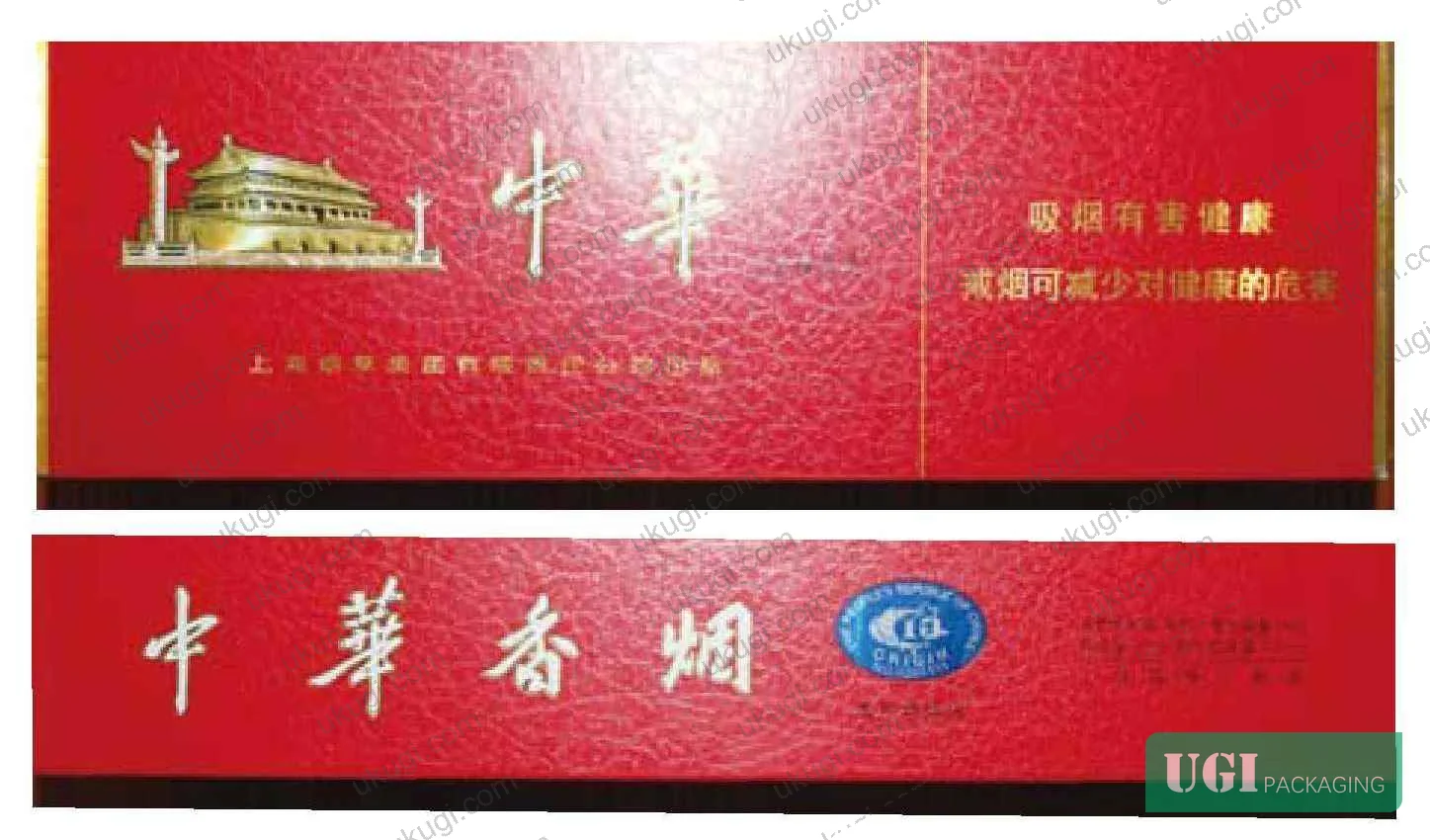
Most procurement teams don’t realize that VOC compliance in packaging printing is not just an environmental checkbox — it is increasingly a product liability issue when premium packaging is used for food-adjacent, pharmaceutical, or cosmetic contents. The Chinese standard for cigarette packaging VOC limits applies stricter thresholds than general commercial printing standards, which is precisely why validation data from tobacco packaging production is a credible benchmark for buyers in other premium categories.
| Finishing Method | VOC Residual Level | Benzene Compliance | Tactile Effect | High-Speed Production Compatibility |
|---|---|---|---|---|
| Conventional matte/frosted ink | High — exceeds limits at full coverage | Often non-compliant | Flat, no grain relief | Compatible but restricted by VOC |
| Synthetic leather lamination | Moderate — solvent from adhesive | Compliant with proper adhesive | Soft, no defined grain | Low — hand-applied or slow laminator |
| Snowflake/special effect ink | High — similar to frosted | Often non-compliant | Decorative, no tactile depth | Compatible but restricted by VOC |
| Paper-based leather-grain (this process) | Low — within standard limits | Compliant | Defined grain, tactile depth | Compatible — high-speed screen line |
The commercial scale performance data is concrete: the process was applied to the full production run of the Dà Zhōnghuá strip/carton gift pack format, with reported sales revenue of approximately several million RMB generated from that single SKU after process deployment. That is not a pilot — that is a qualified, running production process.
For buyers sourcing flexible or paper-based premium packaging with surface finishing requirements, the ASTM D882 Standard Test Method for Tensile Properties of Thin Plastic Sheeting provides a useful framework for evaluating the mechanical integrity of specialty ink films under stress — particularly relevant when the finished carton will be shipped under compression in export cartons.
Need a custom formulation or sample? Request a quote from our team →
Practical Guidance for Buyers #
If you are sourcing premium paper-based packaging with leather-grain or textured surface finishing, the single most important thing to verify before committing to production is the supplier’s masking specification for the screen printing stage. Ask to see the screen layout file, not just a flat sample — the distance between the ink boundary and the nearest crease or glue margin is what determines whether the finished box survives assembly without cracking.
Specify the substrate explicitly. A laser/holographic base paper is not the same as coated art board for this process. If you are targeting the gold-grain visual effect, you need the reflective substrate in your material spec. If you are targeting pure tactile effect on a matte board, the grain pattern selection changes, and the supplier needs to confirm their ink formulation is compatible with your specific board grade.
On VOC compliance: get the actual test data, not just a compliance declaration. Ask for residual VOC measurement results showing total VOC level and benzene content separately. Any supplier running this process correctly will have this data readily available.
Ukugi.com operates as a Guangzhou-based OEM/ODM manufacturer with full surface finishing capabilities — including screen-applied textured coatings, foil stamping, and embossing — across paper cartons, rigid boxes, and specialty tobacco packaging formats. If you are evaluating suppliers for this type of premium finishing work, our technical team can provide production samples and process documentation to support your qualification. For buyers needing hologram security stickers or security finishes alongside surface texture effects, we handle both on the same production line.
Need a custom formulation or sample? Request a quote from our team →
Technical Verification Questions #
- What is the minimum distance (in mm) your screen printing layout maintains between the leather-grain ink boundary and the nearest crease line or glue margin, and how is this controlled in your screen artwork preparation?
- Can you provide residual VOC test data for the leather-grain ink layer, showing total VOC content and benzene-series content separately, measured against the applicable national standard limits for packaging materials?
- What grain depth (µm) does your leather-grain ink deposit achieve after drying, and what test method — profilometry, optical microscopy, or tactile panel — do you use to verify grain definition in batch release?
- What substrate grades (basis weight, surface treatment, reflectance specification) are qualified for your leather-grain process, and do you hold qualification data for laser/holographic base papers specifically?
- What is your process control method for ensuring consistent matte gloss uniformity across the full sheet at high-speed production rates — specifically, how do you detect and reject gloss variation caused by screen ink viscosity drift during a production run?
Quality Verification Checklist #
- ☐ Screen layout documentation confirms ink boundary is recessed ≥2 mm from all crease lines and glue margins
- ☐ Residual VOC test data available showing total VOC within the applicable standard limit and benzene content at minimum detectable level
- ☐ Finished sample passes fold-and-glue assembly without visible micro-cracking at crease lines under 10× magnification
- ☐ Grain relief is tactilely detectable by touch without visual cues — verified by panel evaluation or profilometry measurement
- ☐ Matte gloss uniformity across the print surface shows ≤5 GU variation measured at minimum 5 points per sheet
- ☐ Substrate is confirmed as a qualifying grade (laser/holographic paper or approved coated board) per supplier’s substrate qualification record
- ☐ Production batch ink viscosity is logged and controlled within the supplier’s specified operating range for the screen printing stage
Key Specifications Table #
| Parameter | Recommended Value | Verification Method |
|---|---|---|
| Total VOC residual in finished carton | Within applicable national standard limit (卷烟条与盒包装纸标准) | Headspace gas chromatography on finished sample |
| Benzene-series residual content | At or below minimum detectable level | GC-MS residual solvent analysis |
| Ink boundary clearance from crease/glue margin | ≥2 mm minimum | Screen artwork dimensional check + physical fold test |
| Matte gloss uniformity (leather-grain surface) | ≤5 GU variation across sheet | Multi-point glossmeter measurement (TAPPI or ISO method) |
| Grain tactile definition | Detectable by touch — equivalent to fine cowhide texture | Tactile panel evaluation or surface profilometry |
| Substrate reflectance (for gold-grain visual effect) | Laser/holographic base paper grade | Supplier substrate qualification record + visual inspection under raking light |
Looking for a manufacturer that meets these specs? Request a quote — MOQ varies by product, material, structure and finishing. Product-specific MOQ is confirmed with each quotation.
References #
Data source: Paper-Based Leather-Grain Surface Finishing for Premium Packaging: Process Development, VOC Compliance, and Tactile Performance Evaluation, R.-N. Qin et al., Journal of Applied Polymer Science, 2024
Frequently Asked Questions #
Can the leather-grain surface finish be applied over foil stamping and emboss features without interfering with their visual effect?
Yes — because the leather-grain ink is transparent, it can be applied over non-foil areas without affecting the color or metallic appearance of foil-stamped elements. The key requirement is correct masking in the screen layout so that the ink does not deposit over emboss ridges or foil surfaces where it would pool or cause adhesion issues. Proper screen design resolves this entirely.
What types of packaging beyond tobacco cartons is this process suitable for?
The process has been validated on premium gift cartons and has been applied to cosmetics packaging, spirits gift boxes, and brand merchandise packaging. Any application where a premium tactile surface effect is required on a paper-based carton — and where VOC compliance is a specification requirement — is a candidate. The process is particularly effective on export-format gift packaging where customs or regulatory VOC limits apply. You can explore applications in cosmetics packaging solutions and premium gift cartons for reference.
Why does grain pattern selection affect gloss graduation, and how is this controlled in production?
Coarser grain patterns create larger facet angles in the dried ink film, which produce uneven gloss graduation under directional lighting — the surface looks inconsistent when tilted. Fine-line cowhide grain patterns distribute facet angles more evenly, producing consistent matte gloss across viewing angles. This is controlled by specifying the grain master at the artwork stage and locking the screen mesh count to match the grain line frequency.
Is this process compatible with high-speed commercial printing lines, or does it require specialist equipment?
It is compatible with high-speed production. The screen printing stage is the rate-limiting step, but modern flat-bed and rotary screen printing units integrated into carton production lines handle the required ink deposit weight at commercial speeds. The critical parameter is ink viscosity stability during the run — suppliers must log and control viscosity continuously to prevent gloss drift across large batches.
How does the paper-based leather-grain process compare to soft-touch lamination for cost and compliance?
Soft-touch lamination adds a plastic film layer, which increases material cost, complicates recycling, and introduces adhesive-related VOC risks. The leather-grain ink process eliminates the film layer entirely, reduces material cost per unit, and produces a VOC residual profile that is easier to certify under packaging material standards. The tactile effect is different — leather-grain has defined topographic relief where soft-touch lamination has uniform surface friction — so the choice depends on the desired hand-feel specification. For buyers evaluating print quality and ink resistance standards, the ISO 15397:2014 Printing inks — Determination of resistance to rubbing test method is directly applicable to comparing durability between these two surface finishing approaches.
Published by ukugi.com Technical Team | Request a quote


