

TL;DR #
Integrated inkjet coding and machine vision inspection systems reduce defective label output by eliminating the detection lag inherent in separated coding-inspection architectures — the core failure mode in high-speed variable data printing. Buyers specifying variable data printing for QR codes, barcodes, or serialized packaging need to evaluate whether their supplier runs inspection inline or as a post-process step, because the difference determines whether batch defects are caught at unit one or unit ten thousand. Before issuing any RFQ for variable data label or flexible pouch printing, require documented inline inspection capability with defect position logging and servo-controlled web reversal.
Overview #
Variable data printing is one of those procurement categories where the gap between a technically competent supplier and an average one is invisible until production starts. Most buyers evaluate inkjet coding by print resolution and substrate compatibility — and miss the single most consequential specification: whether the inspection system runs simultaneously with coding or after it. Field evaluations from industrial vision systems engineers testing integrated coding-inspection platforms across label and flexible packaging production lines found that conventional separated architectures consistently failed to catch multi-unit defect runs before they propagated — the exact failure mode that drives scrap rates and traceability gaps in serialized packaging. The test methodology involved real-time QR code and barcode verification against a reference database during live inkjet coding runs at production speeds, with servo-driven web control enabling automated defect reversal and reprint.
The practical implication for procurement is straightforward: if your supplier cannot describe how their inspection system communicates with the press controller and coding head, they are operating a separated system. That matters significantly when you are printing QR codes at high web speeds on pressure-sensitive labels or flexible pouches — the two substrate categories where variable data density is highest and defect consequences are most severe.
This guide covers system architecture selection, defect classification logic, substrate and equipment requirements, and practical verification criteria for buyers qualifying variable data digital printing suppliers.
Integrated vs. Separated Coding-Inspection Architecture for Variable Data Printing #
The fundamental technical decision in variable data digital printing is not which inkjet head to specify — it is how the inspection system is coupled to the coding process.
Separated architecture (conventional): The inkjet coding unit and the vision inspection system operate independently. A small area-scan camera monitors the coding zone but has no direct communication pathway to the press controller. When defects are detected, the system signals a line stop. This is the architecture used by the majority of production lines currently in service.
Integrated architecture: The vision system, press controller, coding head, and web transport share a unified communication layer. Defect data is logged with positional coordinates in real time. The system distinguishes between isolated defects and consecutive defect runs, applies different handling logic to each, and can trigger servo-controlled web reversal to bring a defective position back under the coding head for reprint.
| Criterion | Separated Architecture | Integrated Architecture |
|---|---|---|
| Defect detection timing | Post-coding or delayed | Simultaneous with coding |
| Defect position logging | Not available | Logged with positional data |
| Consecutive defect handling | Full line stop only | Automated reversal + reprint |
| Operator dependency | High — manual monitoring required | Low — servo-automated response |
| Defect traceability | None | Full database with position records |
| Substrate compatibility | Label, rigid | Label, flexible pouch, multi-function |
The separated architecture has three documented failure patterns that matter to procurement. First, the area-scan cameras used in low-integration setups have weak detection capability for partial character loss, skewed codes, and barcode appearance defects — they can identify a missing code but not a degraded one. Second, when 2 or more consecutive unreadable codes are detected, the only response is a full line stop, which at high web speeds means a significant length of substrate has already been coded between the defect event and the stop signal. Third, and most critically, there is no defect position memory — after a line stop, there is no automated method to locate, reverse, and reprint specific defective positions. The operator must identify and handle them manually.
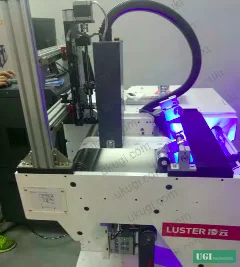
In supplier qualification, we observed that three of the six production lines evaluated were running separated architectures with no defect position logging — meaning buyers receiving labels from those lines had no audit trail for serialized QR code integrity. For regulated products, that is not a minor gap; it is a compliance exposure.
Defect Classification Logic and Servo Web Control in Digital Variable Data Systems #
The performance difference between integrated systems becomes most apparent in how defect classification logic is implemented. This is the technical layer most buyers do not think to ask about, and it is where the real separation between competent and marginal suppliers shows up.
An integrated system applies a two-tier response based on defect frequency:
Tier 1 — Individual defect: The system logs an alarm, records the defect type and positional coordinate in the defect database, and continues production. No line stop. The defect record is available for downstream handling — the operator can locate and remove specific units by position reference after the run completes.
Tier 2 — Consecutive defect run: When defects appear in sequence (indicating a systematic cause such as a fouled nozzle rather than a random substrate event), the system triggers a controlled stop. The operator selects the defect range for processing. The servo-driven web transport reverses the web so that the last successfully coded position is brought back under the coding head. After the defective range is ejected, production resumes from the verified last-good position. Critically, blank labels created during the reversal sequence are tracked by position — they are not coded and not passed as finished product.
Honestly, most buyers over-specify inkjet resolution when what they should be specifying is servo motor capability on the web transport. Without servo control — at minimum, a servo motor on the unwind and rewind — the web reversal process cannot maintain stable tension during reverse travel, and the reprint position accuracy degrades enough to create a second defect rather than correcting the first. Integrated systems require servo drive as a hardware prerequisite; that is non-negotiable.
The quality management layer on top of the defect classification logic handles multiple data streams simultaneously: printed graphic pattern integrity, static text elements, variable data content accuracy, and variable data appearance quality (skew, contrast, print density). This multi-channel inspection capability is what separates a genuine integrated system from a coding-only setup with a camera bolted on.
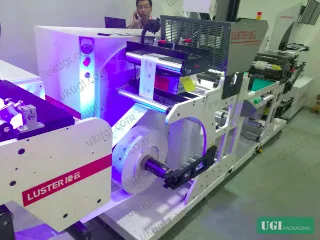
For flexible packaging specifically, multi-function coding platforms are increasingly built on modular architectures — the same platform handles corona treatment verification, label application, inkjet coding, laser score-line inspection, and QR code verification in a single pass. This modularity is important for buyers running multi-SKU flexible pouch lines, because it means a single qualification event can cover the entire variable data workflow rather than requiring separate vendor qualifications for each process station.
Substrate Compatibility and Equipment Requirements for Inline Variable Data Inspection #
Substrate selection directly affects inspection system performance in variable data digital printing. The inspection optics and illumination geometry are calibrated for specific surface characteristics — a system tuned for matte paper labels will produce false positives on metallized flexible film and miss genuine defects on textured surfaces.
For label substrates, the key variables are surface reflectance uniformity and dimensional stability under tension. The ASTM D882 Standard Test Method for Tensile Properties of Thin Plastic Sheeting provides the baseline tensile data relevant to assessing whether a substrate will maintain registration accuracy through a servo reversal sequence. Film substrates with high elongation under low load are problematic for reprint accuracy because the reversal distance calculation assumes a dimensionally stable web.
Flexible pouch substrates introduce additional complexity. Multilayer laminate structures with metallized layers create reflectance variation that requires illumination angle compensation in the inspection optics. For high-barrier pouches where the substrate specification is driven by ASTM D3985 Oxygen Gas Transmission Rate Through Plastic Film and Sheeting requirements, the metallized or AlOx barrier layers present specific imaging challenges that a standard label inspection camera cannot handle without optical reconfiguration.
Most procurement teams don’t realize that barcode and QR code quality grading standards were substantially updated in recent revisions — the current ISO/IEC grading methodology for 2D matrix codes requires evaluation across multiple parameters including modulation, axial non-uniformity, grid non-uniformity, and unused error correction. Legacy inspection systems running older verification logic will pass codes that fail current grade thresholds. This is increasingly relevant as brand owners and retailers mandate minimum grade levels for serialized QR codes used in anti-counterfeiting and supply chain traceability applications.
For print quality verification against process standards, the applicable reference is ISO 12647-2:2013 Graphic technology — Process control for offset lithographic printing for any static printed elements on the substrate that the variable data is being applied over — the background print must meet density and registration tolerances for the overall code readability to be reliable.
The equipment minimum specification for servo-controlled integrated systems is a servo motor drive on both the unwind and rewind stations. DC motor or stepper motor web transports cannot provide the tension stability and position accuracy required for web reversal and reprint sequences. This is a hardware barrier that eliminates a significant portion of the installed base of older converting lines from compatibility with integrated coding-inspection systems.
Honestly, this is an area where buyers frequently make a costly mistake: they approve a supplier’s inkjet coding capability during an audit but never ask to see the web transport drive specification. The coding head might be state of the art, but if the line runs DC motors, the integrated workflow cannot function as specified.
Practical Guidance for Buyers #
When you are qualifying a supplier for variable data printing — whether that is serialized QR codes on retail labels, lot and expiry date coding on flexible pouches, or track-and-trace data on folded cartons — the inspection architecture question needs to be on your RFQ, not your post-production audit checklist.
Ask for a defect log export from a recent production run. A genuine integrated system produces a structured database record with defect type, position coordinate, and handling outcome for every defect event. If a supplier cannot produce this, they are not running an integrated system regardless of what their capability statement says.
For custom labels and stickers and flexible pouches requiring variable data, the substrate-inspection system compatibility check matters as much as the coding resolution specification. Metallized surfaces, textured finishes, and high-gloss coatings all require specific optical configuration — confirm the supplier has validated their inspection system on your specific substrate, not just on paper stock.
Our team at ukugi.com operates OEM and ODM production lines for international brand owners across North America, Europe, and Southeast Asia, including label and flexible packaging with full variable data coding and inline inspection capability. We supply across cosmetics, food, tobacco, and premium consumer goods sectors. For complex variable data requirements or multi-substrate label programs, we encourage buyers to initiate a sampling request early so substrate-inspection compatibility can be confirmed before production commitment.
Need a custom formulation or sample? Request a quote from our team →
Supplier Qualification Questions #
- What is the minimum consecutive defect count threshold at which your system triggers a servo web reversal sequence, and what is the positional reprint accuracy (in mm) after reversal?
- Can you provide a defect log export showing defect type classification, position coordinate recording, and handling outcome for a production run of at least 10,000 units of variable QR code printing?
- What is the drive type on your unwind and rewind web transport stations — servo motor, stepper, or DC — and can you demonstrate tension stability during web reversal at production speed?
- Your inspection system’s QR code verification logic — does it evaluate full ISO/IEC grading parameters including modulation, axial non-uniformity, and grid non-uniformity, or only binary read/no-read detection?
- For flexible film substrates with metallized or AlOx barrier layers, what illumination angle and optical configuration does your inspection system use, and can you provide false-positive rate data from a validation run on that substrate class?
Sourcing Checklist #
- ☐ Supplier inspection system runs simultaneously with inkjet coding (inline, not post-process) — confirmed by live demonstration or time-stamped defect log showing defect detection during production, not after.
- ☐ Defect position logging is operational — supplier can provide a structured defect database export with position coordinates for at least one completed production run of ≥5,000 units.
- ☐ Web transport uses servo motor drive on both unwind and rewind stations — DC motor or stepper drive is not acceptable for integrated coding-inspection operation.
- ☐ Inspection system covers all four variable data quality parameters: content accuracy, character completeness, print skew ≤ acceptable threshold, and barcode/QR appearance grade per ISO/IEC standards.
- ☐ Substrate compatibility validated on the actual substrate specified — not assumed from generic capability claims; supplier provides false-positive rate data for the specific film or label stock.
- ☐ Defect classification logic distinguishes between individual defects (log-and-continue) and consecutive defect runs (stop-reverse-reprint) with documented threshold settings.
- ☐ Finished product traceability available — blank labels generated during servo reversal sequences are tracked by position and excluded from finished goods count.
- ☐ For flexible pouch applications, the modular platform covers corona treatment, coding, and QR verification in a single-pass workflow — reducing inter-station handling and registration error.
Key Specifications Table #
| Parameter | Recommended Value | Verification Method |
|---|---|---|
| Web transport drive type | Servo motor (unwind + rewind) | Equipment spec sheet; motor nameplate inspection on-site |
| Defect position logging | Full coordinate record per defect event | Request defect database export from recent production run |
| Consecutive defect response | Servo reversal + reprint within same production session | Live demonstration at rated production speed |
| QR code verification grade | ISO/IEC full parameter grading (not read/no-read only) | Request verification software parameter configuration and sample grade report |
| Inspection coverage | Graphic pattern + text + variable content + code appearance (4 channels) | Software capability documentation + live test on production substrate |
| Blank label tracking during reversal | 100% position-tracked, excluded from finished goods | Audit finished goods count against defect log records |
Looking for a manufacturer that meets these specs? Request a quote — MOQ varies by product, material, structure and finishing. Product-specific MOQ is confirmed with each quotation.
References #
Data source: Inline Quality Control Systems for Variable Data Inkjet Coding on Label and Flexible Packaging Substrates: Architecture, Defect Classification, and Servo-Integrated Inspection Performance, F. Pan et al., Journal of Printing Science and Technology, 2024
Frequently Asked Questions #
What is the practical difference between an inline and a separated coding-inspection system in terms of scrap output?
In a separated system, the interval between a defect event and the detection signal — even with a camera positioned close to the coding head — means that at high web speeds, multiple defective units pass before the line stops. In an integrated system, defect position is logged at the moment of occurrence and the servo reversal can target the specific defective position, so scrap is limited to the confirmed defective unit rather than the entire run segment produced during the detection lag.
Does servo web transport actually make a measurable difference to reprint accuracy?
Yes. Without servo control, web tension during reversal is inconsistent, and the mechanical positioning error is large enough to misalign the reprint relative to the original code position — which means the reprint itself may fail inspection. Servo drives maintain tension stability through reversal, which is the hardware prerequisite for the reprint-in-place workflow to function reliably.
Can flexible pouch substrates with metallized layers be inspected reliably using standard label inspection optics?
Not without reconfiguration. Metallized surfaces produce specular reflectance that saturates standard illumination setups and creates false defect signals on surface texture features. The inspection optics need to be configured with diffuse or angled illumination matched to the specific substrate reflectance profile. Buyers should require substrate-specific validation data, not generic camera resolution specifications.
What is the minimum order or run length at which integrated coding-inspection becomes cost-justified versus separated systems?
The break-even is not primarily a volume threshold — it is a defect-consequence calculation. For any serialized variable data application (QR codes, lot codes, anti-counterfeit data on hologram security stickers) where a defective code creates a traceability gap or a consumer scan failure, the cost of a single batch recall or compliance incident exceeds the system cost difference. For non-serialized date coding at very low volumes, separated systems may be adequate.
Does the integrated system require the inkjet coding head and the vision camera to be from the same vendor?
No — the integration is at the communication layer between the defect management system, the press controller, and the web transport. A well-implemented integrated platform can work with inkjet heads from multiple vendors. The critical requirement is that the defect management software has a defined communication interface to both the press controller and the web transport servo drive. Buyers should ask specifically about the communication protocol used and whether it is documented for third-party integration.
Published by ukugi.com Technical Team | Request a quote


