
Factory Packaging Improvement Case
How We Reduced Paper Use by 80% in Glass Bottle Shipping
How our controlled bottle-and-cardboard layer route replaced many individual cartons while keeping separation, transport and buyer handling requirements in scope.
The result: 80% less paper in the compared shipping route
For the applicable glass-bottle shipping configuration, we arrange bottles in controlled layers, use cardboard cells and layers for separation and support, build the stack to the planned transport height and secure the completed load with plastic film. Compared with our previous carton-intensive route for the same applicable configuration, this UGI Packging method reduced paper use by 80%.
The figure is our first-party comparison between those two routes. It is not an industry average and does not mean every bottle, destination or handling system can use the same arrangement without verification.
Case facts
Case type
Factory improvement
Application
Glass-bottle transport packing
Compared routes
Carton-intensive vs layered stacking
Measured result
80% reduction in paper use
How the transport stack is assembled
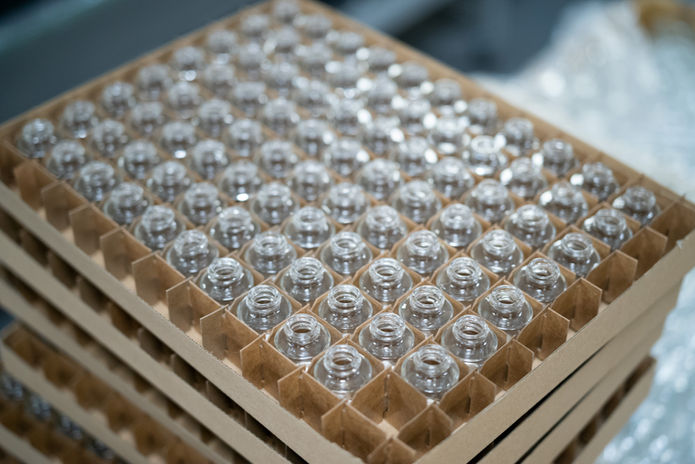
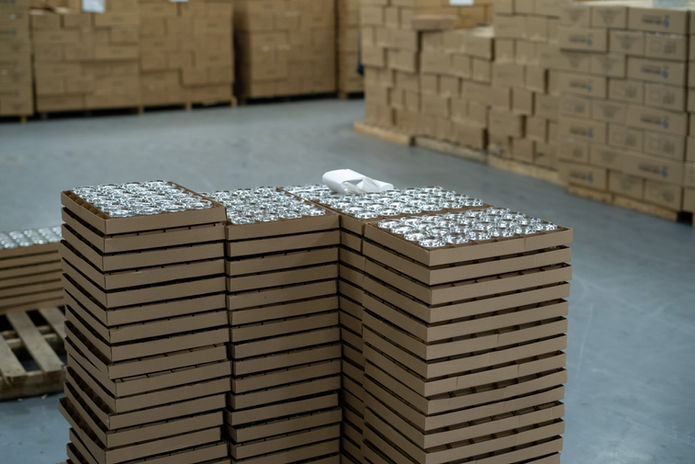
These first-party factory images show the cardboard cells and layered bottle stacks used in the route described here.
The problem with the previous route
Our previous configuration relied more heavily on individual or small-group cartons around glass bottles. Those cartons organised the shipment, but they also increased paper consumption across a full transport load. We wanted to reduce that paper without pretending the bottles no longer required separation, load control or route-specific protection.
What we changed
- We arrange the bottles in a controlled layer based on the applicable bottle and transport configuration.
- Cardboard cells and layers separate, organise and support the bottles while limiting direct glass-to-glass contact.
- We repeat the bottle-and-cardboard sequence until the planned transport height is reached.
- The assembled stack is secured with plastic film for shipment preparation.
Previous route and current route
The change reduced reliance on cartons; it did not remove the need for protective structure or route validation.
| Decision point | Previous route | Current applicable route |
|---|---|---|
| Paper format | More individual or small-group cartons | Cardboard cells and layers within an organised stack |
| Bottle control | Controlled mainly through separate cartons | Controlled through the cell, layer and pallet arrangement |
| Final securing | Shipment-specific outer packing | Completed layered load secured with plastic film |
| Measured paper use | Comparison baseline | 80% lower for the compared applicable configuration |
What did not disappear
Cardboard remains because bottle separation and layer support are still necessary. Plastic film also remains because it secures the completed stack. We therefore describe the result as a reduction in paper use—not as paper-free, plastic-free or automatically recyclable packaging.
Reducing cartons does not remove the need to check compression, vibration, impact, pallet handling, humidity, rubbing and decoration damage for the actual shipping route.
Why the same route cannot be assigned to every bottle
Bottle geometry, base stability, neck projection, glass weight and surface decoration change the protection requirement. A divider designed around one cylindrical bottle may not control an irregular perfume bottle, a coated cosmetic bottle or a surface vulnerable to rubbing. Warehouse handling and the buyer’s filling or decoration operation also affect whether organised layers can be received safely.
What buyers should confirm
Bottle and finish
Final drawing, weight, geometry, decoration, vulnerable areas and physical sample.
Load and route
Layer count, pallet pattern, stack height, container route, humidity and handling conditions.
Receiving operation
Warehouse equipment, unpacking method and whether bottles feed automated or manual operations.
Related glass packaging evidence
Continue with the product range, technical FAQ and verification resources behind this shipping decision.
Need help specifying glass bottle shipping packaging?
Send the bottle drawing, finish, quantity, shipment route, pallet and receiving conditions. UGI Packging can review whether a layered transport route is appropriate before sampling or shipment approval.