
Quotation readiness case · clarification required
Why a Lift-Off Mug Gift Box Still Needed Dimension Engineering
Replacing the spring hinge with a two-piece lift-off lid solved one structural issue, but dimensions, mug orientation, insert fit, lid tolerance, foil placement and timing still required approval.
The quotation decision: confirm the revised box before pricing
This is the second part of the same mug gift-box project. The original translated inquiry requested a concealed spring-hinge presentation box; the dated internal analysis warned that ordinary 3 mm greyboard was a poor match for the grooved, repeatedly loaded hinge. A later revised brief removed the spring mechanism and described a fully removable two-piece lid and base. The archive then contains English requirement notes and a draft UGI response, but no send record or subsequent customer approval. This Case follows what the documents actually establish, separating a changed written brief from a confirmed exchange. No customer name, company, contact details or identifiable artwork are published.
The responsible response was to clarify the structure before calculating a final price. The inquiry and factory proposals are not an approved order or test result.
The revised brief changed the opening experience
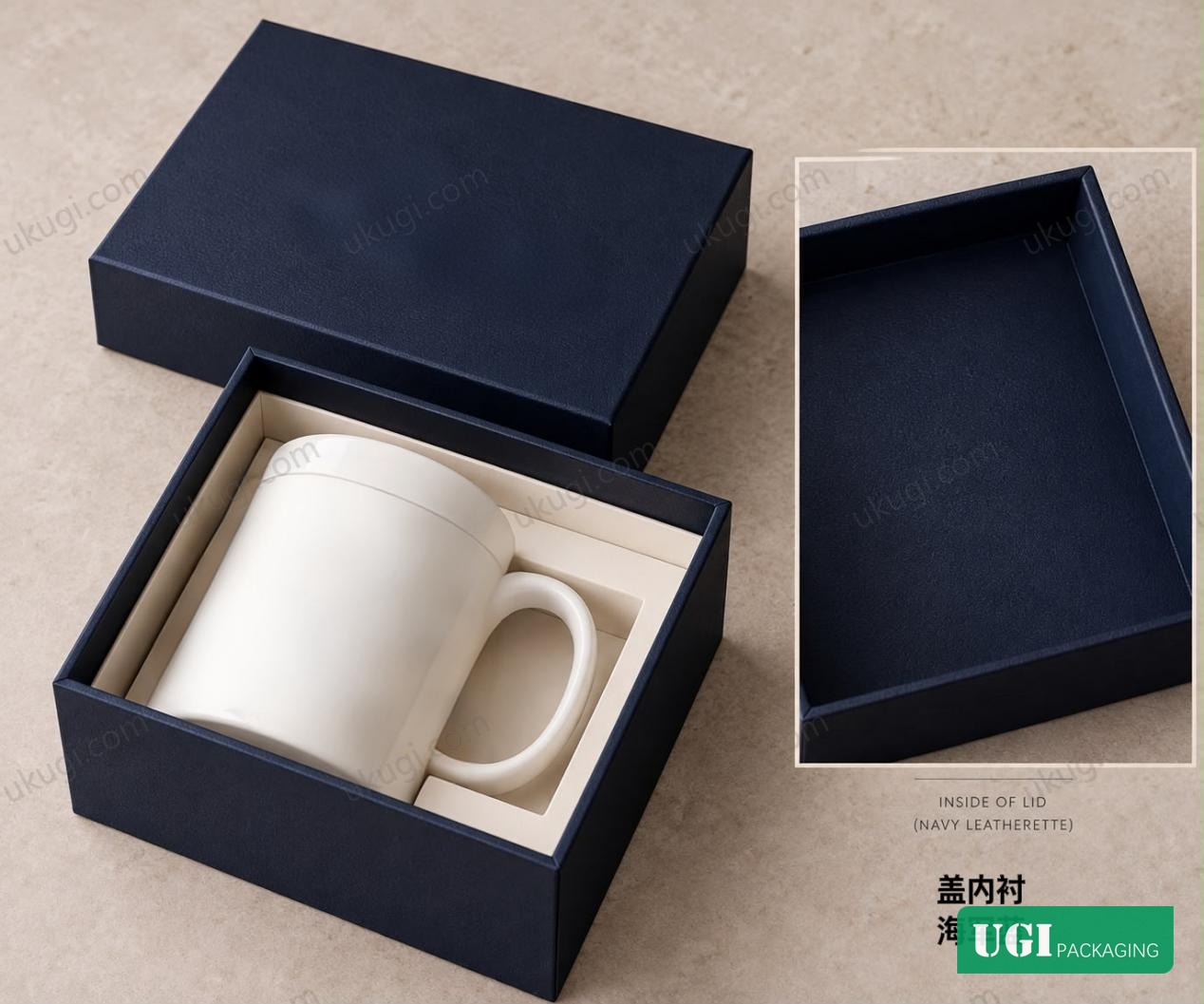
The written project changed course after the spring-hinge analysis. The revised request described a two-piece rigid gift box with a completely removable lift-off lid, rather than a hinged lid. The intended aesthetic remained premium: a navy fine-grain specialty or leatherette paper, warm ivory or cream presentation around the mug, a small crisp gold-foil mark, clean right-angle construction and no visible greyboard. The first trial order was still 1,000 sets, potentially followed by repeat production if quality and timing were reliable. The source of this stage is a revised Chinese RFQ and English notes; neither is a supplied, independently verifiable customer-reply email.
This was a genuine change in the engineering brief, not just a wording change. A separate lid and base no longer rely on a spring pulling at a grooved wall. That made conventional rigid-board construction feasible again and removed the need to price MDF merely to support the concealed hinge. The design would lose the automatic jewellery-box opening effect but gain a simpler structural route. A factory could accept that route in principle; it still needed to decide how to build this particular two-piece box at the required quality level.
The revised Chinese RFQ formalised the change as a new product brief, rather than asking the factory to quietly swap a hinge in the old quotation. It restated the 1,000-set trial and repeat-order possibility, referenced a high-end straight-corner, fully covered appearance, and explicitly requested no bare board. It asked for a recommended board thickness or grammage, not an automatic carry-over of the original 3 mm specification. In the accompanying English requirements, the lid-fit target became unusually clear: easy to lift, accurately aligned, and not held shut simply by squeezing the base through excessive friction. The next document is a draft UGI reply that worked through the board, covering, foil, lining, EVA, protective sheet, fit, finish and timing point by point. It is useful evidence of proposed technical advice, but not proof that those assurances were sent to or approved by the customer.
The revised reference images show the intended navy/ivory presentation and full interior covering. They are visual concept references, not evidence that a final 1,000-piece run has been produced or tested to this specification. One image shows the cup lying in the light insert beneath the removable navy lid; the other calls attention to the navy-finished inside of the lid and the cream lining around the mug. These are useful for discussing the intended reveal and visible surfaces, but they do not replace an approved section drawing or physical sample.
The written box dimensions reopened the fit question
The second-stage brief retained the mug envelope: 117 mm high × 85 mm diameter, approximately 132 mm including the handle. It proposed an insert size of 180 × 165 × 125 mm and an approximate outer box of 190 × 175 × 135 mm. It asked for around 20 mm cushioning around the mug and 15–20 mm of protection above it, including a separate thin protective sheet. These are useful starting values, but they are not yet an approved dimensional drawing.
The proposed UGI reply first raised a sizing concern: the 85 mm mug diameter appeared small relative to an outer box height of 135 mm, leaving excess space and allowing movement during transport. It suggested reducing the outer height to 110 mm and the insert height from 125 mm to 100 mm, subject to confirmation. The reason for opening with dimensions was sound—an unsafe cavity would undermine every later material choice—but the numerical recommendation was not yet supported by a labelled orientation drawing. It was a proposal, not an approved finished size or proven transit solution.
This is an example of a useful proposed factory intervention with an incomplete dimensional explanation. The draft reply discussed the 85 mm diameter as if it alone established the safe height, but the mug has a handle and a 117 mm length on another axis. A tighter outside number may improve visual proportion without increasing protection if the cup’s actual orientation and cavity walls are not drawn. The proposal belongs in the story because it shows the reasoning that required correction, while the article must not silently endorse the 110 mm figure as engineered or approved.
There is a second dimensional issue that must not be hidden. The mug is 117 mm high, while the proposed outer box height is 110 mm. If the mug stands upright along that axis, the proposal is physically incompatible even before allowing board thickness, insert, protective sheet and clearance. The reference imagery suggests a mug lying on its side, but a picture does not define the engineering axes. The factory must label which of the 190 × 175 × 135 mm dimensions is the lid-to-base depth, show the mug’s orientation in a section drawing, and calculate usable internal clearance. It must also confirm whether the 180 × 165 × 125 mm figure is the insert’s outside size, cavity size or available internal box space. Until that stack-up is agreed, neither 135 mm nor 110 mm should be presented as a safe final dimension.
The approximately 132 mm handle envelope is especially important: a cavity cut to the 85 mm mug body could still force the handle against a wall. The sample must demonstrate controlled fit for the body and handle, including realistic tolerance, protection around the mug, and removal without tearing the lining. “Twenty millimetres around the mug” needs a defined reference—body, handle, cavity edge or box wall—rather than an unsupported arithmetic deduction from one photograph.
Greyboard became possible again, but thickness was still a choice
Once the concealed spring load disappeared, the revised request asked the factory to recommend an appropriate rigid-greyboard thickness or grade: substantial and premium in hand, but not unnecessarily heavy. The draft response listed common board thicknesses of 1.5, 2, 2.5 and 3 mm. Thicker board can increase stiffness and perceived solidity while adding weight; thinner board can reduce weight but may feel less substantial. None of those figures, by itself, guarantees the desired lid fit or panel straightness after wrapping.
The factory therefore needed to make and compare physical samples, not merely reply with the thickest available board. A two-piece lid must match the base after board cutting, exterior wrapping, inner turn-ins and adhesive curing. Material thickness and covering thickness affect the finished opening clearance. The English requirements explicitly rejected a lid that was excessively tight, jammed or difficult to lift in some mass-production units. The target was a smooth, precise, aligned lift-off fit—not a closure that depended on strong friction to stay shut. That raises a handling question as well: if friction is not the retention method, how will the gift box be secured for transit or retail handling? The RFQ should identify the outer packing or other closure method before freight and pack-out are finalised.
The draft reply named four ordinary thickness choices—1.5, 2, 2.5 and 3 mm—and proposed physical reference samples so the buyer could feel the weight and stiffness trade-off. It did not identify a selected grade, density, bending performance or final thickness. “Premium but not too heavy” is a design objective, not a measurable board specification; approval should compare samples after full wrapping, because even the same nominal board can feel and fit differently once lining, adhesive and turn-ins are present. The production risk identified in the notes was variation across the 1,000 pieces, not merely whether one carefully adjusted prototype opened smoothly.
Exterior covering, complete interior wrapping and foil were part of the box—not optional extras
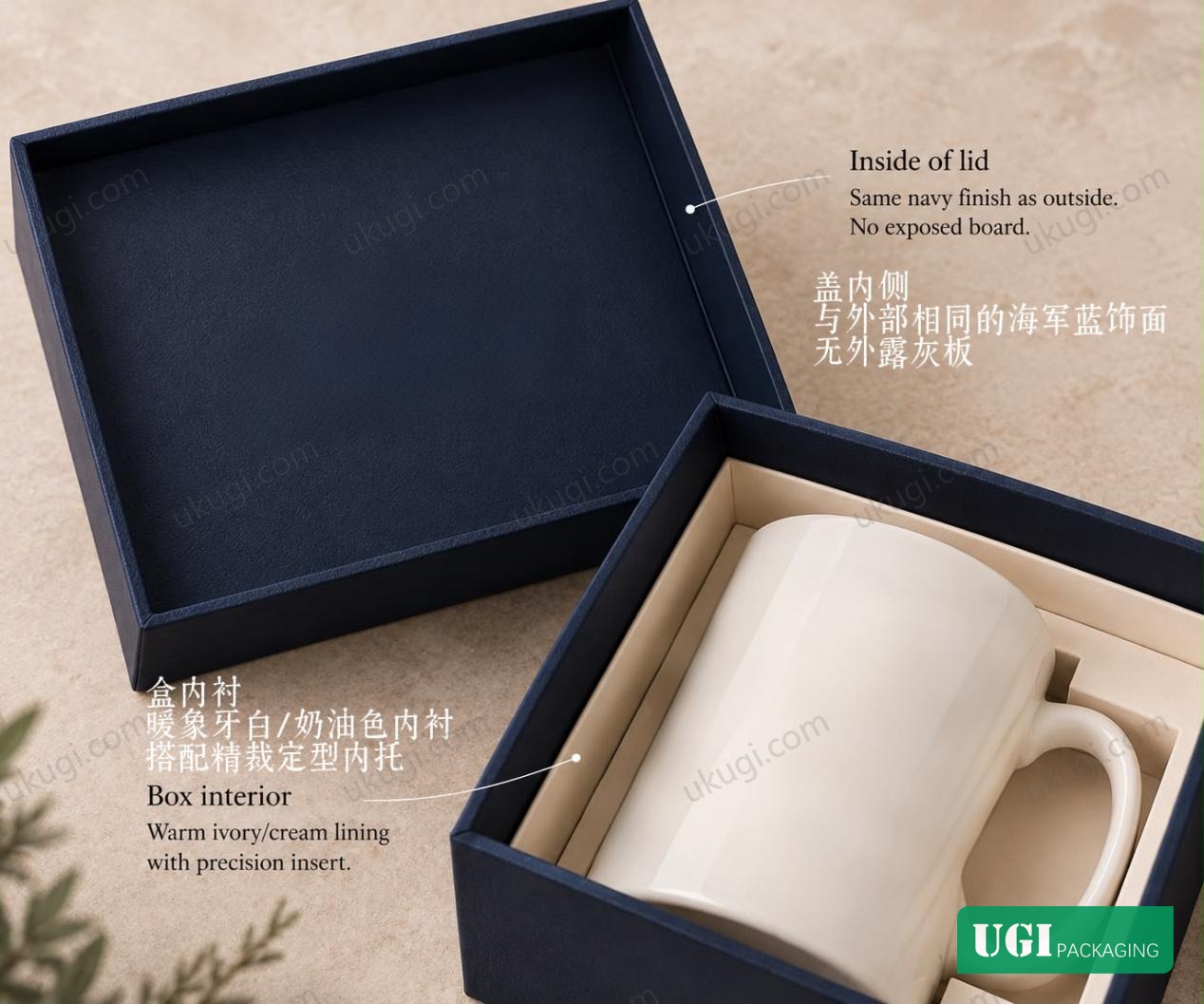
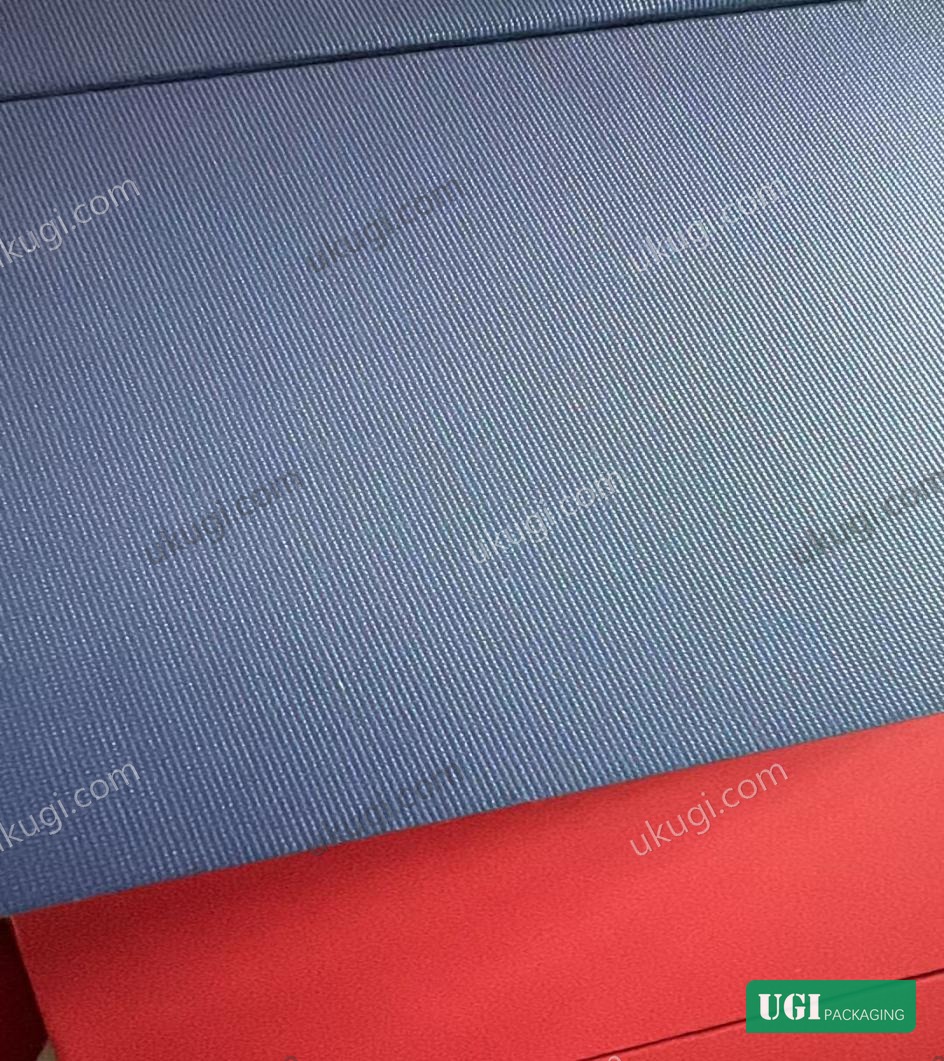
The revised brief called for a navy fine-grain leatherette or specialty paper with an elegant, subtle texture, not a heavy artificial leather grain. It required all visible surfaces to look finished: the outside and inside of the removable lid, the base’s visible interior walls and edges, and any visible turn-ins. Exposed greyboard or unfinished raw areas were expressly rejected. That requirement affects material yield, wrapping sequence, corner treatment and labour. A quotation that covers only the exterior shell would miss meaningful work.
The gold-foil mark was to be small, crisp and clean, with sharp edges, no missing detail, blur, bubbles or uneven coverage. The sources do not describe its placement consistently: the Chinese revised RFQ specifies a centred mark on the inside of the lid, while the English notes request it on the top of the lid. That difference changes the die position, make-ready and what the user sees during unboxing. The final quotation must be based on one approved vector artwork file, size, colour/foil reference and placement drawing. The public Case may explain the conflict but must not display the identifying logo itself.
The acceptance standard extended beyond foil. The revised materials asked for straight, clean corners; vertical, flat walls; uniform neat wrapping; no visible or overflowing glue; no wrinkles, bulges or exposed board; and an overall high-end factory finish. The material swatches and a physical pre-production sample had to establish whether the navy texture, full wrap, foil and lid fit could be reproduced across the run. The draft UGI reply described these requirements as feasible, but a draft assurance is neither a sent commitment nor final sample approval.
The insert became more specific: CNC EVA, flocking and a separate sheet
The first-stage discussion compared XLPE, EPE and EVA. The revised brief narrowed the request to a CNC-cut EVA foam insert that held both mug body and handle. The cavity was to be accurately carved rather than filled with a generic rectangular pad. The complete visible insert surface was to be warm ivory or cream flocked or velvet-lined, with no raw foam exposed. The brief sought a clean contrast between the navy box and light insert and a cavity that neither rattled nor squeezed the mug.
The revised brief added a removable white fine-cell protective foam sheet of approximately 3–5 mm over the mug. Its role was transport protection and dust control; it was meant to be lifted out during unboxing. That sheet is a separate material and pack-out step, not the same thing as the shaped structural EVA insert or the 15–20 mm clearance figure. A factory quotation needs to say whether it includes the sheet, its dimensions and material, and how it sits without scuffing the flocked presentation.
The intended opening sequence was unusually explicit: remove the navy lid → encounter an information card → remove the thin white protective sheet → reveal the mug seated in the warm-ivory insert. The card was part of the described experience, but the source did not lock its dimensions, artwork, paper, printing or whether the factory would supply it. It should therefore be recorded as a separate quote line or buyer-supplied component rather than silently absorbed into the box price.
The order of those layers affects practical construction. A card must lie flat and remain readable when the lid is removed; the disposable foam sheet must be easy to lift without dragging across the cup or disturbing the flocked insert; and the cavity must locate both the cylindrical body and projecting handle. The revised brief requested 20 mm around the mug and 15–20 mm above for transit protection, while separately requesting the removable 3–5 mm fine-cell sheet. Those are three distinct requirements, not interchangeable numbers. The source does not establish a tested compression or drop standard, so the sample should be checked against the actual mug and agreed shipping conditions before any claim of protection is made.
This sequence helps explain why the interior mattered so much. A beautiful exterior could not compensate for a rough internal wall, visible greyboard, poorly fitted EVA, an unplanned protective sheet or an awkward lid. Each step in the opening revealed another production surface and another acceptance criterion.
The revised requirements also asked for proof, swatches and timing—not just a number
The revised RFQ asked the factory for photographs or videos of comparable high-quality two-piece rigid boxes, navy fine-grain covering samples and suitable ivory insert finishes. It asked the factory to recommend board thickness and disclose sample fee, sample time, fastest production time for 1,000 units and MOQ if above 1,000. It invited practical improvements to appearance, durability, mass-production suitability or value, with a separate explanation and revised quotation. The quotation scope was to include the board shell, navy wrapping inside and out, gold foil, shaped and flocked EVA insert, removable white protective sheet and all relevant hand assembly—but not the mug.
Christmas delivery had become a priority. The draft reply asserted that sampling would take seven days and a 1,000-unit production run approximately two weeks, and said this would comfortably meet Christmas. Those statements are preserved as part of the project record, but there is no independent capacity confirmation, approved sample date, shipping method, delivery destination or customs schedule in the source. A responsible Case must not repeat that statement as a promise. A real schedule starts with confirmed specifications and artwork, then material sourcing, physical sample, buyer approval, production slot, packing, freight and arrival. “Christmas priority” is a deadline to plan backwards from, not proof that an unapproved design can be delivered by then.
The requirements also asked to see comparable two-piece boxes on photo or video, then actual navy fine-grain covering swatches and ivory flocked insert samples. These proof requests had different purposes: photographs show the supplier’s general execution, material swatches establish colour and tactile choice, and a purpose-made sample establishes the particular mug cavity, lid fit, full interior wrapping and foil. The draft reply’s statement that clean corners, straight walls and excellent stamping were routine for this class of work was an assertion to verify in that physical sample. The requested quote would then need to account separately for the board shell, all visible navy wrapping, the centred gold-foil operation, CNC-shaped EVA with cream lining, white removable sheet and assembly labour, still excluding the mug.
What this inquiry teaches a future buyer
After the structure changed, the factory could say a lift-off lid was feasible. It still could not responsibly freeze a production price from the written brief alone. The buyer needed to supply or approve a labelled orientation and dimensional drawing; an actual mug or accurate sample including handle; the final lid and insert heights; the desired fit tolerance; board sample; navy covering and ivory flocking swatches; the precise gold-foil artwork and its inside-versus-top placement; the information-card scope; the protective-sheet specification; pack-out/transport retention; quantity; and a realistic sampling and shipping schedule.
The story illustrates a common RFQ mistake: solving the most visible structural problem does not automatically resolve the rest of the product. The hidden spring hinge was removed, but the second round exposed dimension axes, internal fit, hand-finished surfaces and delivery assumptions. Those details determine what the factory actually makes and what a quotation must include. A useful RFQ explains the intended experience and gives a measurable, approvable drawing and sample standard.
Case facts
Revised structure
Fully removable two-piece lid and base
Initial quantity
1,000 sets; repeats depended on quality and timing
Mug envelope
117 mm high × 85 mm diameter; about 132 mm including handle
Unapproved size proposal
Outer height 135 → 110 mm; insert height 125 → 100 mm
Inquiry issues that block quotation
| Known evidence | Still needed | Why it changes the quotation |
|---|---|---|
| Separate lift-off lid | Approve finished fit after complete wrapping | Production variation can make a tight lid jam. |
| 117 mm mug height; proposed 110 mm box height | Label mug orientation and all dimensional axes | An upright 117 mm mug cannot fit inside a 110 mm outside height. |
| 190 × 175 × 135 mm box and 180 × 165 × 125 mm insert | Confirm outside, usable inside and cavity dimensions | Board, covering and handle geometry affect clearance. |
| Inside-lid versus top-of-lid foil | Approve a single artwork placement drawing | The conflicting source descriptions affect die position and setup. |
| 20 mm sides, 15–20 mm above, plus 3–5 mm sheet | Validate layered pack-out with the actual mug | These are separate allowances and components. |
| Seven-day sample and two-week production assertion | Verify capacity, approval and freight milestones | Christmas priority is not a delivery commitment. |
The numbers and materials are requests or proposals, not approved production results.
Need a comparable quotation for your own mug gift box? Send the actual mug and handle dimensions, intended opening, insert and finish references, artwork status, quantity and destination.
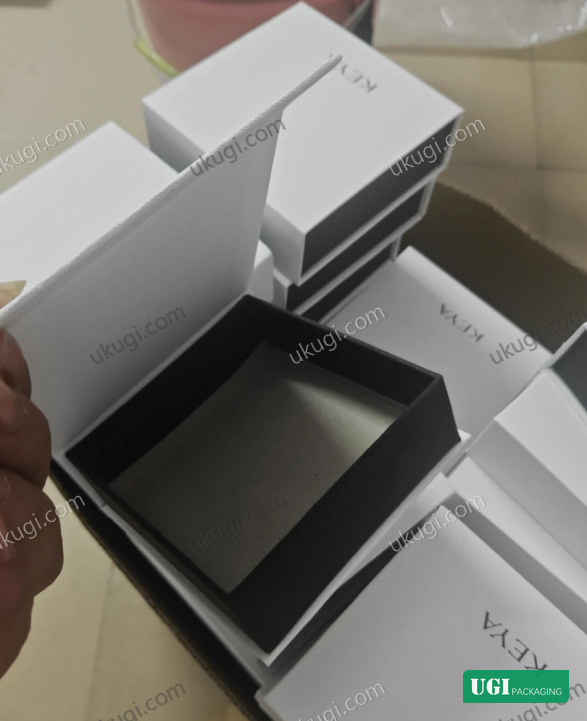
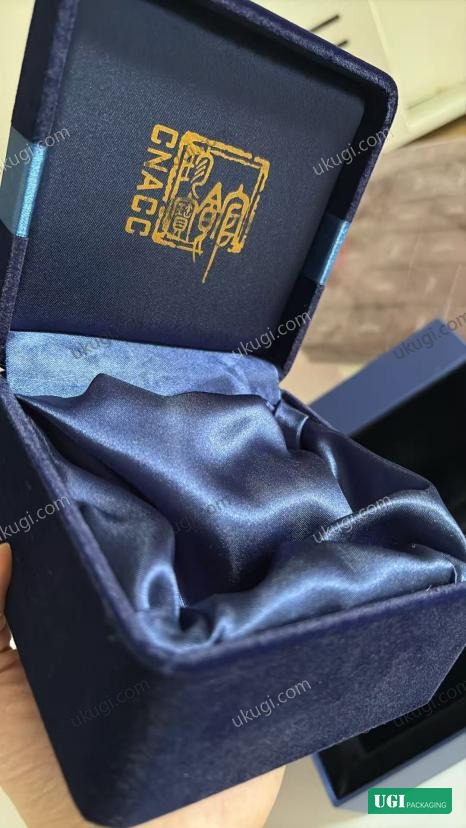
The revised brief is the second documented stage of the same project: the spring mechanism was removed and the construction became a fully removable two-piece lid and base. The public narrative keeps the original dimensions, insert and material discussion in sequence. The rendered PDF pages are retained privately as evidence, while the independent watermarked images are placed next to the structural and material explanations they support.
What this Case does and does not establish
This records revised project requirements and a draft UGI reply; the supplied archive does not verify that the reply was sent or that the customer approved its proposals. It does not prove the 110 mm height works, the lid or mug passed testing, foil placement was approved, or the seven-day sample, two-week production period or Christmas arrival was confirmed. The revised concept images are briefing material, not evidence of completed UGI production for this project.
Copy-and-send mug gift-box RFQ template
Replace the brackets with approved inputs and attach a labelled drawing, mug sample or controlled dimensions, and editable artwork.
Related UGI resources
Planning a lift-off mug gift box?
Send your mug and handle dimensions, preferred structure, insert and covering references, artwork and delivery plan. We will identify the decisions needed before a defensible quotation.