

One-Piece Corrugated Mailers with Inserts: Structure and Test Plan
A one-piece corrugated mailer with an insert should be engineered as a packed system. Product dimensions and weight, flute, board grade, closure, insert geometry, empty space, assembly labor, distribution route and acceptance criteria determine whether the design protects the product.
UGI Packaging manufactures custom corrugated gift boxes, mailers, shipping cartons and inserts in our factory. We print, cut, crease, form, mold or convert insert materials, assemble samples and complete QC with our own equipment.
Choose the box and insert as one structure
A one-piece mailer may use rollover walls, dust flaps, locking tabs or an integrated platform. A separate insert may use corrugated board, folded paperboard, molded pulp, foam or formed plastic. Select the route from product mass, fragility, surface sensitivity, accessory count and required presentation.
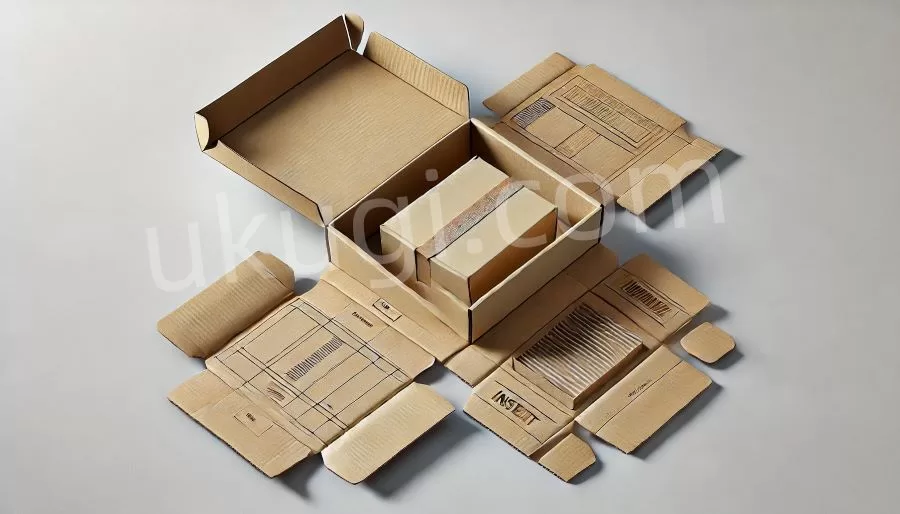
The insert should control movement without creating pressure points or preventing the lid from closing. Finger access, cable channels and accessory compartments must be included in the approved drawing.
- Product dimensions, weight and center of gravity
- Fragile and scratch-sensitive areas
- Corrugated flute and board grade
- Mailer wall and closure style
- Integrated or separate insert
- Drop orientation and distribution route
- Assembly time and packing sequence
- Outer labels, seals and pallet packing
Prototype the complete pack-out
A cut sample should be packed by the intended operator to check assembly, product loading, insert retention, closure and removal. Print and finish can change crease behavior, so production-intent material is needed before final release.
Record the exact product, accessories, insert, mailer, seals and void fill used in the test. Changing any of those after approval can invalidate the result.
Use route-specific distribution testing
A mailer is not proven by appearance or material name. Define drop, vibration, compression or other handling exposures from the actual route. ISTA publishes packaged-product test procedures; choose the relevant procedure and acceptance limits for the complete packed system.
Production release and QC
Production begins after the dieline, board, insert, artwork, sample, packing method, test plan and acceptance criteria are approved. Our QC team checks dimensions, flute direction, cutting, creasing, locks, insert fit, print placement, closure, carton packing and agreed functional samples.
Common failures include excess movement, crushed corners, insert collapse, tabs that release, lid pressure from an oversized insert and inconsistent assembly by pack-out staff.
Frequently asked questions
Is a one-piece mailer always ready for courier shipping?
No. Validate the complete packed system for the actual product, route and acceptance criteria.
Should the insert be part of the same dieline?
It may be integrated or separate. Choose the route from product fit, assembly, tooling, material and protection requirements.
What should the prototype include?
Use the actual product, accessories, insert, mailer, seals, labels and intended packing sequence.
When does production start?
After structure, board, insert, artwork, sample, test plan, quantity and packing are approved.