

Foldable Packaging Box Structures: A Buyer’s Selection Guide
UGI Packaging manufactures the packaging and printed components covered in this article in our own factory. For foldable packaging box structures, we develop the specification and sample, operate the relevant printing, cutting, forming, finishing and assembly equipment, and inspect the approved result before packing. This connects each buyer decision to the way our factory actually produces and controls the job.
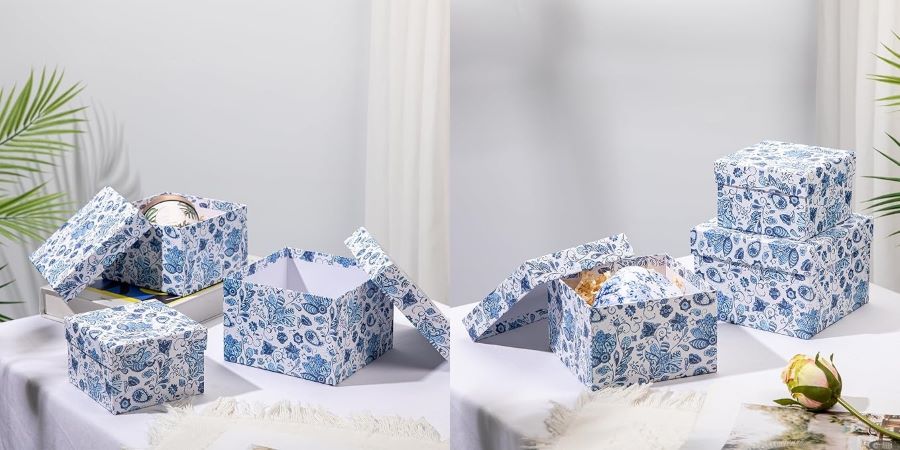
“Foldable packaging box” is not one box style. It can describe a folding carton delivered as a flat blank, a corrugated mailer, or a collapsible rigid box that folds for transport and is erected before use. These formats differ in material, assembly, protection, presentation and cost. A buyer should choose the structure from the product, packing workflow and distribution route—not from a shape name alone.
For an accurate proposal, provide the product’s maximum dimensions and weight, orientation, fragile areas, insert requirements, packing method, expected distribution conditions, quantity by size and artwork version, and the way the finished packaging must be delivered and stored.
Quick answer
Start by deciding what the package must do:
- protect and restrain the product;
- run through the intended packing process;
- remain stable during handling and shipment;
- create the required opening and display experience; and
- arrive in a form the packing site can store and assemble consistently.
Then compare structures using physical samples. “Flat,” “folding” and “collapsible” describe delivery or assembly characteristics; they do not establish the same strength, appearance or storage saving.
Separate the main packaging categories
Folding cartons
Folding cartons are usually cut and creased from paperboard and supplied flat. Common families include straight-tuck, reverse-tuck, lock-bottom, crash-lock or auto-bottom, sleeve, pillow and multi-panel constructions.
They can suit retail products that need printed communication and moderate protection. Performance depends on dimensions, board stiffness, panel spans, closures, grain direction, windows, coatings and the packed product. A folding carton should not be selected only by board grammage.
Collapsible rigid boxes
A collapsible rigid box uses rigid-board panels arranged so the box can fold down for delivery and be erected before packing. It may use adhesive strips, locking panels, magnets or other closure and assembly details.
This format can reduce the volume occupied by empty erected boxes while retaining a rigid-box presentation after assembly. It also introduces risks that must be tested: hinge durability, corner alignment, adhesive performance, magnetic closure alignment, wrap cracking and staff assembly consistency.
Conventional rigid boxes
A two-piece lid-and-base box, shoulder box or other set-up rigid box is normally delivered formed rather than flat. It may offer the desired presentation and dimensional stability, but it should not be labelled flat-pack unless the actual construction collapses.
Corrugated folding formats
Corrugated mailers, regular slotted containers and die-cut transit formats can also arrive flat. Their role is often shipping or heavier-product protection rather than the close printed appearance associated with a folding carton or wrapped rigid box. When a supplier identifies a corrugated style by code, compare the drawing and dimensions against the official FEFCO Code instead of relying on the style name alone.
The categories may be combined—for example, a folding carton inside a corrugated shipper—but they should not be compared as if they were interchangeable.
Start with product and distribution risk
Record:
- maximum product dimensions and total packed weight;
- centre of gravity and required orientation;
- glass, sharp, delicate or high-value components;
- surfaces that may scuff or leak;
- accessories, manuals and promotional items;
- direct product-contact or regulatory constraints;
- retail shelf, hand delivery, parcel network or pallet distribution;
- expected stacking, vibration, drop and humidity exposure; and
- whether the pack is primary, secondary or transport packaging.
The inner dimensions must allow loading without excessive movement. If the product varies, measure the largest approved configuration rather than one convenient sample. An insert may be needed to control motion, but it should support the product at suitable areas and remain compatible with the outer structure.
UGI Packaging’s guide to foldable gift-box OEM/ODM decisions can help a buyer identify candidate format families before a specification is prepared.
Match the structure to the packing workflow
A flat structure moves work from the converting site to the packing site. That can be useful, but only when the buyer accounts for assembly labour, space, training and quality control.
Ask:
- Is the box assembled manually or with equipment?
- How many folds, locks, liners or adhesive strips are involved?
- Does the operator need to hold the box square while loading?
- Can components be installed in the wrong orientation?
- How will erected boxes be staged without collecting dust or damage?
- What happens if an adhesive strip is exposed too early?
- Can the pack be reopened and closed as intended?
- Does the packing line need a pre-erected format instead?
Time physical samples with the actual staff and product. A supplier’s generic assembly-time claim cannot represent a different workforce, line layout or box size.
Compare common structures by decision condition
Tuck-end folding carton
Consider a tuck-end carton when the product is relatively light, panels can provide adequate stability, and fast manual or automated closure is required. Confirm which end opens, whether dust flaps interfere with loading, and whether the carton can support the display orientation.
Lock-bottom or auto-bottom folding carton
Consider a reinforced or pre-glued bottom when loading weight or packing speed makes a simple tuck base unsuitable. Test whether the base opens fully and remains locked under the real load. Extra material and gluing can affect cost and packed-flat thickness.
Sleeve with tray
A sleeve can create a sliding reveal and provides printable outer panels. It adds a separate or integrated tray and requires controlled clearance: too tight causes scuffing or difficult opening, while too loose feels unstable.
Pillow carton
A pillow carton can suit small, light products and promotional items. Curved panels and limited internal volume make it a poor default for heavy, fragile or precisely oriented products.
Collapsible rigid box
Consider this when rigid presentation is important but empty-pack storage and freight need comparison. Check erected squareness, corner alignment, closure, hinge life, wrap behaviour and assembly instructions. Include any adhesive liners or removable tapes in testing and quotation.
Two-piece rigid box
Use a conventional lid-and-base construction when set-up presentation, fit and stability outweigh the space occupied by formed boxes. The lid-to-base clearance must be sampled with the final wrap, inserts and product. It is generally not a flat-pack format.
Do not compare freight by structure name
Request supplier packing data for the exact proposed construction:
- pieces per inner pack and export carton;
- export-carton external dimensions and gross weight;
- pallets or cartons required for the order;
- packing method for inserts and accessories;
- protection used between decorated surfaces;
- allowable stacking orientation; and
- assembly waste or spare components, if applicable.
Calculate volume from the quoted cartonization. A collapsible format may occupy less space than its erected equivalent, but thick folded panels, separate inserts, protective materials and pallet limits affect the actual result.
The comparison should include inbound freight, warehouse space, assembly labour, defect handling and the value of presentation—not only the packaging unit price.
Select materials around structure and finish
For folding cartons, board selection should consider thickness, stiffness, fibre direction, fold geometry, cut-outs, printed coverage and exposure. For rigid boxes, greyboard or another rigid core is typically wrapped with printed or specialty material; core thickness alone does not define box strength or finish quality. Corrugated formats require a board construction selected for the distribution system.
Ask the supplier to identify each material and its role. If recycled content, forestry claims, food contact or restricted substances matter, request project-specific documentation for the proposed material rather than assuming a broad logo or website statement applies to the finished package.
Decoration should follow structural approval. Foil, lamination, embossing, dark solid colours and textured wraps can affect folding, glue, scuff visibility and registration. Mark functional glue, label and coding areas on the dieline.
Define the insert with the outer box
An insert changes both product protection and the way a box assembles. Provide product drawings or stable samples and identify surfaces that may bear load.
Evaluate:
- cavity fit and removal clearance;
- support location and product movement;
- product loading direction;
- accessory and cable management;
- abrasion between insert and finish;
- assembly sequence;
- material separation at end of life; and
- whether the insert changes the outer-box dimensions or closure.
A beautiful empty box is not an approved packaging system. Sample the outer box, insert, product and accessories together.
Information required for a quotation
Provide:
- Product dimensions, weight, orientation and fragility.
- Packaging role and distribution route.
- Preferred structure or permission to propose alternatives.
- Finished internal dimensions, if already established.
- Outer material, wrap, printing and finishes.
- Insert material and product-restraint requirements.
- Assembly and packing method.
- Quantity by size and artwork version.
- Flat, collapsed or erected delivery requirement.
- Export-carton and pallet information required for logistics comparison.
- Delivery destination and commercial terms.
- Proof, sample, test and acceptance requirements.
Structural tooling, printing setup, foil or embossing dies, special materials, samples and version changes can create fixed costs. Compare quotations only after these items and the quoted construction are aligned.
Use the right sample sequence
Begin with a white or plain structural sample when dimensions, assembly or product fit are uncertain. Test it with the actual product and normal packing staff.
Move to a printed proof or appearance sample for artwork, colour and finish decisions. Where the decision depends on exact materials, wrapping, foil, magnets, adhesive strips or repeated assembly, request a production-representative sample and ask what differs from mass production.
Record:
- approved dimensions and dieline revision;
- approved materials and component list;
- product and insert configuration tested;
- assembly instructions;
- artwork and finish masters; and
- deviations that require buyer approval.
Production schedule and change control
The production clock should start from a defined approval point, not from the first enquiry. Confirm the trigger in the order record. It may require approved structure, print-ready artwork, final quantity, commercial confirmation, material availability, tooling and sample approval.
Changes to product dimensions, insert, structure, artwork versions, finish or delivery plan can change both price and schedule. Ask for a revised written confirmation rather than relying on the original estimate.
QC and acceptance checklist
Check the complete packaging system for:
- correct structure, dimensions and material identity;
- cut, crease, fold and glue quality;
- erected squareness and panel alignment;
- lock, tuck, hinge, magnet or adhesive-strip function;
- product and insert fit;
- print, finish and artwork version;
- scuffing, cracking, delamination or exposed edges;
- repeated opening or assembly where relevant;
- export-carton count and surface protection; and
- comparison with the approved master sample.
Define how many units are inspected and which defects are critical before production. “Good quality” is not a usable acceptance criterion.
Common selection failures
How UGI Packaging produces this work
Depending on the approved structure and artwork, our equipment route can include die-cutting equipment, digital printing equipment, and offset printing presses. We develop the process specification and sample first, release the controlled production files, run the operations in the approved sequence, and inspect materials, registration, dimensions, surface condition, assembly and packing against the retained approval sample. Our engineers confirm project-specific materials, tooling and acceptance limits without shifting UGI Packaging’s manufacturing responsibility to an outside factory.
Submit the product data, workflow and destination through the UGI Packaging contact page.
Related resources and sources
- Packaging box manufacturing process — connect structure selection with tooling, printing, converting and inspection stages.
- UGI Packaging contact page — submit product dimensions, packing workflow and quantity by version.
- FEFCO Code — check official corrugated structural codes and drawings.
Frequently asked questions
Is a foldable box the same as a folding carton?
No. A folding carton is one category of flat-delivered paperboard packaging. “Foldable” can also describe corrugated formats or collapsible rigid boxes.
Are all rigid boxes supplied assembled?
No. Conventional set-up rigid boxes are generally formed, while specially engineered collapsible rigid boxes can be delivered folded. Confirm the exact construction and supplier packing data.
Which foldable structure saves the most freight?
There is no universal answer. Compare export-carton dimensions, gross weight, palletization, inserts, protection and units per shipment for the actual designs.
What should be tested before approval?
Test product fit, insert restraint, assembly, closure, repeated opening where relevant, surface durability and the complete pack under its intended handling and distribution conditions.
What information is needed for a structural proposal?
Provide product dimensions and weight, fragile areas, packaging role, distribution route, packing process, quantity, artwork and finishes, delivery form, destination and acceptance criteria.