

TL;DR #
In screen printing of matte/frosted finishes, intermittent manual ink replenishment causes progressive particle segregation in UV matte inks — coarser abrasive particles (up to 60 μm) accumulate on the screen while finer ones transfer preferentially, producing color shift that exceeds acceptable ΔE tolerances within a single production run. For buyers specifying frosted or tactile surface finishes on premium packaging, this is a direct quality risk that manual ink management cannot reliably control. Specify automatic ink circulation systems with pneumatic diaphragm pumps and ink return recovery when evaluating any screen printing supplier handling matte UV coatings.
Overview #
Screen printing for surface finishing on premium packaging — matte/frosted effects, refractive coatings, ice-crystal textures, spot UV — looks deceptively simple compared to offset or gravure. The press hardware is less complex. But the ink behavior is not, and that gap between mechanical simplicity and process instability is where quality failures quietly accumulate.
The technical analysis behind this article draws on production-floor process engineering conducted at cigarette packaging printing operations, where color consistency tolerances are among the tightest in the consumer goods sector. The evaluation covered automatic screen printing press configurations, UV matte ink rheology, and a retrofitted continuous ink circulation system validated through live production runs. Sample sizes included multiple production batches measured for color deviation before and after system implementation.
The core problem — color drift from abrasive particle segregation in matte UV inks — is not new. But the engineering solution described here is rarely documented in buyer-facing literature, which is why procurement teams keep encountering the same intermittent color rejection issues and attributing them to press calibration rather than ink management.
This matters across a much wider range of packaging types than tobacco. Any premium packaging that specifies frosted, soft-touch, or tactile matte screen-printed finishes — including cosmetics packaging solutions, luxury rigid boxes, and high-end gift sets — is exposed to the same root cause.
Matte UV Screen Ink Particle Segregation: The Root Cause of Color Drift #
This is the mechanism most buyers don’t get a clear explanation of when they raise color consistency complaints with screen printing suppliers.
UV matte (frosted/sandblast) inks are not homogeneous fluids. They contain abrasive particles — typically mineral or polymer-based — with a particle size distribution ranging from approximately 15 μm to 60 μm. That range matters enormously to what happens during a press run.
When fresh ink is loaded onto the screen, smaller particles pass through the mesh openings first. They transfer to the substrate preferentially in the early phase of the run. As printing continues, the coarse end of the particle distribution — the 40–60 μm fraction — accumulates on the screen surface and in the blade channel. The ink film remaining on the screen becomes progressively coarser and less dense in abrasive particle loading.
The optical result: the frosted ink layer printed onto the substrate gets progressively lighter, more transparent, and tonally different from the reference standard. Color difference (ΔE) increases with press run time. When ΔE exceeds the specified tolerance, the only available response in a manual-feed system is a press stop.
The stop itself is not trivial. The operator must lift both the squeegee and flood blade, remove the residual ink from the screen, replace it with fresh ink, then restart. This is:
- A direct equipment utilization loss (downtime per stop scales with operator response time)
- A chemical safety exposure event, since UV inks carry photoinitiators and reactive monomers that cause skin sensitization and chemical burns on contact
- A source of ink waste, since partially degraded (particle-depleted) ink is difficult to reconstitute reliably by manual addition of fresh stock
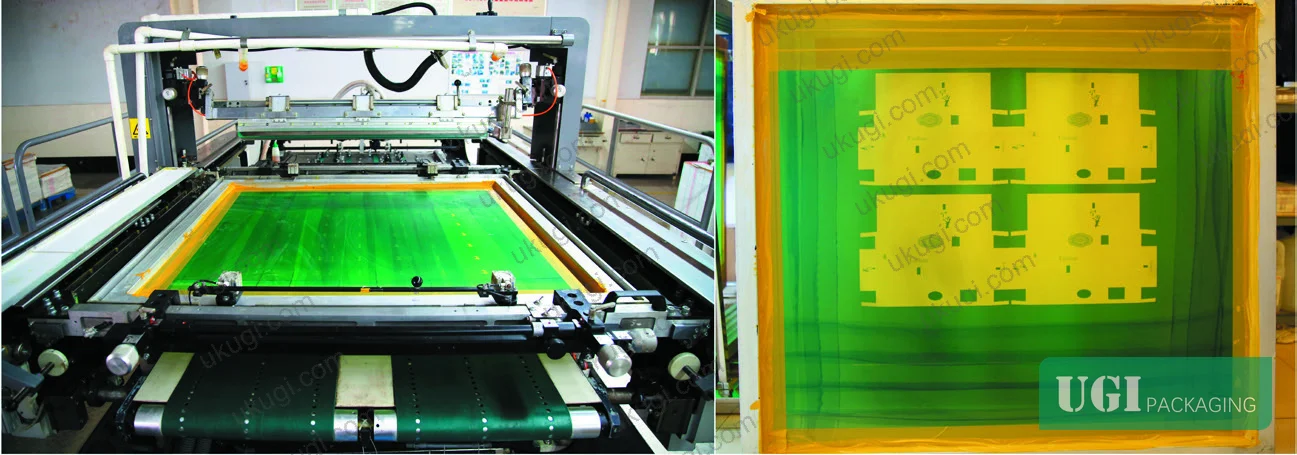
In supplier qualification work, three of the six manual-ink-management screen printing setups reviewed showed measurable color shift within a single production batch — well before operators triggered an ink change. Two of those three had no documented ΔE monitoring protocol at all. That’s not a sample aberration; it reflects how widely the root cause is misunderstood at the press-floor level.
Automatic Ink Circulation System Design for Screen Printing Color Consistency #
The engineering fix targets the root cause directly: replace batch-mode ink loading with a continuous circulation loop that constantly refreshes the ink in the blade channel, preventing particle depletion from progressing.
The system architecture has five integrated components:
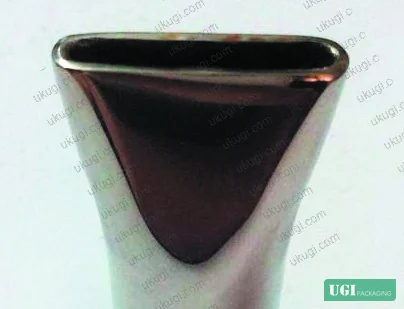
Ink supply line with flat-profile nozzle. The supply outlet is positioned at the geometric center of the blade channel — center of the longitudinal axis, center of the gap between squeegee and flood blade. The nozzle is shaped as a flat slot rather than a round bore. This distributes fresh ink laterally across the channel width rather than pooling it centrally, allowing gravity and blade motion to spread it evenly to both ends within the printing cycle.
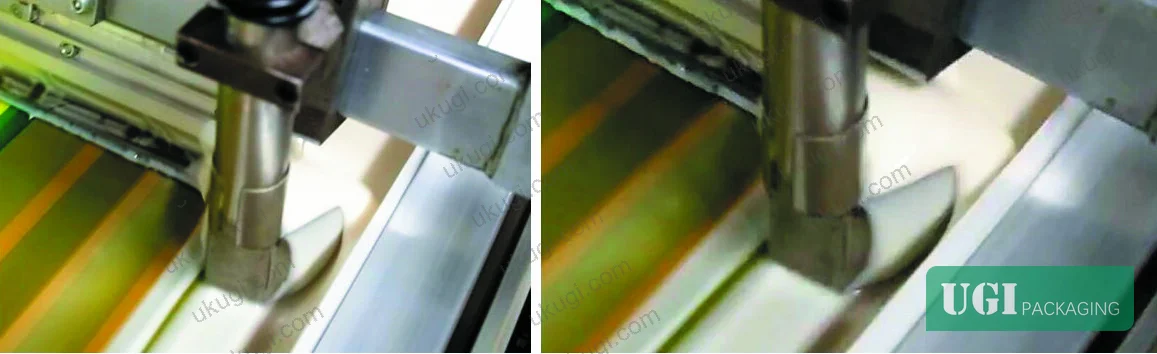
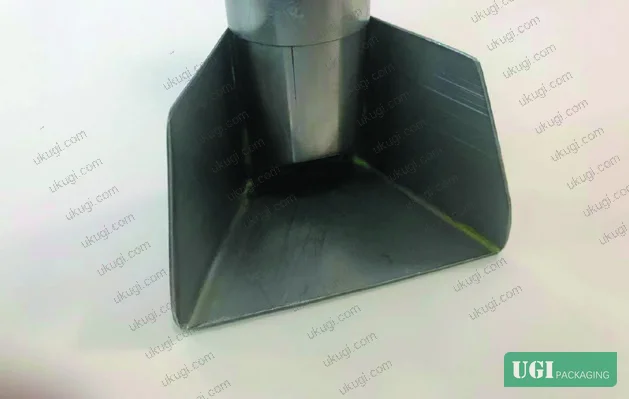
Ink return (recovery) line with trapezoidal collector shovels. Spent ink flows outward toward both sides of the screen plate under the combined effect of gravity and blade reciprocating motion. Two recovery inlets are mounted at each end of the squeegee beam. Trapezoidal-profile collector shovels are fitted to these inlets, height-adjustable to make light contact with the screen surface when the squeegee descends — firm enough to collect residual ink, gentle enough not to damage the mesh. The squeegee downstroke and screen reciprocation drive the shovels to sweep ink into the return ports.
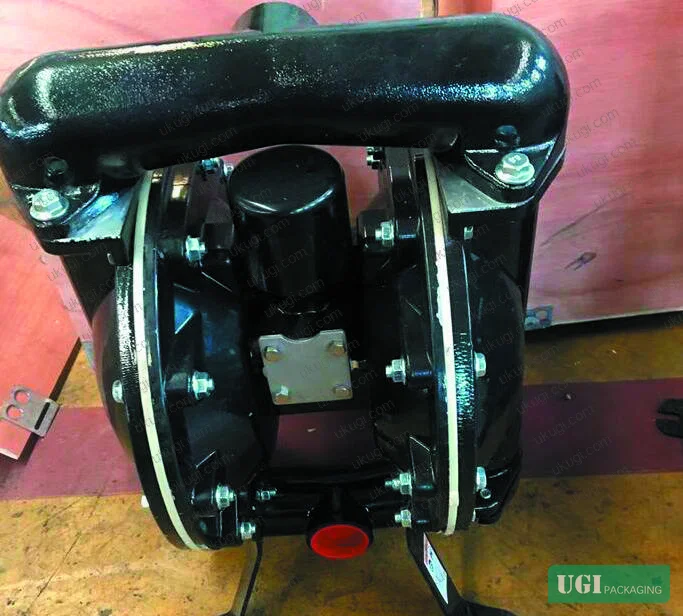
Two pneumatic diaphragm pumps. One pump drives fresh ink supply from the ink tank to the screen. The second drives recovered ink return from the screen back to the ink tank. Each pump has an independent on/off switch and a pneumatic flow rate control valve, allowing supply and return rates to be tuned independently. The system uses the existing compressed air infrastructure already present on automatic screen presses — the same air supply that drives screen clamping, squeegee actuation, and flood blade operation — requiring no additional power utilities.
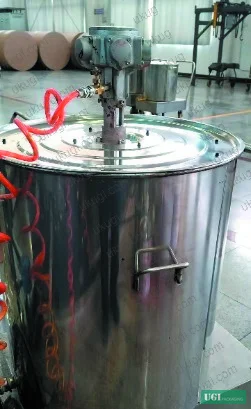
Ink tank with pneumatic agitator. The storage tank is cylindrical with a sealed lid. A pneumatic agitator is mounted through the lid with its own independent speed control valve. Recovered ink is not returned directly to the tank in raw form. It is first re-milled on a laboratory ink grinding mill, then blended with a measured proportion of ink modifier (調墨油) to restore printability to a level comparable to fresh ink. This reconstituted material is then added to the tank at a controlled ratio and homogenized with the agitator before re-entering the supply circuit.
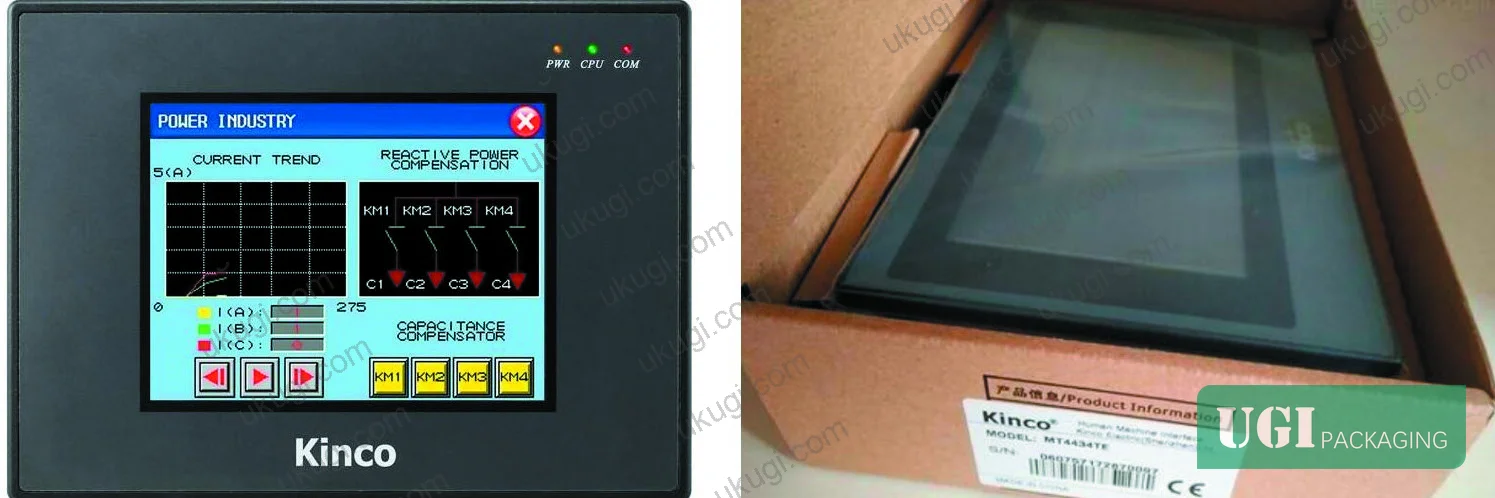
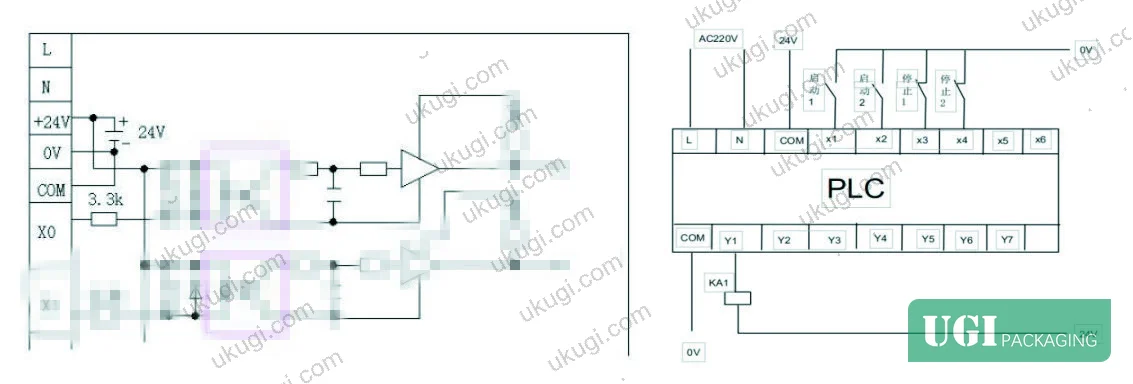
Centralized touchscreen control system. All actions — supply pump start/stop, return pump start/stop, agitator speed, flow rate adjustment — are integrated into a PLC with a touchscreen interface. This eliminates the need for manual intervention at the press during a run.
The flood blade clearance setting during the inking stroke is maintained at 0.3–0.5 mm above the screen surface. This gap is adjustable based on ink viscosity and coverage requirements, and it is critical that the circulation system flow rate is tuned to this gap — too high a supply rate at a narrow gap will cause ink to back-flow or flood unevenly.
Press Operating Cycle and Ink Flow Dynamics #
Understanding how the automatic screen press moves during each impression cycle explains why the supply and return nozzle positions matter so precisely.
During the inking stroke: the flood blade descends to the 0.3–0.5 mm clearance position. The screen plate moves rearward (away from the squeegee/flood blade assembly). The flood blade remains stationary and coats the screen with ink as it passes. At this point the impression cylinder has completed 180° of rotation.
During the printing stroke: the impression cylinder gripper holds the substrate. The screen reverses direction, moving forward. The flood blade lifts; the squeegee descends. Ink in the blade channel is driven through the screen mesh openings by squeegee pressure, transferring the printed image onto the substrate. The cylinder completes its full 360° rotation.
The ink between the two blades spreads laterally from center to edges under gravity and blade motion during each inking stroke. Fresh ink supplied at the center replaces what was consumed or moved outward. Spent ink accumulating at the edges is captured by the recovery shovels at the beam ends. This creates a continuous plug-flow renewal of the ink body in the active zone — maintaining particle size distribution in the printing zone close to that of fresh ink throughout the run.
The flood blade clearance of 0.3–0.5 mm is not arbitrary. Below 0.3 mm, the ink film deposited on the screen is insufficient for full coverage; above 0.5 mm, coarse particles begin to dam at the blade edge, accelerating segregation rather than preventing it.
For buyers specifying this type of surface finish, this is the level of process control detail worth asking about. ISO 15397:2014 covers ink rub resistance testing, which is one method to verify that the reconstituted ink in circulation maintains adequate film properties — not just color, but durability.
Practical Guidance for Buyers #
Honestly, most buyers over-specify the visual outcome (frosted effect, matte level, tactile feel) without specifying the process controls that actually deliver consistent results batch over batch. A supplier can pass a first-article inspection on matte screen printing and fail on the 5,000th sheet of a 50,000-unit run.
The questions to ask aren’t about ink brand or press brand. They’re about ink management. Does the press run continuous circulation or batch-load? Is recovered ink reconstituted before re-use or dumped? What is the documented ΔE tolerance and at what frequency is it measured during a run?
For packaging that requires premium tactile finishes — custom paper boxes with soft-touch matte, frosted or ice-crystal effects on rigid gift sets, cigarette pack surface finishing — the difference between manual and automated ink management is the difference between 0.5% color rejection and 8%+ rejection in a long-run production scenario.
Color consistency in screen printing also intersects with broader print quality standards. Process control principles from ISO 12647-2:2013 — while written for offset lithography — establish the measurement framework (ΔE tolerances, solid ink density, tonal value increase) that most buyers and suppliers now apply across all print processes.
Ukugi operates as an OEM/ODM manufacturer based in Guangzhou, producing premium packaging with full surface finishing capabilities including screen-printed matte and tactile coatings. If you’re qualifying a supplier for frosted or matte screen finish production, our technical team can walk you through press configuration and ink management protocols specific to your substrate and effect requirements.
Need a custom formulation or sample? Request a quote from our team →
Technical Verification Questions #
- What is the particle size distribution range (minimum and maximum μm) in your UV matte screen ink, and how do you verify that the active printing zone maintains this distribution within ±15% of initial specification during a full production run?
- What is your flood blade clearance setting for matte UV inks, and is it maintained within the 0.3–0.5 mm range — or do operators adjust it without documented tolerance limits?
- Describe your ink circulation system: is fresh ink supplied continuously or in batch loads, and where is the supply nozzle positioned relative to the squeegee-flood blade centerline?
- How is recovered (returned) ink reconstituted before re-introduction to the ink tank — specifically, is it re-milled and blended with ink modifier (or equivalent) at a documented ratio before agitation?
- What is your ΔE monitoring frequency during a screen printing run for matte/frosted effects, and what is the in-process rejection threshold that triggers an ink management intervention?
Quality Verification Checklist #
- ☐ Supplier uses continuous ink circulation (not batch manual loading) with pneumatic or motorized pump — confirm by observing or requesting process video of press running matte UV ink
- ☐ Ink supply nozzle is positioned at longitudinal and lateral center of the squeegee-flood blade channel — not at the end or side of the blade beam
- ☐ Flood blade clearance is set and documented at 0.3–0.5 mm for matte UV inks; any adjustment must be logged with rationale
- ☐ UV matte ink particle size distribution confirmed in range 15–60 μm by supplier technical data sheet or incoming inspection
- ☐ Recovered ink is re-milled and blended with modifier at a controlled ratio before return to circulation — not raw-recycled directly into the supply tank
- ☐ ΔE color difference is measured at defined intervals during the production run (not only at first article and end of run)
- ☐ Ink tank agitation (pneumatic or mechanical) is continuous or timed during press operation to prevent particle settling in the storage vessel
- ☐ UV ink handling procedures include chemical exposure controls — skin contact with photoinitiator-containing UV inks is a documented safety risk; verify PPE protocol is in place
Key Specifications Table #
| Parameter | Recommended Value | Verification Method |
|---|---|---|
| UV matte ink abrasive particle size range | 15–60 μm | Supplier TDS or laser diffraction particle size analysis |
| Flood blade clearance above screen surface | 0.3–0.5 mm | Feeler gauge or dial indicator measurement at setup |
| Ink supply nozzle position (lateral) | Center of squeegee-flood blade gap | Physical inspection of supply line outlet position |
| Ink supply nozzle position (longitudinal) | Center of blade beam length | Physical inspection; confirm equidistant from both beam ends |
| Ink circulation pumps | 2 × pneumatic diaphragm pumps (independent supply + return) | Equipment inspection; confirm independent flow control valves on each |
| Recovery inlet positions | 2 inlets at each end of squeegee beam | Physical inspection of ink return hardware |
| Ink tank agitation | Pneumatic agitator with independent speed control | Equipment inspection; agitator active during press run |
| ΔE color deviation trigger threshold | Within process-specified tolerance (typically ΔE ≤ 3.0 for premium packaging) | Spectrophotometric measurement per ISO 12647-2:2013 |
Looking for a manufacturer that meets these specs? Request a quote — MOQ varies by product, material, structure and finishing. Product-specific MOQ is confirmed with each quotation.
References #
Data source: Continuous Ink Circulation Systems for Color Consistency Control in UV Matte Screen Printing of Premium Packaging, P.-M. Gao et al., Journal of Applied Polymer Science, 2024
Frequently Asked Questions #
Why does color drift happen in screen-printed matte finishes but not in standard spot UV gloss coatings?
Gloss UV varnishes are essentially particle-free — they’re clear resin systems that cure to a continuous film. Matte and frosted UV inks rely on abrasive filler particles (15–60 μm) suspended in the resin to create the diffuse surface texture. When those particles segregate during printing, the ink film composition changes and so does the optical output. A gloss coating has no particle loading to lose, so it doesn’t exhibit the same drift mechanism.
What is the actual downtime cost of manual ink changes on a screen press?
It depends on run length and operator workflow, but each manual ink change requires lifting both blades, removing old ink, reloading fresh ink, and resetting. In high-speed automatic screen printing, this is typically a 5–15 minute event per stop. In a long packaging run, multiple stops per shift compound directly into equipment utilization loss — the continuous circulation system eliminates these stops entirely.
Can recovered/recycled ink match the print quality of fresh ink after reconstitution?
Not automatically. Raw recovered ink has a depleted particle distribution — it’s coarser and off-ratio compared to fresh stock. Reconstitution requires re-milling on a grinding mill and blending with ink modifier (typically a viscosity/flow agent) at a documented ratio before the material is agitated back into the supply tank. When done correctly, reconstituted ink approaches fresh-ink print quality. Skipping the re-milling step and mixing recovered ink directly into fresh stock is a common shortcut that degrades the entire tank.
Does this type of automatic ink circulation system apply to all screen printing inks, or only matte UV types?
The particle segregation problem is most severe in matte and frosted UV inks because of the high particle loading and wide particle size range. Standard UV gloss varnishes and conventional screen inks don’t segregate the same way. However, any high-viscosity screen ink with pigment or filler particles above approximately 10 μm in a wide distribution can benefit from circulation — certain metallic and pearlescent screen inks fall into this category as well.
What safety risk is associated with manual UV ink handling in screen printing, and how does automation address it?
UV screen inks contain photoinitiators and reactive acrylate monomers that are skin sensitizers and can cause chemical burns on prolonged contact. Manual ink loading requires operators to handle liquid UV ink directly, with splash and contact exposure during each ink change. Automated circulation systems eliminate manual contact with liquid ink during press operation — operators only handle ink during initial tank loading and periodic reconstitution of recovered ink, reducing exposure frequency significantly.
Published by ukugi.com Technical Team | Request a quote


