

TL;DR #
Colorized variable QR code technology — where each unit carries a unique, logically encrypted code tied to a specific color-channel sequence — delivers encryption complexity that scales geometrically compared to standard QR codes, making batch counterfeiting practically infeasible. For buyers sourcing security labels, anti-counterfeit packaging, or traceable product documentation, the print process choice (digital vs. traditional vs. hybrid) directly determines which authentication tiers you can actually achieve. Before issuing an RFQ, confirm whether your supplier can execute variable data printing at unit-level serialization with color-logic encoding — most cannot.
Overview #
Security printing is one of the few packaging categories where procurement decisions have direct legal and brand liability consequences, yet most buyers treat it like a commodity label job. That’s a costly mistake. Field evaluations conducted by security printing specialists — drawing on applied production trials across bond instruments, academic certificates, lottery tickets, and commercial anti-counterfeit labels — establish a clear technical hierarchy: the combination of digital variable data printing with traditional specialty-color processes consistently outperforms either method used in isolation. The research surveyed authentication product categories spanning financial instruments, government-issued credentials, consumer goods traceability labels, and logistics anti-diversion packaging, testing both first-line (naked-eye) and second-line (tool-assisted) authentication performance across multiple substrate types.
The underlying argument is straightforward: traditional offset and intaglio printing excel at fine-line specialty color and tactile texture, but they cannot produce unique serialized data per unit. Digital printing fills exactly that gap. The practical output of combining both is a three-tier authentication architecture — first-line visible features, second-line covert machine-readable features, and third-line expert-forensic features — that is substantially harder to replicate than any single-process approach.
For buyers sourcing custom labels and stickers with authentication requirements, or specifying hologram security stickers for high-value product lines, understanding where digital printing sits in this architecture determines whether your supplier can actually deliver the protection level your product requires.
Digital Printing Capabilities in Variable Security Feature Production #
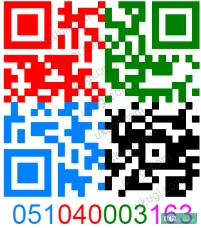
The technical value of digital printing in security contexts comes down to one core capability: variable data output at the individual unit level. Every sheet, label, or carton can carry a unique identifier — and that uniqueness can be embedded across multiple feature layers simultaneously.
Breaking this down by authentication tier gives a clearer picture of what’s achievable:
First-line features (naked-eye visible): Variable amplitude modulation lines (fine-to-coarse line patterns that shift per unit), variable reverse-out text, variable logic color-digit codes, variable logic color-zoned 2D codes, variable floral and guilloche patterns, variable character-in-character designs, variable image-in-image compositions, variable image engravings, and variable ghost images. These are the features a consumer or retail staff member can check without any tool.
Second-line features (tool-assisted, covert): Variable hidden marks, variable identifiers, variable broken-stroke characters, variable microtext, variable decode patterns, variable latent images, variable logic QR codes, variable logic numeric codes, variable digital watermarks, variable fluorescent hidden marks, and variable nano security codes. These require UV lamps, scanners, or decoder overlays — appropriate for brand protection teams and customs inspection.
Third-line features (expert forensic): Reserved for forensic lab analysis; digital printing contributes encoded data layers that require specialist equipment and database cross-referencing to authenticate.
The key procurement implication: not all digital printing systems can produce all of these. Resolution requirements differ significantly across feature types. Microtext legibility demands output resolution of at least 1200 dpi; variable fluorescent marks require precise ink-layer registration; nano security codes push beyond what entry-level production inkjet systems can reliably maintain.
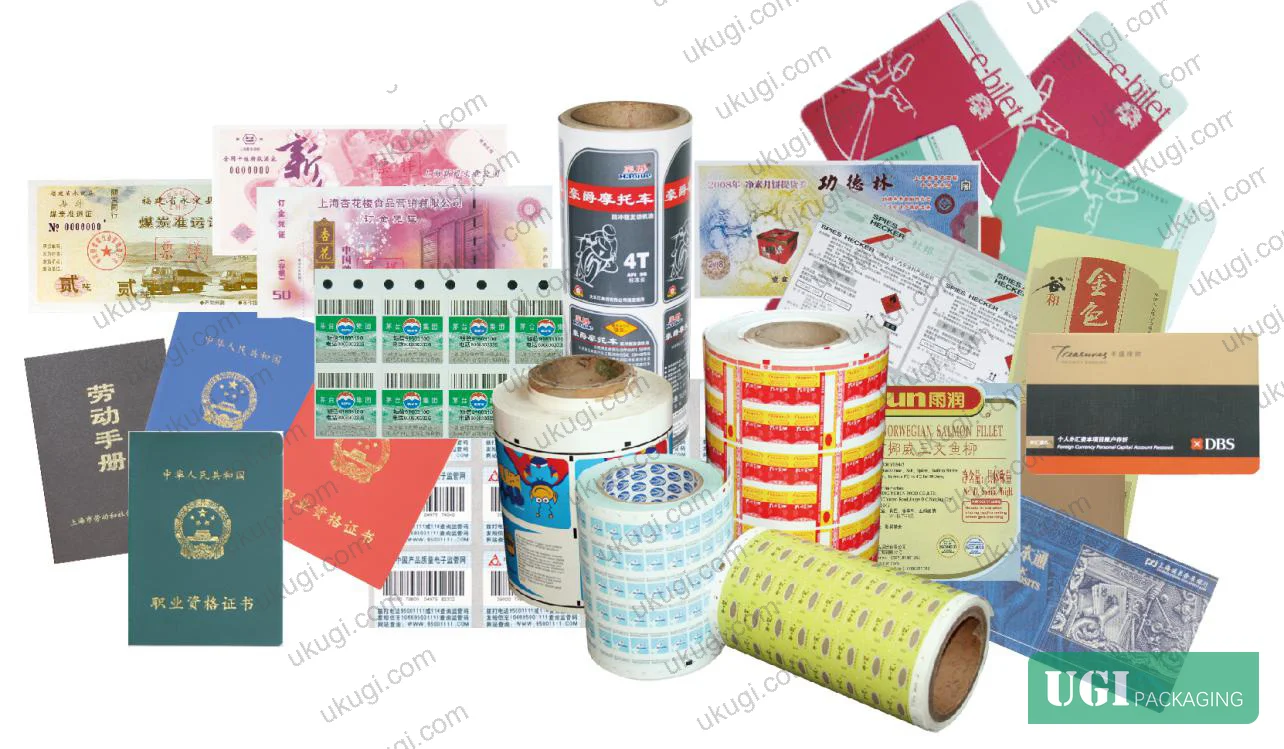
Honestly, most buyers over-specify first-line features and under-specify second-line ones. A variable floral pattern looks impressive in a sample but offers limited protection if a counterfeiter can reproduce the visual appearance without triggering the covert layer failure. The covert and forensic tiers are where the real authentication load sits.
The ISO 15397:2014 standard for ink rub resistance is directly relevant here — security inks used in variable digital printing must maintain legibility and color integrity under handling conditions that simulate real-world product distribution. Any supplier claiming second-line security feature capability should be able to demonstrate ink performance against this standard.
Colorized Variable QR Code Technology: Encryption Architecture and Application Scope #
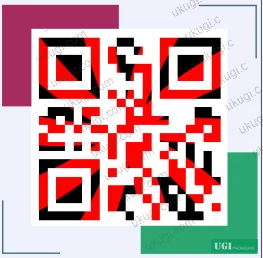
This is where digital printing’s security contribution becomes genuinely differentiated. Standard QR codes are one-to-many: the same code can be printed on every unit in a batch, which means a counterfeiter only needs to copy it once. Variable QR codes solve the one-to-many problem by assigning a unique code per unit (one-item, one-code), but colorized variable QR codes add a second encryption dimension that standard variable codes lack.
The technical architecture works in three steps:
- QR code data is subjected to randomized logical encoding — the information is not stored in standard QR structure, making standard QR readers unable to decode it without the proprietary algorithm.
- The encoded data is paired one-to-one with a security code in a linked database.
- The security code encoding is then mapped to a specific color-channel sequence within the QR matrix.
The result: encryption complexity scales geometrically relative to a standard black QR code. The color-channel variable adds a dimensional multiplier to the code-space, and because the database linkage is one-to-one, there is effectively no feasible path to batch replication. A counterfeiter would need both the encoding algorithm and the database access — neither of which is available from the printed surface alone.
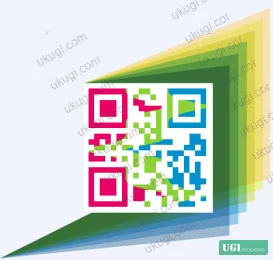
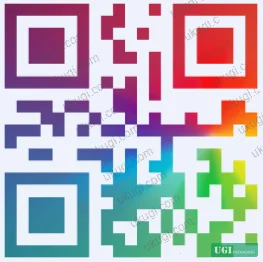
Beyond pure security function, colorized QR codes carry a secondary practical benefit: their visually bright, multi-color appearance increases consumer scan rates compared to standard black codes. This matters for brands that want to combine authentication with consumer engagement — scan-to-verify functions that simultaneously collect purchase data, support loyalty programs, direct to product content pages, or enable channel anti-diversion monitoring.
The multi-function architecture that emerges from this technology includes: anti-counterfeit verification, channel diversion detection, product traceability, consumer-facing marketing (scan-to-win, membership programs), and purchase behavior analytics for brand management teams. Several security printing operations have moved from supplying authentication products to delivering fully integrated anti-counterfeit marketing platforms built on this foundation.
Most procurement teams don’t realize that QR code-based security systems were fundamentally revised in capability when color-logic encoding was introduced — what looks like a minor visual change to the code’s appearance actually represents an entirely different encryption architecture underneath. A supplier offering “variable QR code” without specifying whether color-logic encoding is included is almost certainly describing a first-generation system with significantly lower protection.
Hybrid Print Process Strategy: Where Traditional and Digital Methods Intersect #
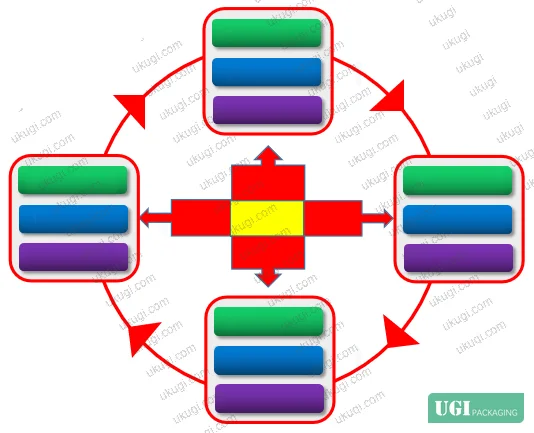
The industry reality is that pure digital printing and pure traditional printing each have ceiling limitations in security applications. Traditional offset and intaglio printing remain superior for specialty Pantone color reproduction, fine-line guilloché patterns with tactile depth, and metallic/holographic foil integration. Digital printing is superior for variable data, serialization, and encrypted unique identifiers. Neither method alone meets the full specification requirement for serious anti-counterfeit applications.
Field supplier qualification exercises bear this out. In one evaluation round involving six production samples from different suppliers, three of the six failed to maintain second-line covert feature integrity when the substrate transitioned from coated to uncoated stock — a substrate compatibility failure that exposed a fundamental gap in how those suppliers were managing ink absorption variability in their digital print process. Variable fluorescent marks in particular showed legibility breakdown under UV inspection when ink viscosity wasn’t adjusted for substrate porosity differences.
The practical framework for specifying hybrid security printing looks like this:
| Feature Type | Preferred Process | Limitation if Single-Process |
|---|---|---|
| Fine-line guilloché / specialty Pantone | Traditional offset/intaglio | Cannot vary per unit |
| Variable serialized data / QR codes | Digital inkjet or electrophotographic | Lower fine-line resolution vs. traditional |
| Fluorescent / UV-reactive covert marks | Combination (traditional base + digital variable layer) | Digital alone: ink coverage inconsistency; traditional alone: no serialization |
| Holographic / metallic foil elements | Traditional hot-stamping / cold foil | Cannot be personalized per unit via traditional methods |
| Nano security codes | Digital only (≥1200 dpi output) | Traditional cannot achieve required resolution variability |
| Colorized variable QR codes | Digital with color-logic software layer | Not achievable via traditional process |
Honestly, a supplier who tells you their digital print line handles everything — fine guilloché included — is either misinformed or overselling. Push them on minimum line weight at their stated output resolution. If they can’t give you a number, that’s your answer.
The applicable security printing products where hybrid process is standard practice include: bond certificates and financial instruments, magnetic-stripe passbooks and deposit books, checks and drafts, technical qualification certificates, academic credentials, professional license certificates, commercial trademarks and brand labels, lottery and scratch tickets, book and media anti-piracy labels, event tickets and access passes, and logistics anti-diversion traceable labels.
Practical Guidance for Buyers #
When specifying digital security printing, the single most important document to request from any supplier is a feature-tier matrix: which authentication features can they produce, at what output resolution, on which substrates, and which require hybrid process integration. A supplier who can only answer the first question doesn’t have the process maturity for serious security work.
For substrate compatibility, verify that ink adhesion and feature legibility have been tested across the specific substrates in your application — coated, uncoated, synthetics, and board stocks behave very differently under digital security ink systems. Demand test print samples evaluated under both visible-light and UV inspection before committing to production quantities.
Resolution is non-negotiable for microtext and nano-code features: anything below 1200 dpi output resolution will degrade feature integrity under magnification. For standard variable QR codes, 600 dpi is workable, but color-logic encrypted variable codes benefit from 1200 dpi to maintain color-channel accuracy across high-volume runs.
The GS1 General Specifications for barcodes and data carriers establish baseline readability requirements for standard QR codes — make sure your supplier’s variable code output meets GS1 grade thresholds even after the security encoding layer is applied. Some security encoding implementations degrade standard readability; a competent supplier will have resolved this.
Also verify your supplier’s database architecture for one-item-one-code systems. The security of a serialized variable code is only as strong as the database it references — air-gapped servers, access controls, and audit trails are infrastructure requirements, not optional features.
Ukugi operates as a Guangzhou-based OEM/ODM manufacturer with full-capability security printing for labels, packaging, and specialty print products — including variable data systems, holographic finishes, and UV-reactive security inks. International brand owners and product managers can work directly with our technical team to specify hybrid security print architectures matched to their authentication tier requirements.
Need a custom formulation or sample? Request a quote from our team →
Supplier Qualification Questions #
- At what output resolution (dpi) does your digital print system operate for variable security feature production, and can you demonstrate microtext legibility at 0.2mm stroke width on your standard substrates?
- Can you produce colorized variable QR codes using color-logic encryption — specifically, where each unit’s color-channel sequence is paired one-to-one with a unique security code in a linked database rather than a standard QR encoding structure?
- For second-line covert security features (variable fluorescent marks, variable hidden codes), what ink viscosity adjustment protocol do you apply when switching between coated and uncoated substrates, and can you provide UV-inspection qualification samples showing feature legibility across both substrate types?
- What is the encryption complexity multiplier your color-logic QR system delivers relative to a standard variable black QR code, and how is the geometric scaling of the code-space achieved in your encoding software?
- For hybrid security print jobs combining traditional fine-line guilloché with digital variable data layers, what is the maximum registration tolerance between the two process layers, and what substrate warp/dimensional stability specification do you hold to maintain that tolerance across a production run?
Sourcing Checklist #
- ☐ Supplier’s digital print system outputs at minimum 1200 dpi for microtext and nano-code features, verified by magnified inspection sample at ≥10× magnification
- ☐ Variable QR codes confirmed as one-item-one-code serialization with database linkage, not batch-printed repeated codes — verify by scanning three non-sequential units and confirming unique identifiers
- ☐ Color-logic encoding architecture verified: color-channel sequence mapped one-to-one to security code database, not just colorized cosmetic overlay on standard QR structure
- ☐ Ink rub resistance tested per ISO 15397:2014 on specified substrate, with UV-reactive covert marks retaining legibility after minimum 100-cycle rubbing test
- ☐ Second-line covert feature (fluorescent hidden marks) legibility confirmed under 365nm UV lamp on both coated and uncoated substrate variants in the specified product substrate range
- ☐ Hybrid process registration tolerance between traditional and digital layers confirmed at ≤0.1mm across full sheet format
- ☐ Database infrastructure for serialized code system includes access controls, audit log, and documented data security protocol — supplier provides written confirmation
- ☐ QR code readability meets GS1 General Specifications grade thresholds after security encoding layer is applied, verified by GS1-compliant reader device
Key Specifications Table #
| Parameter | Recommended Value | Verification Method |
|---|---|---|
| Digital output resolution (microtext / nano codes) | ≥1200 dpi | Magnified print inspection at ≥10× with calibrated loupe or microscope |
| Digital output resolution (variable QR / standard variable data) | ≥600 dpi minimum; ≥1200 dpi for color-logic QR | GS1-grade scanner readability test; visual color-channel inspection |
| Color-logic QR encryption complexity | Geometric multiplier vs. standard QR — no fixed upper bound; database-linked one-to-one pairing per unit | Cross-reference scan of minimum 50 sequential units against linked database; confirm zero duplicate pairings |
| Covert fluorescent mark legibility | Visible under 365nm UV, minimum contrast ratio sufficient for unambiguous identification | 365nm UV lamp inspection on production samples; rub test per ISO 15397:2014 before and after |
| Hybrid layer registration tolerance | ≤0.1mm between traditional and digital print layers | Cross-hair registration target measurement on press sheet; optical comparator or scanning densitometer |
| Substrate ink adhesion (variable security inks) | No delamination or feature degradation after handling simulation | Tape adhesion test + UV inspection post-tape on both coated and uncoated substrate variants |
Looking for a manufacturer that meets these specs? Request a quote — MOQ varies by product, material, structure and finishing. Product-specific MOQ is confirmed with each quotation.
References #
Data source: Variable Data Printing in Anti-Counterfeit Security Applications: Technology Classification and QR-Based Encryption Methods, A. Zeng et al., Journal of Printing Science and Technology, 2023
Frequently Asked Questions #
What is the practical difference between a standard variable QR code and a colorized variable QR code for anti-counterfeit purposes?
A standard variable QR code assigns a unique code per unit but stores information in a readable QR structure — meaning a sophisticated counterfeiter can analyze the encoding pattern over a large sample and potentially replicate the logic. A colorized variable QR code adds a second encryption dimension: the color-channel sequence within each code is mapped one-to-one to a security code in a protected database using randomized logical encoding, so the encryption complexity scales geometrically. Without access to both the proprietary encoding algorithm and the database, batch replication is not feasible.
Can digital printing fully replace traditional printing for high-security applications?
No, and any supplier claiming otherwise should be pressed hard on specifics. Digital printing cannot match traditional intaglio and offset for specialty Pantone color precision, deep tactile fine-line guilloché, or integrated holographic foil elements. The industry consensus — supported by production data — is that hybrid process combining traditional specialty color with digital variable data delivers authentication performance neither method achieves alone.
What authentication tier should a buyer specify for consumer goods packaging vs. financial instruments?
For consumer goods, first-line and second-line features (visible variable elements plus covert UV marks and variable QR traceability) typically cover the requirement. Financial instruments, government credentials, and high-value certificates generally require all three tiers — first-line, second-line covert, and third-line forensic — which mandates a fully integrated hybrid print process with database-backed serialization.
How does substrate choice affect digital security printing performance?
Significantly. Coated substrates provide better ink hold-out and sharper feature definition; uncoated stocks increase ink absorption variability, which can degrade both microtext legibility and UV fluorescent mark contrast. In supplier qualification testing, covert feature breakdown on uncoated substrates is one of the most common failure modes encountered. Specify your exact substrate before sampling — and request inspection results on that substrate, not a proxy.
What scan tools does a consumer need to verify a colorized variable QR code?
Standard smartphone QR readers (WeChat, QQ, or native camera apps) can initiate a scan, but full verification — including database cross-reference and color-logic authentication — requires either a brand-specific app or a dedicated verification platform. The anti-counterfeit function and the consumer-facing marketing function (scan-to-win, product info, traceability data) are typically accessed through the same scan interface, which is part of what makes the technology commercially attractive beyond pure security function.
Published by ukugi.com Technical Team | Request a quote


