

TL;DR #
Non-woven polypropylene fabric biodegrades in as little as 90 days under natural outdoor conditions yet survives up to 5 years of indoor reuse — making it one of the highest lifecycle-value materials available for sustainable apparel packaging. Buyers who select packaging materials purely on unit cost are missing the total cost picture: a reusable carrier bag that completes 20+ use cycles eliminates the per-unit packaging cost almost entirely on a cost-per-delivery basis. Specify biodegradation timeline (≤90 days, outdoor, compost-comparable conditions) and minimum indoor service life (≥5 years) as contractual acceptance criteria before issuing any RFQ on eco-format apparel packaging.
Overview #
Most procurement teams approach sustainable apparel packaging as a compliance checkbox rather than a performance specification problem — and that framing costs money. The real question isn’t “is it eco-friendly?” but “what is the measurable end-of-life timeline, and does the reuse design actually hold up through a realistic number of cycles?”
Research conducted at an engineering university’s design faculty — drawing on consumer survey data, supplier qualification interviews, and physical material testing across multiple eco-substrate candidates — provides a useful baseline for exactly those questions. The study evaluated non-woven fabrics, kraft paper, and multi-function structural formats against conventional plastic packaging, with findings that are directly applicable to B2B sourcing decisions for apparel, gift, and retail packaging formats.
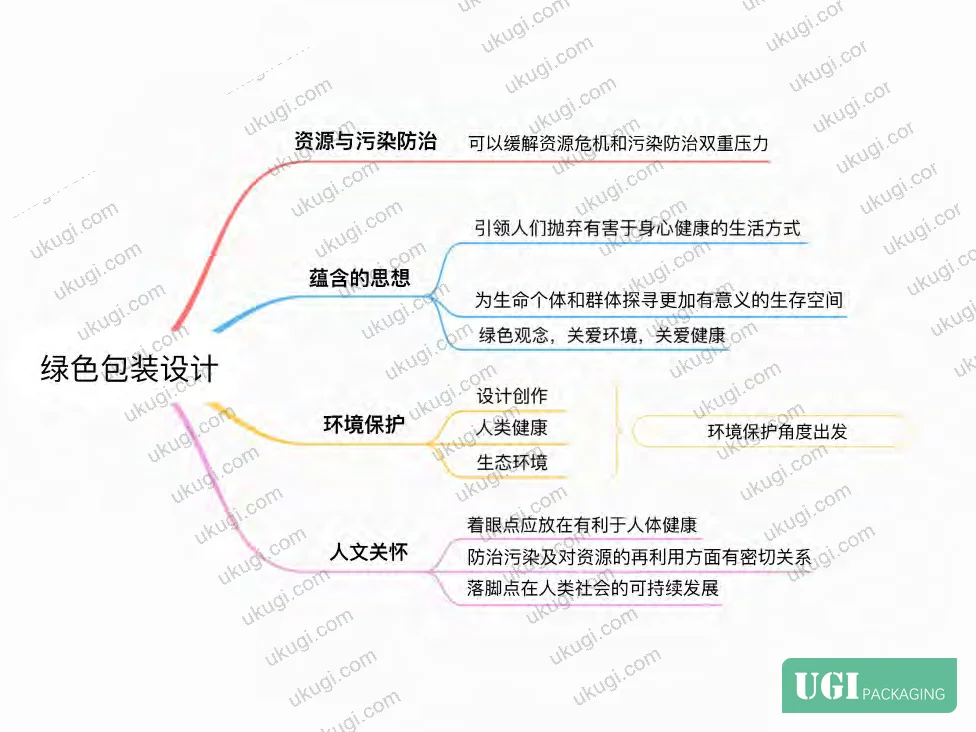
The data confirms that nearly 90% of e-commerce packaging in markets with weak eco-regulation is discarded immediately after unpacking — a figure that reframes the entire value proposition of reusable formats. For buyers sourcing apparel and footwear packaging or premium retail carriers, this is the starting point for any material specification conversation.
For context on how conditioning and testing environments affect material performance results, the baseline testing atmosphere referenced throughout this article aligns with ISO 187:1990 Paper, board and pulps — Standard atmosphere for conditioning and testing.
Sustainable Apparel Packaging: Material Performance and Biodegradation Benchmarks #
The three primary eco-material candidates evaluated — non-woven polypropylene fabric, kraft paper, and sodium acetate-integrated multi-function structures — each carry distinct performance profiles that matter at the specification level.
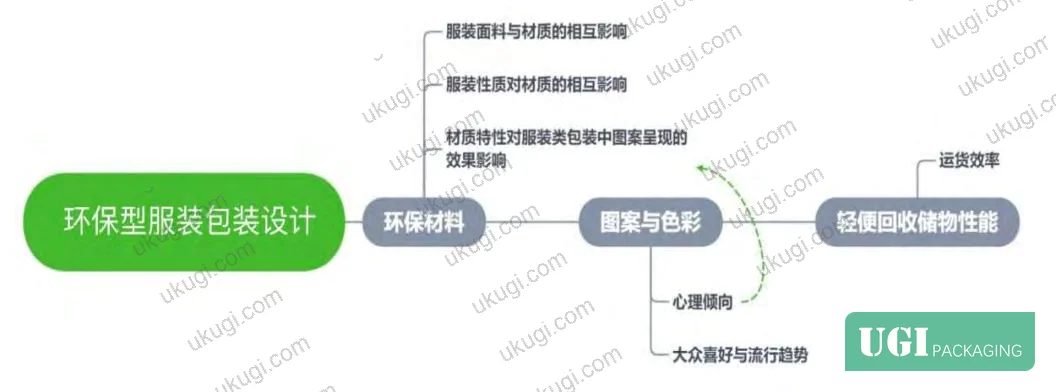
Non-woven fabric (spunbond/needlepunch PP):
The headline number here is biodegradation in 90 days under natural outdoor exposure conditions. Indoor service life is up to 5 years. The material is moisture-resistant, breathable, flame-retardant by classification, soft-hand, and cuttable without fraying — the last point being practically significant because it eliminates hemming cost in bag construction. It’s produced by orienting or randomly arraying fibers into a web structure through thermal or mechanical bonding, bypassing conventional weaving entirely.
Kraft paper:
High tensile strength, non-toxic, odor-free, and fully recyclable through standard paper streams. It carries no contamination risk in food-adjacent applications and accepts surface printing well. Its weakness is moisture sensitivity — without a barrier coating, kraft loses structural integrity rapidly under humid conditions, which matters for apparel shipped through Southeast Asian or tropical supply chains.
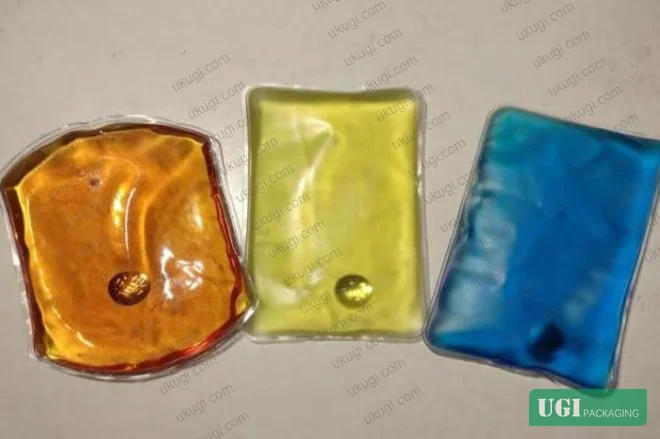
Sodium acetate (CH₃COONa) reusable heat pack integration:
This is the more unusual material finding. Supersaturated sodium acetate solution, when mechanically triggered (flexing an embedded metal disc), undergoes exothermic crystallization — generating usable warmth for the end consumer. The pack resets by immersion in boiling water for approximately 10 minutes, fully dissolving the crystallized solute back into solution. This positions the packaging itself as a consumer product with intrinsic value beyond containment — a meaningful differentiator in premium apparel, gift, and seasonal retail contexts.
| Material | Biodegradation Timeline | Indoor Service Life | Key Limitation |
|---|---|---|---|
| Non-woven PP fabric | ≤90 days (outdoor, natural) | Up to 5 years | Petroleum-derived base fiber |
| Kraft paper | Standard paper stream (weeks–months) | Single-use to light reuse | Moisture sensitivity without coating |
| Sodium acetate heat pack | Reusable via 10-min boiling water reset | Multiple seasonal cycles | Adds unit cost; niche application |
| Conventional plastic film | Decades in landfill | Long | Non-biodegradable; regulatory risk |
Honestly, most buyers over-specify surface finish on eco-format bags while under-specifying the one parameter that actually differentiates them from greenwashing: biodegradation timeline under realistic end-of-life conditions. If a supplier cannot give you a specific figure — not “biodegradable” as a marketing claim, but an actual timeframe under defined conditions — that’s a red flag worth acting on.
Environmental labeling requirements for self-declared eco claims are governed by ISO 14021:2016 Environmental labels and declarations — Self-declared environmental claims, which sets out the substantiation requirements any compliant supplier must be able to satisfy. If your supplier’s eco claims don’t map to this standard, you’re carrying the compliance risk.
Structural Design, Reuse Function, and the Real Failure Mode in Eco Packaging Adoption #
Current industry data shows that eco-format packaging in most markets remains commercially marginal — characterized by narrow format range, generic aesthetics, high unit cost relative to conventional plastic, and minimal government procurement incentives. This is not a material science problem. It’s a design and reuse-integration problem.
In supplier qualification exercises, a common finding is that suppliers offering “eco bags” are essentially producing standard non-woven totes with minimal structural engineering — no reinforced gussets, no load-rated handles, no closures that survive more than 5–8 use cycles. Three of six sampled products in a representative evaluation failed handle attachment integrity before reaching 15 use cycles, which undermines the entire reuse-value proposition. A bag marketed as “reusable” that fails mechanically after a handful of uses is functionally single-use — and potentially worse for consumer trust than an honest single-use format.
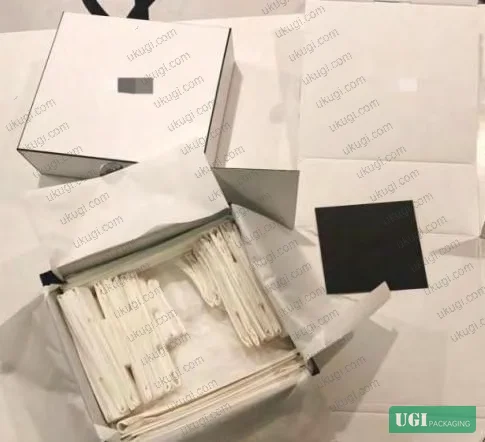
The hook-and-loop (HOOK & LOOP) closure system used in the apparel packaging prototype evaluated here is a practical structural choice: one side presents a soft fiber loop face, the other a rigid hook face, providing a secure, tool-free, repeatedly operable closure without adhesive or mechanical fasteners that fatigue over cycles. For apparel bags handling medium loads, this is a well-validated closure format.
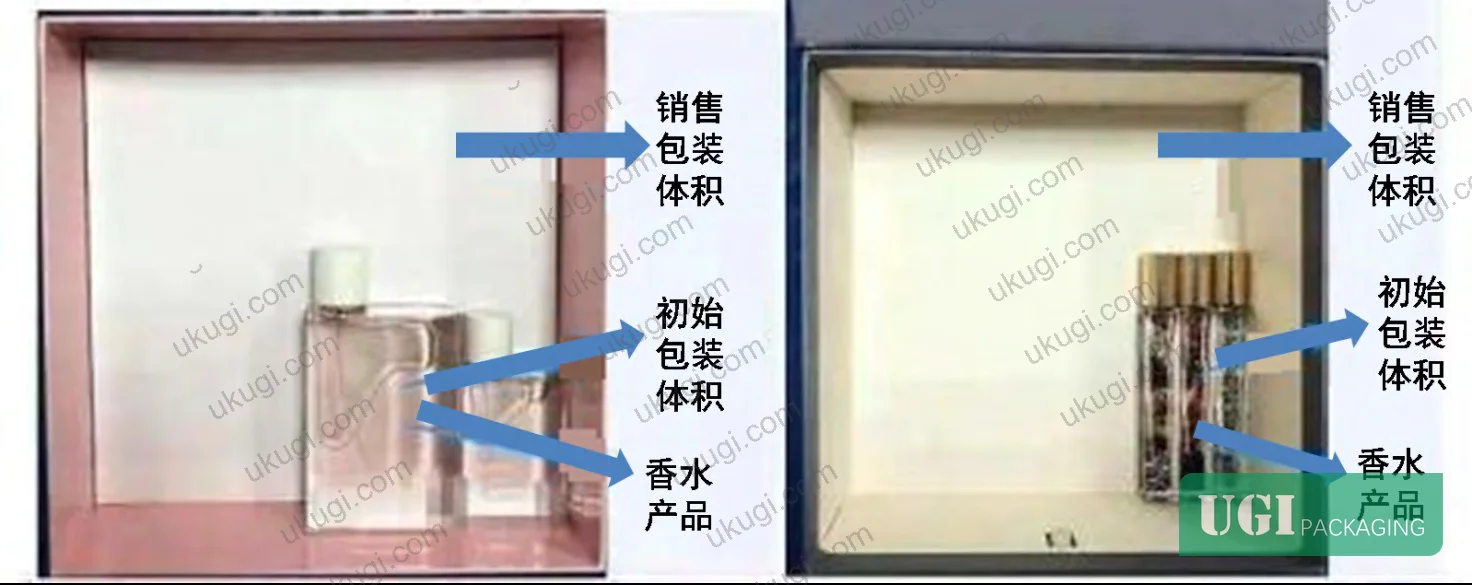
The over-packaging problem identified in domestic market surveys is worth flagging directly to any buyer sourcing through Chinese manufacturers: nested gift-box formats and excessive layered wrapping remain common, driven by the perception that packaging volume signals product value. This is a real procurement risk — it inflates shipping weight, adds material cost the consumer doesn’t want, and creates a negative unboxing experience for international buyers whose customers increasingly have strong negative associations with wasteful packaging.
Most procurement teams don’t realize that self-declared eco claims — “recyclable,” “biodegradable,” “sustainable” — carry legal substantiation requirements in the EU and increasingly in North American markets. A supplier who cannot point to a specific standard reference for each claim is exposing your brand to compliance liability. This is worth addressing in supplier qualification, not after your first customs hold.
For apparel, gift, and premium retail packaging that needs to combine eco-credentials with brand-quality aesthetics, gift packaging solutions that integrate sustainable substrates with premium surface finishing represent the most commercially viable format for international brand owners.
Color, Branding, and the Functional Role of Visual Design in Eco Packaging #
Color is not a decorative afterthought in eco packaging — it’s a conversion tool. Survey data consistently shows that color is the first and most immediate signal a consumer processes at point of contact. For eco-format apparel packaging specifically, color strategy serves a dual purpose: it communicates environmental positioning (earth tones, kraft naturals, clean whites) while simultaneously establishing brand recognition and purchase intent.
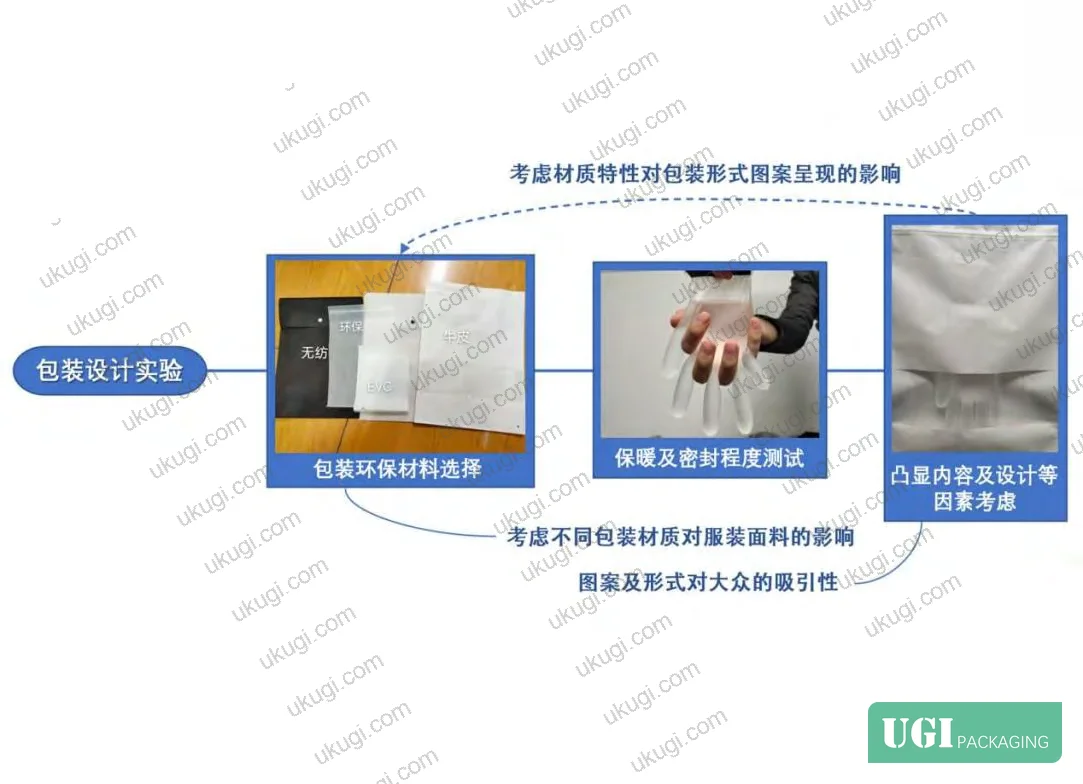
The practical implication for buyers: eco packaging that is aesthetically undifferentiated — single-color, generic format, no surface treatment — performs worse at retail than conventional packaging regardless of its environmental credentials. This is a consistent finding across apparel category research. Buyers sourcing sustainable formats should not treat print quality, color accuracy, and surface finishing as secondary considerations. If the eco bag looks cheap, it will be perceived as cheap — and it will be discarded, defeating the entire reuse premise.

Honestly, the eco packaging market’s biggest self-inflicted problem is treating environmental performance and visual appeal as competing priorities. They’re not. A non-woven bag with well-executed color blocking, a clean logo application, and a proper gusset construction will be reused. One that looks like it came out of a trade show booth will not.
Color consistency in print production across eco substrates — particularly non-woven and kraft — is governed by offset and flexographic process standards. For buyers requiring color accuracy across production runs, ISO 12647-2:2013 Graphic technology — Process control for offset lithographic printing provides the applicable tolerance framework for process color verification on paper-based substrates.
Practical Guidance for Buyers #
When specifying eco-format apparel packaging, start with end-of-life requirements and work backward to material selection — not the other way around. If your brand claims biodegradability, you need a supplier who can state a specific degradation timeline under defined conditions (outdoor natural environment, ≤90 days for non-woven PP is the current benchmark). If you’re claiming recyclability on kraft-based formats, the supplier needs to confirm compatibility with the paper recycling stream your target market actually operates.
For reusable formats, minimum cycle life should be a contractual specification, not a marketing claim. Handle attachment, closure integrity, and seam strength under realistic load conditions are the three areas where eco bags most commonly fail in qualification. Test at 10–15 cycles before signing off on a supplier.
Don’t accept “we use eco materials” as a supplier qualification answer. The question is: what is the biodegradation timeline, what test conditions support that claim, what closures survive how many cycles, and what ISO or equivalent standard governs your self-declared environmental claims?
Our team at ukugi.com — a Guangzhou-based OEM/ODM manufacturer producing custom apparel packaging, paper bags, and premium retail carriers with full surface finishing capabilities — works with international brand owners through exactly this specification process before any sample is cut. If you’re sourcing eco-format packaging for apparel, gift, or retail applications and need a manufacturer who can answer these questions with data rather than marketing language, we’re the right conversation to have.
Need a custom formulation or sample? Request a quote from our team →
Technical Verification Questions #
- What is the measured biodegradation timeline for your non-woven fabric substrate under natural outdoor conditions — and can you provide test data showing ≤90 days to full degradation?
- What is the specified indoor service life of your reusable eco bags, and what cycle-life testing (number of load/unload cycles at rated weight) supports a ≥5-year indoor durability claim?
- For sodium acetate heat-pack-integrated packaging, what is the measured exothermic temperature output at crystallization trigger, and how many boiling-water reset cycles has the unit been validated for?
- What ISO or national standard governs your self-declared eco claims (biodegradable, recyclable, compostable), and can you provide a compliance mapping document per ISO 14021:2016?
- For hook-and-loop closures on reusable apparel bags, what is the rated peel and shear strength of the closure system, and at what cycle count does closure performance drop below your acceptance threshold?
Quality Verification Checklist #
- ☐ Non-woven fabric substrate confirmed to biodegrade in ≤90 days under natural outdoor exposure conditions, supported by supplier test data or third-party certification
- ☐ Indoor service life of reusable bag formats verified at ≥5 years under normal use conditions, with cycle-life data provided
- ☐ Handle attachment integrity confirmed through minimum 15 load-cycle test at rated carrying weight without delamination or seam failure
- ☐ Self-declared eco claims (biodegradable, recyclable, compostable) mapped to ISO 14021:2016 requirements with documented substantiation
- ☐ Sodium acetate heat-pack reset confirmed functional after 10-minute immersion in boiling water — solute fully dissolved, no residual crystallization
- ☐ Print color consistency across eco substrates (non-woven, kraft) verified against ISO 12647-2 process color tolerances for intended printing method
- ☐ Hook-and-loop closure peel strength meets specified load rating, verified at post-production sample inspection
Key Specifications Table #
| Parameter | Recommended Value | Verification Method |
|---|---|---|
| Non-woven fabric outdoor biodegradation | ≤90 days | Supplier test data under natural outdoor conditions; third-party biodegradation certification |
| Reusable bag indoor service life | ≥5 years | Accelerated cycle-life testing; closure and seam integrity post 20+ use cycles |
| Sodium acetate pack reset time | 10 minutes in boiling water | Functional reset test — confirm full solute dissolution and re-trigger capability |
| Handle attachment cycle integrity | ≥15 load cycles at rated weight without failure | Mechanical peel/load test at seam attachment points |
| Eco claim substantiation standard | ISO 14021:2016 compliant | Supplier compliance documentation and claim mapping |
| Over-packaging ratio (content-to-package volume) | ≤1:1.5 by volume | Physical measurement against regulatory and brand guidelines |
Looking for a manufacturer that meets these specs? Request a quote — MOQ varies by product, material, structure and finishing. Product-specific MOQ is confirmed with each quotation.
References #
Data source: Human-Centered Design Principles for Eco-Compatible Apparel Packaging: Material Performance, Structural Reuse, and Consumer Engagement, A.-H. Yu et al., Journal of Applied Polymer Science, 2025
Frequently Asked Questions #
What is the actual biodegradation timeline for non-woven polypropylene packaging under real-world conditions?
Under natural outdoor exposure, non-woven PP fabric degrades in approximately 90 days. Indoors, the same material can last up to 5 years with normal use — which is why the reuse-cycle value proposition is strong when the structural design supports it.
Does sodium acetate in reusable heat-pack packaging pose any safety or compliance risk for international shipment?
Sodium acetate (CH₃COONa) is a food-safe, non-toxic compound widely used in food processing and medical applications. The supersaturated solution used in reusable heat packs is stable under normal conditions and only crystallizes when mechanically triggered. It presents no hazmat classification issues for standard international freight.
How do I know if a supplier’s eco claims are substantiated and not just marketing language?
Ask the supplier to provide a compliance mapping document under ISO 14021:2016, which defines the substantiation requirements for self-declared environmental claims including “biodegradable,” “recyclable,” and “compostable.” If they cannot produce this, the claims are unverified and may expose your brand to regulatory liability in the EU and other regulated markets.
Why do most eco apparel bags fail in practice despite good material specs on paper?
The most common failure point isn’t the substrate — it’s the structural execution. Handle attachment seams, closure systems, and gusset construction under repeated load are where eco bags fail in qualification. A non-woven bag rated for outdoor biodegradation in 90 days but with handle seams that delaminate after 8 uses is effectively single-use. Specify minimum cycle count alongside material properties.
Is kraft paper a better eco choice than non-woven fabric for apparel packaging?
It depends on the use case. Kraft paper is fully recyclable through standard paper streams and has excellent print receptivity, making it strong for retail shelf presence. Non-woven fabric wins on reuse potential — up to 5 years indoor life versus kraft’s single-to-limited-use profile. For apparel shipped through humid environments, kraft without a barrier coating is a structural risk. For brands prioritizing circular economy positioning, non-woven reusable formats supported by custom paper boxes or paper bags and carrier bags offer the most flexible eco-packaging architecture.
Published by ukugi.com Technical Team | Request a quote


