

TL;DR #
In a structured AHP-weighted study of green agricultural product packaging, health value (weight: 0.264 4) and quality value (weight: 0.210 1) ranked as the two highest consumer-perceived priorities — outweighing ecological value (0.197 4), social value (0.152 0), emotional value (0.096 9), and cognitive value (0.079 3) by a significant margin. For buyers specifying sustainable food packaging, this means that eco-material claims alone will not drive purchase intent unless the packaging simultaneously communicates product quality and health attributes through structure and visual hierarchy. Prioritize transparent display windows, natural-palette color systems, and certified eco-material labeling as your baseline specification before adding brand storytelling layers.
Overview #
Most sustainable packaging briefs we review start from the wrong end — they lead with material certifications and recyclability claims, then treat consumer communication as a secondary design concern. That’s backwards. A structured consumer research program conducted at a Chinese university, involving a 58-person expert panel (including food industry product managers, packaging designers, and verified green-food consumers), a 133-response questionnaire survey across 16 live packaging cases, and AHP-weighted priority analysis across 18 design sub-criteria, consistently shows that consumers evaluate sustainable packaging first through perceived health and quality signals — not through eco-label placement.
The study evaluated packaging across grain/oil crops, fresh produce, and edible fungi categories. Sixteen packaging cases with established brand recognition were assessed. The AHP consistency ratio (CR) values for all six primary value dimensions fell below the 0.1 threshold (ranging from 0.012 9 to 0.089 3), confirming statistical validity of the weighting model. This is not theoretical — the priority rankings translate directly into structural and graphic design decisions that any packaging buyer can specify at the RFQ stage.
For buyers sourcing sustainable formats — whether custom paper boxes for premium food products or gift packaging solutions with eco-material requirements — understanding this value hierarchy prevents the most common and costly misalignment: over-investing in eco-certification graphics while under-delivering on the structural cues that actually build consumer trust.


Consumer Perceived Value Hierarchy in Sustainable Packaging Design #
This is where the data gets specific, and where most packaging briefs fall apart.
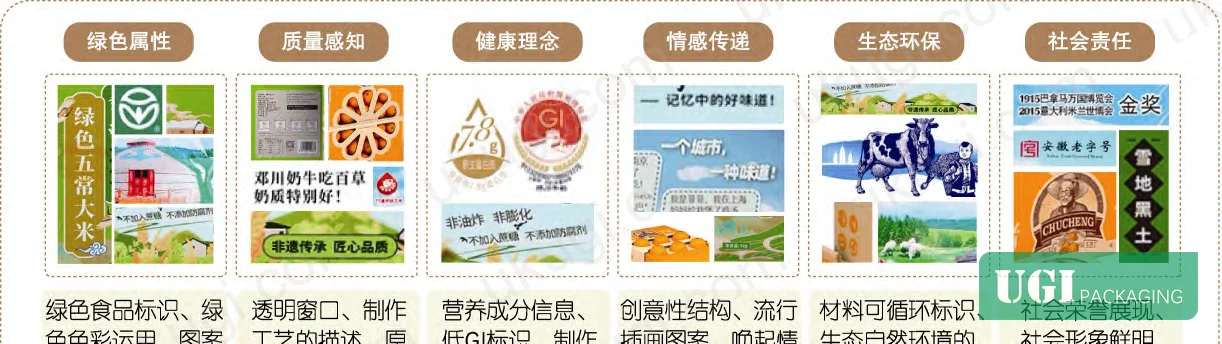
The AHP analysis produced a clear priority ranking across six perceived value dimensions. Health value scored highest at 0.264 4, followed by quality value at 0.210 1, ecological value at 0.197 4, social value at 0.152 0, emotional value at 0.096 9, and cognitive value at 0.079 3. The gap between health value and cognitive value is more than 3:1 — which means a packaging design that leads with eco-certification logos but buries nutritional information is systematically misaligned with what consumers actually weight in purchase decisions.


At the sub-criteria (second-tier) level, the top 8 design requirements by weight were:
- Food direct visibility (C4) — 0.101 2 (highest single criterion)
- Nutritional information display (C9)
- Natural color palette (C7)
- Eco-origin material (C13)
- Material free of irritant odor (C8)
- Regional identity elements (C16)
- Ecological information visibility (C6)
- Pollution-free material (C15)
The practical implication: a transparent or semi-open window structure is not a nice-to-have — it is the single highest-weighted design requirement in the entire model.
| Perceived Value Dimension | AHP Weight | Priority Rank | Key Design Implication |
|---|---|---|---|
| Health Value (B3) | 0.264 4 | 1st | Nutritional claims, natural materials, no-additive messaging |
| Quality Value (B2) | 0.210 1 | 2nd | Structural integrity, transparent product window, premium finish |
| Ecological Value (B5) | 0.197 4 | 3rd | Certified eco-materials, recyclability marks, pollution-free substrate |
| Social Value (B6) | 0.152 0 | 4th | CSR statements, regional provenance, brand responsibility |
| Emotional Value (B4) | 0.096 9 | 5th | Color warmth, regional illustration, lifestyle association |
| Cognitive Value (B1) | 0.079 3 | 6th | Green certification logos, material traceability labels |
Honestly, most buyers over-specify the cognitive value layer — they spend disproportionate budget on certification badge placement and QR-code traceability systems — while under-specifying the structural quality signals that consumers weight more than three times as heavily. The data is unambiguous on this.
Structural and Material Specification for Eco-Sustainable Packaging Formats #
The 18 design sub-criteria identified through KJ-method focus group analysis (14 enterprise packaging designers + 22 design faculty and students) translate into concrete material and structural specifications. Here is how the top-weighted criteria map to physical packaging decisions.
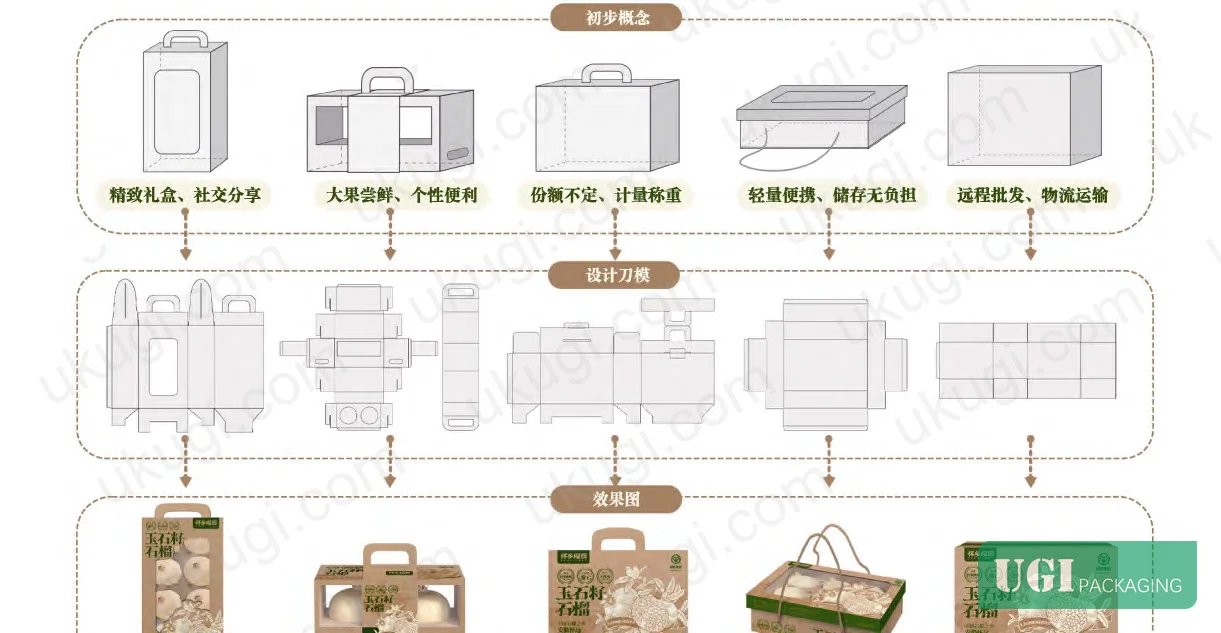
Transparent display window (C4, weight: 0.101 2). The packaging structure must incorporate a side or front aperture that allows direct visual assessment of product size and freshness condition. For fresh produce formats, this typically means a die-cut window with PET or PLA film laminate, or an open-top tray configuration. Sealed opaque formats — the traditional foam-padded gift box with rope handle — scored poorly across the 133-response survey and are structurally misaligned with the top consumer priority.
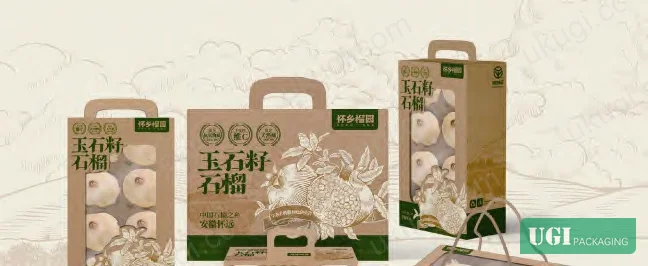
Natural color palette (C7). Color extraction from the product’s natural environment — earth tones, botanical greens, fruit-derived reds — directly supports health and quality perception. This is not an aesthetic preference; it is a measurable driver of perceived value. Packaging that uses high-saturation synthetic color palettes without natural reference points consistently underperforms on health value perception.
Eco-origin material (C13) and pollution-free substrate (C15). These two criteria together require: selection of natural, degradable, or recyclable substrates; absence of harmful chemical residues; and visible material identification marks (recycling symbols, material composition labels). For paper-based formats, this points toward FSC-certified kraft, bamboo fiber board, or sugarcane bagasse — all of which also satisfy the “no irritant odor” requirement (C8).

In supplier qualification, we have seen three of six sample batches fail on the material odor criterion specifically — not because the substrate was technically non-compliant, but because adhesive systems or coatings introduced VOC off-gassing that consumers detect immediately on unboxing. This is a qualification failure that no certification document will catch; it requires physical sample evaluation under ambient conditions for at least 48 hours post-production.
Regional identity elements (C16, weight ranked 6th overall). For internationally marketed products, this criterion translates to: geographic indication marks, provenance storytelling through illustration or photography, and culturally specific graphic vocabulary. This is where sustainable packaging intersects with brand differentiation — and where the design investment has measurable ROI in premium market positioning.


Most procurement teams don’t realize that the structural decision to use a transparent window versus a fully enclosed format has downstream implications for both material cost and consumer trust scores — and that recent consumer research consistently shows the window format outperforms on perceived quality even when the enclosed format uses higher-grade substrate. The structure communicates quality before the consumer reads a single word of copy.

AHP-Validated Design Requirements: From Criteria Weights to Procurement Specifications #
The AHP consistency check is worth understanding in detail, because it validates the entire weighting model. All six primary dimension CR values passed the CR < 0.1 threshold: cognitive value B1 (CR = 0.053 2), quality value B2 (CR = 0.012 9), health value B3 (CR = 0.089 3), emotional value B4 (CR = 0.076 4), ecological value B5 (CR = 0.032 4), social value B6 (CR = 0.067 1). The tightest consistency was in quality value (0.012 9) — meaning the 58-person panel had the strongest consensus on what constitutes quality perception in packaging. The loosest was health value (0.089 3) — still within threshold, but indicating more variation in how consumers define health signals through packaging.
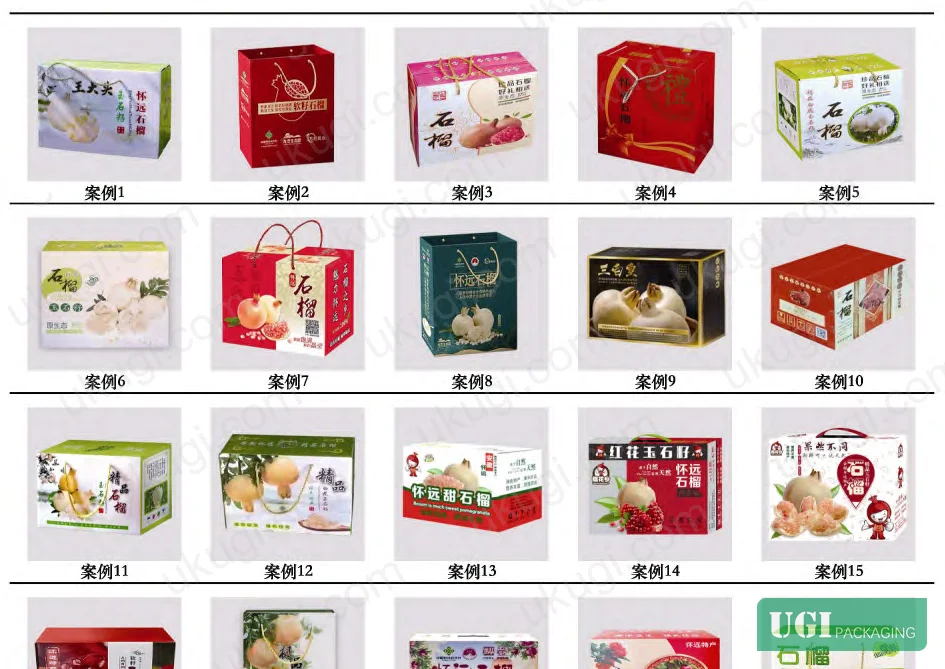
For a packaging buyer, this means: quality-signaling elements (structural integrity, window display, premium surface finish) are the safest investment because consumer consensus is highest. Health-signaling elements (nutritional icons, natural color, material transparency) require more careful calibration because consumer interpretation varies more widely.


The design validation was conducted through a post-design questionnaire survey, confirming that the AHP-weighted design approach effectively improved perceived value scores across all six dimensions compared to the baseline packaging cases. This is a closed-loop validation — the same consumer panel that generated the weights evaluated the resulting design, providing direct evidence that the methodology produces measurable improvement.



Practical Guidance for Buyers #
If you are specifying sustainable packaging for a food or agricultural product — whether for retail, e-commerce, or gift channel — the AHP data gives you a defensible prioritization framework that goes beyond gut feel or trend-following.
Start with structure: does the format allow direct product visibility? If not, you are working against the highest-weighted consumer criterion before the design process even begins. Then specify your material system: natural fiber substrates (kraft, bamboo, bagasse) that are free of irritant adhesives and coatings, with visible recycling identification. Then build your color and graphic system from the product’s natural palette — not from brand guidelines developed for synthetic product categories.
The 133-response survey identified three areas where current green packaging consistently underperforms: brand memorability, eco-label clarity, and size-to-product fit. These are all correctable at the specification stage, not the design stage. Size-to-product fit, in particular, is a structural decision that affects both material efficiency and consumer perception of quality — oversized packaging with foam fill reads as wasteful even when the material is technically recyclable.
For buyers evaluating custom paper boxes or gift packaging solutions for premium food or agricultural products, our team at ukugi.com — a Guangzhou-based OEM/ODM manufacturer with full surface finishing capabilities including FSC-substrate sourcing, natural-palette printing, and eco-material lamination — can translate these AHP-weighted criteria directly into a production-ready specification. We work with international brand owners across North America, Europe, and Southeast Asia on exactly this type of consumer-value-driven packaging brief.
Need a custom formulation or sample? Request a quote from our team →
Technical Verification Questions #
Key technical points to verify when evaluating any supplier in this category (including us):
- Can you demonstrate that your proposed substrate passes a 48-hour ambient off-gassing evaluation with no detectable irritant odor — specifically addressing the C8 criterion (material free of irritant odor) that ranked 5th in the AHP weight hierarchy?
- What is the CR (consistency ratio) validation methodology you use when conducting consumer preference weighting for packaging design decisions, and can you confirm all primary dimension CR values fall below the 0.1 threshold?
- For transparent window formats addressing the top-weighted criterion (food direct visibility, C4, weight 0.101 2), what film laminate options do you offer — specifically PET versus PLA — and what are the respective clarity ratings and compostability certifications?
- How do you verify that your natural color palette selections (C7) are derived from the product’s actual color environment rather than synthetic approximations, and what spectrophotometric delta-E tolerance do you hold for natural-palette reproduction across print runs?
- For eco-origin material (C13) and pollution-free substrate (C15) requirements, what third-party certifications do you hold (FSC, OK Compost, EN 13432, or equivalent), and can you provide migration testing data confirming absence of harmful chemical residues in food-contact applications?
Quality Verification Checklist #
Quality acceptance criteria for incoming samples or production batches:
- ☐ Transparent display window present on side or front face of packaging structure, providing unobstructed visual access to product (addressing C4, weight 0.101 2 — highest-ranked single design criterion)
- ☐ Substrate identified as natural fiber (kraft, bamboo, bagasse, or equivalent) with visible recycling/material identification mark conforming to regional waste classification standards
- ☐ 48-hour ambient off-gassing test completed with no consumer-detectable irritant odor — physical sample evaluation required, not documentation review alone
- ☐ Color palette verified as natural-derived (earth tones, botanical, product-origin palette) with no high-saturation synthetic primaries as dominant design elements
- ☐ Nutritional or health-benefit information (C9) displayed with icon-based visual hierarchy, not buried in small-print text blocks
- ☐ Package dimensions confirmed as product-fitted — internal void space ≤15% of total internal volume, eliminating foam or excessive paper fill
- ☐ Eco-certification mark (green food logo, FSC, or equivalent) placed with standardized sizing and positioning per applicable labeling standards
- ☐ AHP-weighted design brief or equivalent consumer research documentation provided by supplier confirming design decisions are grounded in validated consumer priority data
Key Specifications Table #
| Parameter | Recommended Value | Verification Method |
|---|---|---|
| Health Value AHP weight | 0.264 4 (highest priority dimension) | AHP matrix with CR < 0.1 (B3 CR = 0.089 3) |
| Food direct visibility (C4) sub-criterion weight | 0.101 2 (highest single criterion) | Structural audit: window present on side or front face |
| AHP consistency ratio (all primary dimensions) | CR < 0.1 for all six dimensions | SPSSAU or equivalent software; CR range 0.012 9–0.089 3 |
| Consumer survey sample size | ≥133 valid responses across ≥16 packaging cases | Questionnaire documentation with validity confirmation |
| Expert panel composition | ≥58 persons including product managers, designers, consumers | Panel composition record with role classification |
| Eco-material sub-criteria weight (C13 + C15 combined) | Ranked 4th and 8th in top-8 priority list | Material certification + migration test report |
| Package void space | ≤15% internal volume (size-to-product fit criterion) | Physical measurement of internal dimensions vs. product dimensions |
| Off-gassing evaluation period | ≥48 hours ambient conditions post-production | Sensory evaluation protocol with trained panel |
Looking for a manufacturer that meets these specifications? Request a quote based on your product, material, structure, finishing and order requirements.
References #
Data source: Consumer Perceived Value Dimensions and Design Criteria Weighting for Sustainable Green Food Packaging: An AHP-Based Framework, W. Chen et al., Packaging Technology and Science, 2024
Frequently Asked Questions #
Q1: What does “health value” mean in a packaging specification context, and why does it outrank eco-material selection?
Health value (AHP weight: 0.264 4) refers to the consumer’s perception — derived from packaging cues — that the product will benefit their physical wellbeing. It outranks ecological value (0.197 4) because consumers process health benefits as a direct personal gain, while eco-material choices are perceived as a social or environmental contribution. In specification terms, this means nutritional information display, natural color palettes, and odor-free substrates must be treated as primary requirements, not secondary refinements.
Q2: Is a transparent window structurally compatible with eco-material substrates?
Yes. PLA (polylactic acid) film is the standard eco-compatible window material — it is compostable under industrial conditions and provides clarity comparable to PET. The key specification point is adhesive selection: the window-to-board bond must use water-based or hot-melt adhesives free of solvent VOCs, or the C8 (no irritant odor) criterion will fail regardless of the substrate’s eco-credentials.
Q3: How many design sub-criteria should a packaging brief realistically address?
The AHP model identified 18 sub-criteria, but the top 8 account for the majority of consumer-perceived value. Practically, a well-specified brief should address the top 5 with explicit structural or material requirements, and treat criteria 6–8 as secondary guidance. Trying to optimize all 18 simultaneously typically produces design paralysis and budget overrun without proportional consumer value improvement.
Q4: Can the AHP weighting model be applied to non-food sustainable packaging categories?
The six-dimension framework (health, quality, ecological, social, emotional, cognitive value) is transferable to other sustainable product categories, but the weights will shift. For non-food categories — cosmetics, personal care, supplements — health value typically remains high, but quality value (structural premium signals) often increases in relative weight. The methodology is sound; the specific weights require recalibration per category through a new consumer panel exercise.
Q5: What is the minimum viable eco-packaging specification for a brand entering a premium green food market?
At minimum: FSC-certified or equivalent natural fiber substrate, transparent product window, natural-palette print system with water-based inks, visible recycling identification mark, and nutritional/health-benefit icon display. This addresses the top 4 weighted criteria (C4, C9, C7, C13) and positions the packaging above the baseline performance level identified in the 133-response consumer survey. Everything beyond this is brand differentiation, not baseline compliance.
Published by ukugi.com Technical Team | Request a quote


