

Packaging Printing Processes: How to Choose, Proof and Approve the Right Method
UGI Packaging manufactures the packaging and printed components covered in this article in our own factory. For packaging printing processes, we develop the specification and sample, operate the relevant printing, cutting, forming, finishing and assembly equipment, and inspect the approved result before packing. This connects each buyer decision to the way our factory actually produces and controls the job.
Choose a packaging printing process by matching the substrate, artwork, quantity profile, number of versions, colour requirement and converting sequence. Offset, flexographic, gravure and digital printing solve different production problems; no method is automatically best for every package. The approval route must also match the risk, because a PDF proof cannot predict every colour, surface and finishing interaction.
Quick answer
Start with the package material and final structure. Then define image detail, spot colours, variable data, quantity by version, finish coverage and acceptable colour variation. Ask the supplier to explain the proposed process, setup items, proof limitations and production controls. Approve colour on a representative substrate when colour is commercially critical.
Compare the main printing routes
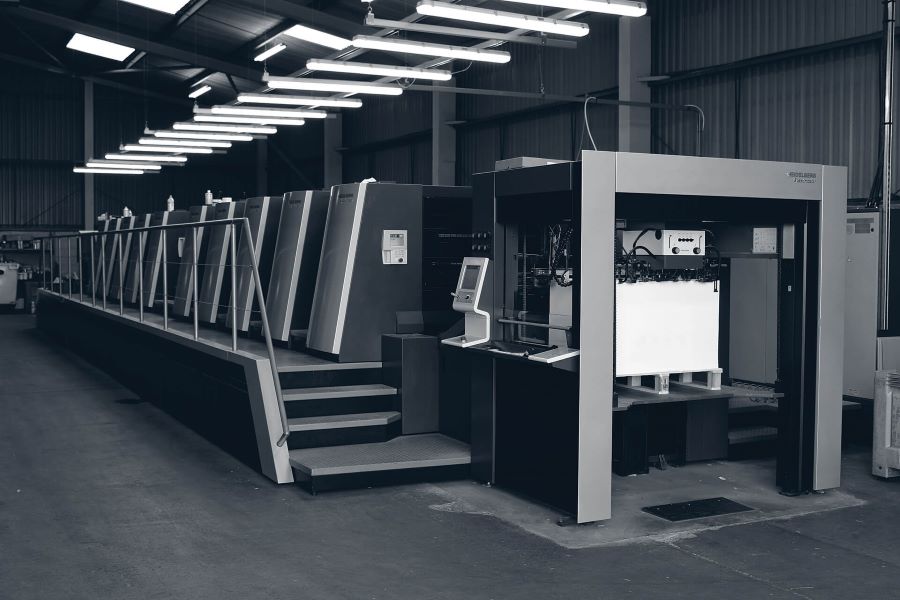
Offset lithography is widely used for high-quality graphics on paper and paperboard, often before lamination or mounting. It involves plate and press setup and is suited to work where sheet-fed quality and repeatability justify that setup.
Flexographic printing uses flexible relief plates and is common across labels, corrugated and flexible materials. Results depend on substrate, plate, anilox, ink and press conditions. Gravure uses engraved cylinders and can support demanding long-run work, but cylinder preparation is a major setup category. Digital printing images from digital data without conventional plates, which can suit prototypes, shorter runs, versioning or variable data, subject to substrate, format, colour and finish limitations.
Our engineers confirm the final recommendation against our factory equipment and the project. UGI Packaging selects the print route that matches the approved material and format.
Match process to substrate and artwork
Coated paperboard, uncoated kraft, corrugated liner and synthetic films absorb or hold ink differently. The same colour values can look different because of whiteness, texture, gloss and opacity. Fine reverse text, large solids, gradients, barcodes and metallic effects create different control needs.
Provide editable artwork, linked images, fonts or outlined text, dieline, bleed, safe zones, colour definitions and overprint instructions. Mark areas for foil, varnish, lamination, glue, coding and barcodes. Review the surface-finishes guide before finalizing interactions between print and finishing.
Understand setup and quotation drivers
The quotation should identify substrate, sheet or web format, process, colour count, spot colours, plate or cylinder needs, ink coverage, variable versions, proof route, finishing, waste allowance, inspection and packing. Unit price alone hides the difference between recurring material/process cost and fixed setup.
Digital printing may reduce conventional plate setup, but it can introduce click charges, format limits or different colour behaviour. Conventional processes may become efficient as stable volume rises, but the crossover depends on the job and supplier, not a universal quantity.
Choose proofs that answer the right question
A soft proof reviews content and layout on screen. A calibrated contract proof can provide stronger colour guidance within its defined system, but it still may not reproduce the exact substrate, metallic effect, white ink, varnish or lamination. A press proof or production-representative sample provides more direct evidence but adds setup and time.
Approve barcodes and legal copy separately from appearance. Keep a version-controlled proof record and physical colour master where appropriate. If substrate or finish changes, reassess whether the proof remains valid.
Use standards within their scope
ISO 12647 is a family for process control in graphic production. For example, the official pages for ISO 12647-2 and ISO 12647-6 address offset lithographic and flexographic processes respectively. Referencing a standard does not certify a finished package, cover every substrate, or replace a project-specific colour target and acceptance method.
Define when production begins
The production clock should start after the final substrate, dieline, artwork, colour references, process, proof, finish plan, quantities by version, packing instructions and acceptance criteria are approved. Late changes to copy, barcode, colour, coverage or finish may require new plates, cylinders, proofs or schedules.
Inspect print and finishing together
Inspection may include content/version, colour against the agreed reference, density or process-control data where applicable, registration, trapping, banding, pinholes, hickeys, set-off, rub, barcode quality and print-to-die alignment. The relevant checks depend on the process and use case.
Surface finishing can change colour appearance and adhesion. Evaluate the printed and finished package when lamination, coating, foil, embossing or glue areas matter. A flat printed sheet may not reveal cracking or misregistration after converting.
Prevent common failures
Colour mismatch often begins with an ambiguous reference, substrate change or proof that did not represent production. Misregistration can be amplified by very tight artwork. Banding or inconsistent solids may relate to process, artwork or material. Set-off and scuffing depend on ink, drying, coverage, coating and handling.
Prevention uses controlled files, preflight, representative proofing, first-off approval, retained masters and checks during the run. Avoid describing a screen colour or unrelated sample as an exact production target.
How UGI Packaging produces this work
Depending on the approved structure and artwork, our equipment route can include die-cutting equipment, engraving equipment, foil-stamping equipment, offset printing presses, and printing presses. We develop the process specification and sample first, release the controlled production files, run the operations in the approved sequence, and inspect materials, registration, dimensions, surface condition, assembly and packing against the retained approval sample. Our engineers confirm project-specific materials, tooling and acceptance limits without shifting UGI Packaging’s manufacturing responsibility to an outside factory.
Use the packaging catalog to identify the format, then send files and requirements through the contact page.
Frequently asked questions
Which printing process is best for short runs?
Digital printing is often considered, but the answer depends on substrate, size, colour, finishing, variable versions and the quality target. Compare an actual quote and representative output.
Why does the same colour look different on kraft and white board?
Substrate colour, texture, absorbency and opacity change the reflected result. Use substrate-specific proofs or samples and define whether the target is visual or measured.
Is a PDF proof enough to approve packaging print?
It can approve content and placement, but it cannot reliably approve every substrate colour, gloss, metallic effect, texture or finish interaction. Match the proof type to the risk.
When should the print production clock start?
After final files, substrate, colours, proof, finishing, quantities and acceptance criteria are approved. A material or artwork change can restart part of the process.